
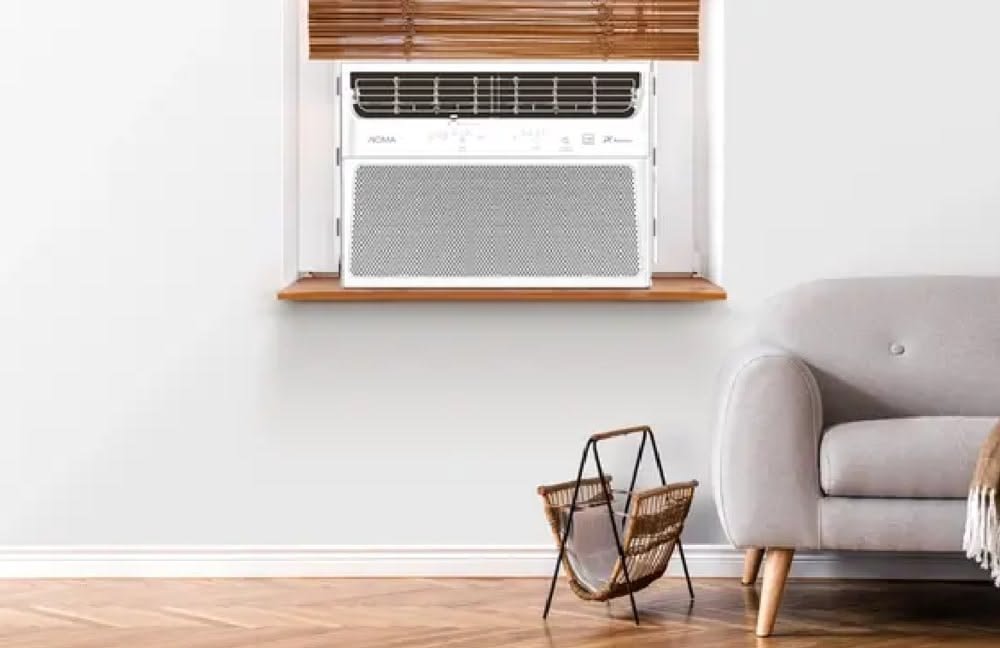
Last July, I was sitting in my bedroom sweating through a 42°C afternoon, staring at my window AC like it had personally betrayed me. The unit was running — I could hear it humming — but the air coming out felt like it was barely trying. Not cold. Not even close.
I called my neighbor, who’s been fixing home appliances for years. He walked in, looked at the AC for about 30 seconds, and said, “Bhai, when did you last clean this thing?” I hadn’t. Not once. In two years.
That embarrassing moment sent me down a rabbit hole of everything that can make a window AC lose its cooling power — and more importantly, what you can actually do about it yourself before spending money on a technician.
Here are the 10 troubleshooting hacks I’ve learned (some the hard way) that genuinely brought my unit back to life.
1. Check the Air Filter First — It’s Almost Always the Culprit
Seriously, start here. Every single time.
A clogged air filter is the number one reason window ACs stop cooling properly, and it’s the easiest fix. When dust and debris build up on the filter, air can’t pass through efficiently. The unit keeps running, electricity keeps getting consumed, but the actual cooling output tanks.
How to do it:
- Turn off and unplug the AC
- Pop off the front grille (usually just clips or one screw)
- Pull out the filter — if it looks gray or brownish, that’s your problem
- Rinse it under running water, let it dry completely, and put it back
- Do this every 2–3 weeks during heavy use
I was shocked when I did this the first time. The difference in airflow was immediately noticeable — like the AC took a deep breath it had been holding for months.
2. Clean the Evaporator Coils (Yes, You Can Do This Yourself)
Behind the filter sits the evaporator coil — a set of metal fins that actually does the cooling work. When dust accumulates on these coils, the AC loses its ability to absorb heat from the room.
You don’t need to call anyone for this. A can of no-rinse coil cleaner (available at any hardware store for around Rs. 800–1200) does the job perfectly.
Steps:
- Remove the filter and take off the front panel if possible
- Spray the coil cleaner directly onto the fins — it foams up and drips dirt away
- Let it sit for 5–10 minutes
- Wipe the area around the coils gently with a soft cloth
Don’t bend the fins. They’re delicate. If some are already bent, a cheap fin comb can straighten them out — this alone can improve airflow by a surprising amount.
3. Inspect the Condenser Coils on the Outside
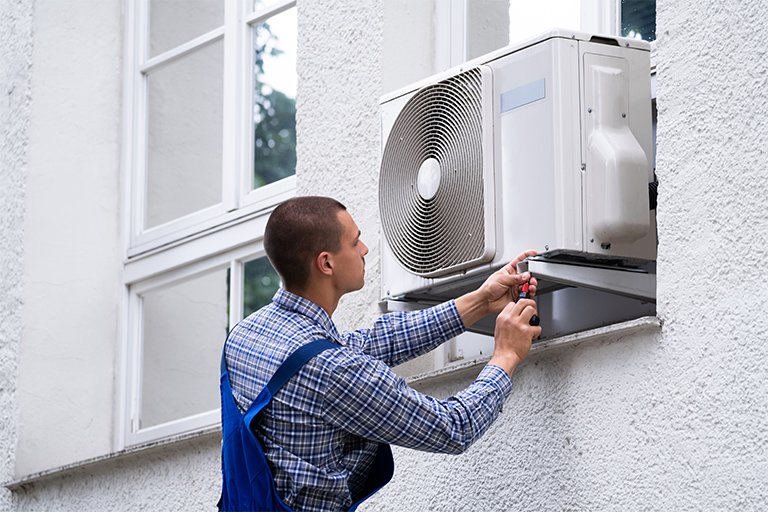
Most people forget the AC has two sides. The evaporator is inside, but the condenser coil faces outdoors and releases the heat. If that side is caked with dust, leaves, or even spider webs, the heat can’t escape — so the unit just recirculates warmth instead of cooling your room.
Use a garden hose on a gentle setting to rinse the condenser fins from the outside. Do this at the start of summer and once mid-season.
Important: Make sure the power is off. Don’t spray water while it’s running.
4. Look for Refrigerant Leaks — Here’s How to Spot Them
This one you can’t fix yourself, but you can identify it early.
If your AC is low on refrigerant (the chemical that actually makes cold air), the cooling drops significantly. Signs of a refrigerant issue:
- Ice forming on the copper pipes or coils
- A hissing sound coming from the unit
- The air feels slightly cool but never actually cold
- Higher electricity bills for less cooling
If you notice ice buildup, turn off the AC and let it thaw for 2–3 hours. Then run it on fan-only mode for a bit. If the problem returns, it’s likely a refrigerant leak and you’ll need a certified technician to recharge it.
This isn’t a DIY fix — refrigerant handling requires a license — but catching it early saves you from compressor damage later.
5. Check if the Room Size Matches the AC Tonnage
Here’s a mistake I see constantly. People buy a 1-ton AC for a large bedroom or living room and wonder why it’s always struggling.
A window AC is rated for a specific room size. If the unit is undersized for the space, it will run continuously without ever reaching the set temperature.
| Room Size | Recommended Tonnage |
|---|---|
| Up to 100 sq ft | 0.75 ton |
| 100–150 sq ft | 1.0 ton |
| 150–200 sq ft | 1.5 ton |
| 200–300 sq ft | 2.0 ton |
If your room is larger than what your AC is designed for — or if the ceiling is unusually high — you’ll always feel like it’s underperforming. That’s not a malfunction; it’s a mismatch.
Also, if the room has bad insulation, direct sunlight through big windows, or multiple heat sources (computers, TVs, cooking nearby), you need to factor that in too.
6. Seal the Gaps Around the AC Unit
This one surprised me when my neighbor pointed it out. He literally put his hand around the edges of my AC installation and felt warm air flowing back in from outside.
If there are gaps between the AC and the window frame, hot outside air keeps sneaking in and neutralizing the cooling. You’re essentially fighting physics.
Quick fix: Use foam weatherstripping tape or AC foam insulation panels (cheap, available at any hardware store) to seal around all four sides of the unit. Make sure the side panels are properly extended and sealed too.
I did this one afternoon and the room felt noticeably cooler within the hour. No tools needed, no technician, maybe Rs. 200 worth of foam tape.
For more tips on how proper installation affects cooling efficiency, check out 9 Common Window AC Installation Mistakes to Avoid Today.
7. Check the Thermostat Setting and Mode — Don’t Laugh, It Happens
Before you open anything up, double-check the obvious.
Is the AC set to “Cool” mode or “Fan Only” mode? Fan mode just circulates air without cooling. Some people accidentally switch modes and spend an afternoon confused.
Also, check the temperature setting. If it’s set to 26°C in a room that’s already 27°C, the compressor will barely kick in.
Set it to at least 3–4 degrees below the current room temperature to force the compressor to work. Once the room cools down, you can bring the setting back up.
Also, if your AC has an “Auto” fan speed — sometimes this actually reduces performance. Try switching to “High” fan speed manually and see if that makes a difference.
8. Test the Capacitor — This Is Often Overlooked
The capacitor is a small cylindrical component that helps the compressor and fan motor start up. When it weakens or fails, the AC either:
- Takes forever to start cooling
- Runs but the compressor doesn’t fully kick in
- Makes a clicking or humming sound without the fan starting
You can visually inspect a capacitor if you’re comfortable removing the AC’s back panel. A bulging top or visible burn marks mean it’s failed. Replacing a capacitor is relatively cheap (around Rs. 300–800 for the part) and a moderately handy person can do it with YouTube guidance.
If you’re not comfortable with electrical components, don’t push it — call someone. But knowing this is the issue saves you from being overcharged for a “major repair” when it’s a small part.
9. Look at How the AC Is Positioned and Where the Airflow Goes
Sometimes weak cooling isn’t about the AC at all — it’s about where the air goes once it leaves the unit.
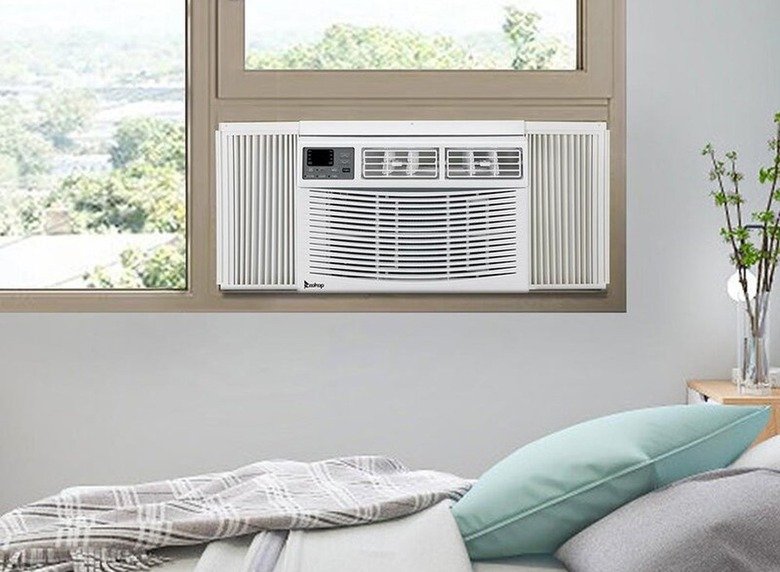
If furniture is blocking the front of the AC, the cold air can’t circulate properly. The room sensor might show a cold temperature right in front of the unit while the rest of the room stays warm.
Things to check:
- Is anything placed directly in front of the AC vents?
- Are the louvers angled to direct air into the room, not just at the floor or ceiling?
- Is the AC mounted too high on the wall? Cold air sinks, so higher is generally okay, but extremely high placement in a tall-ceilinged room can be inefficient.
Also — and this is something I learned from a window AC energy saving guide — using a small fan to help circulate cool air around the room can make your AC feel far more effective without increasing load.
10. Run a Full Reset and Check Power Supply Stability
Sometimes the issue is electrical, not mechanical.
Window ACs are sensitive to voltage fluctuations. If the voltage is consistently low (which is common during peak hours in many Pakistani cities, especially in summer), the compressor won’t run at full capacity. You’ll get the fan running and some weak cool air, but no real cooling.
What to do:
- Use a basic voltage tester or smart plug with voltage monitoring to check if your outlet is consistently delivering the right voltage (220–240V in Pakistan)
- If voltage dips are common, a voltage stabilizer is a one-time investment that can genuinely extend your AC’s life and improve performance
- Also try a full reset: turn off the AC, unplug it for 10–15 minutes, then plug back in and restart
Some units have a built-in reset button (usually on the plug or near the control panel). Press it before turning the unit back on.
If you want to go deeper into understanding what else might be draining performance, this window AC maintenance guide covers a thorough seasonal checklist worth bookmarking.
Quick Comparison: DIY Fixes vs. Call a Technician
| Problem | DIY Possible? | Estimated DIY Cost |
|---|---|---|
| Dirty filter | Yes | Free |
| Dirty coils | Yes | Rs. 800–1200 (cleaner) |
| Gap sealing | Yes | Rs. 150–300 (foam tape) |
| Wrong thermostat setting | Yes | Free |
| Failed capacitor | Moderate | Rs. 300–800 |
| Refrigerant leak | No | Rs. 2000–4000 (technician) |
| Compressor failure | No | Varies significantly |
| Voltage instability | Partial | Rs. 3000–6000 (stabilizer) |
Mistakes That Make Weak Cooling Worse
In my experience, most people make these errors when dealing with a weak-cooling AC:
Immediately calling a technician without checking the basics. A Rs. 5000 service call often ends with the tech cleaning the filter — something that takes 5 minutes at home.
Running the AC with doors and windows open thinking it’ll eventually cool down. It won’t. Seal the room.
Ignoring the drainage tray. A clogged drain causes water to back up, which can freeze the coils and dramatically cut cooling. Pull out the drain tray, clean it out, and make sure the drainage pipe isn’t blocked.
Using the wrong mode during high humidity. If it’s very humid but not extremely hot, the “Dry” mode on many ACs can actually make the room feel more comfortable than “Cool” mode.
Blocking return air. The AC pulls warm room air in to cool it. If that intake area is blocked, there’s nothing to cool.
One Last Thing Before You Call Anyone
The honest truth is that 70–80% of weak cooling problems come down to dirt, gaps, or wrong settings. Before spending money, spend 30 minutes going through this list top to bottom.
I’ve done this multiple times now — for my own unit, my parents’ AC, and even a colleague’s — and in almost every case, the fix was simple and free or nearly free.
The only time you genuinely need a professional is when the refrigerant is low, the compressor is failing, or there’s an electrical fault inside the unit. Everything else? Entirely manageable on your own.
If you’ve tried all of the above and the AC still isn’t cooling properly, it might be time to assess whether the unit is aging out. A well-maintained window AC lasts 8–12 years. After that, efficiency drops regardless of cleaning. In that case, this guide on reviving an old AC is worth a read before you decide whether to repair or replace.
Stay cool — literally.