

9 Common Window AC Installation Mistakes to Avoid Today
There’s something oddly satisfying about installing a window air conditioner on your own. It feels practical, efficient, even a little empowering. You unpack the unit, wrestle it into place, plug it in—and expect instant relief from the heat. But here’s the reality many people quietly discover: a poorly installed window AC doesn’t just cool less effectively, it wastes energy, leaks air, creates noise, and sometimes even becomes a safety risk.
What makes this more frustrating is that most of these issues aren’t caused by faulty machines—they’re caused by small, avoidable mistakes during installation.
This article walks through nine of the most common window AC installation mistakes people make, not just as a checklist, but as a deeper understanding of why they matter, how they affect performance, and what you can do differently right now.
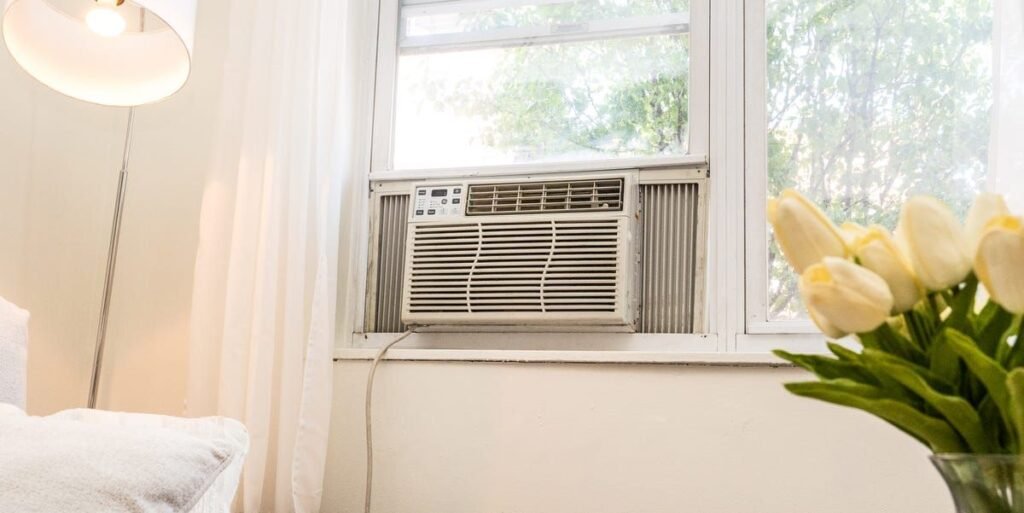
mistake 1: choosing the wrong window
It’s easy to assume any window will do, especially when you’re eager to escape the heat. But the location of your window plays a surprisingly large role in how well your AC performs.
Windows that face direct sunlight, particularly west-facing ones, can significantly increase the heat load inside the room. Installing your AC there means the unit has to work harder, run longer, and still might struggle to maintain a comfortable temperature.
On the other hand, a shaded window or one facing north or east usually provides a more favorable environment. The cooler the surrounding air, the easier it is for the AC to function efficiently.
There’s also the matter of structural suitability. Not all windows are built to support the weight of an AC unit. Older wooden frames or loosely fitted sliding windows may not provide the stability needed.
A better approach is to pause and assess:
- Does the window receive direct sunlight most of the day?
- Is the frame sturdy enough to hold the unit?
- Is there enough clearance for proper ventilation outside?
Choosing wisely here sets the foundation for everything else.
mistake 2: ignoring proper leveling
A window AC isn’t meant to sit perfectly flat. This surprises a lot of people. In fact, most units are designed to tilt slightly outward. That small tilt allows condensation to drain outside instead of collecting inside the unit or dripping into your room.
When the AC is installed without considering this tilt, several issues can arise:
- Water may leak indoors
- Internal components may get damaged over time
- Cooling efficiency can drop
What’s tricky is that the tilt doesn’t need to be dramatic—just a slight downward angle toward the outside is enough. But it has to be intentional.
Many installations go wrong because people focus on making the unit “look straight” rather than function correctly. A spirit level can help, but understanding the purpose of that tilt matters even more.
mistake 3: poor sealing around the unit
This is one of the most common—and most overlooked—problems.
After installing the AC, small gaps often remain around the edges. These gaps might seem harmless, but they create a constant exchange of indoor and outdoor air. Hot air sneaks in. Cool air escapes. Dust and insects find their way inside.
The result? Your AC runs longer, your room never feels fully cool, and your electricity bill climbs.
Good sealing isn’t complicated, but it requires attention:
- Use foam insulation panels or weather stripping
- Ensure side panels are properly extended and secured
- Check for gaps both inside and outside
Think of your room as a controlled environment. Every gap is like leaving a door slightly open.
mistake 4: underestimating support and stability
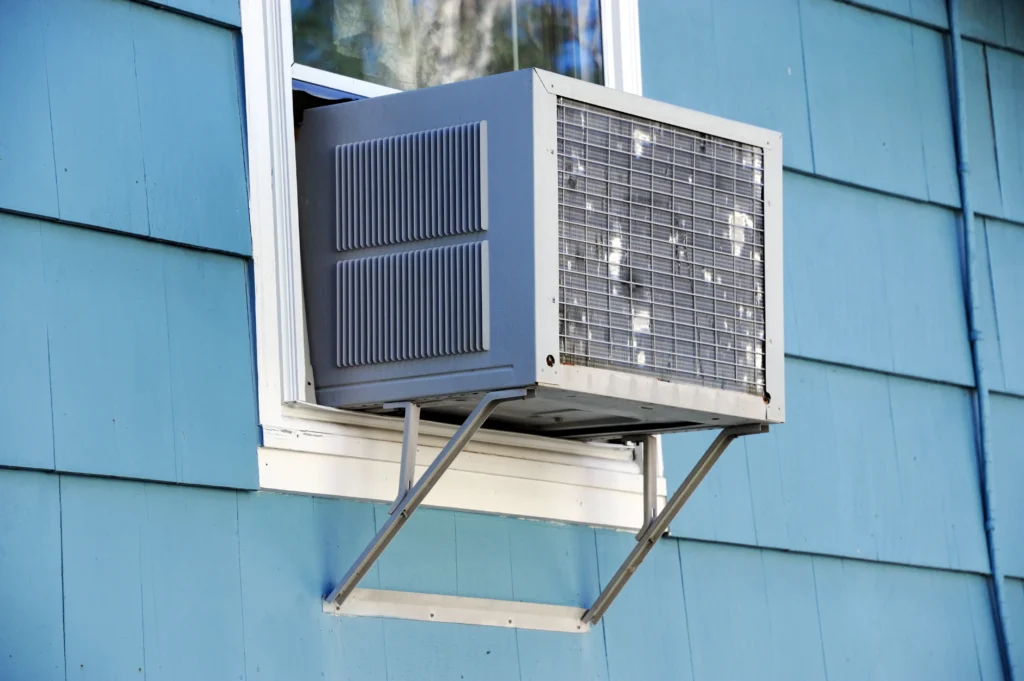
Window AC units can be heavy—sometimes heavier than they look. Relying solely on the window frame to hold that weight is risky.
Without proper support, the unit can shift over time, especially with vibrations during operation. In worst cases, it can even fall out, which is not just damaging but dangerous.
A support bracket is often recommended, especially for larger units. It transfers the weight away from the window frame and distributes it more securely.
Even if your AC seems stable at first, consider:
- Will it remain stable after weeks of use?
- Can the frame handle long-term stress?
- Is there external support preventing movement?
A little reinforcement goes a long way in preventing bigger problems later.
mistake 5: blocking airflow outside
Many people focus entirely on the indoor side of the AC and forget that half of the unit sits outside—and needs space to function properly.
The outdoor part of the AC releases heat. If that heat has nowhere to go, the unit struggles to cool effectively.
Common issues include:
- Installing the AC too close to walls or obstacles
- Blocking vents with curtains, plants, or grills
- Placing it in enclosed spaces with poor airflow
The fix is straightforward: give the unit breathing room. Ensure there’s sufficient clearance around the back and sides.
Think of it like this—your AC is trying to push heat out. Don’t trap it.
mistake 6: incorrect electrical setup
This is where things can get serious.
Window AC units draw a significant amount of power. Plugging them into an overloaded circuit or using low-quality extension cords can lead to overheating, tripped breakers, or even electrical hazards.
Some common missteps include:
- Using extension cords not rated for heavy appliances
- Sharing the outlet with other high-power devices
- Ignoring voltage requirements
Ideally, the AC should be plugged directly into a dedicated outlet. If you’re unsure about your electrical setup, it’s worth getting it checked.
This isn’t just about performance—it’s about safety.
mistake 7: choosing the wrong AC size
Bigger isn’t always better, and smaller isn’t always efficient.
An undersized AC will run constantly without adequately cooling the room. An oversized unit, on the other hand, may cool the room too quickly without properly dehumidifying it, leaving the air feeling clammy.
The key is matching the AC capacity (measured in BTUs) to the room size.
But here’s where people often go wrong—they only consider square footage. In reality, other factors matter too:
- Ceiling height
- Number of occupants
- Sun exposure
- Insulation quality
Taking a few extra minutes to calculate the right size can make a noticeable difference in comfort and efficiency.
mistake 8: neglecting drainage considerations
Condensation is a natural byproduct of cooling. Your AC pulls moisture from the air, and that moisture has to go somewhere.
If the drainage isn’t properly managed, you might notice:
- Water dripping inside the room
- Mold or mildew around the unit
- Unpleasant odors over time
Proper tilt helps, but it’s not the only factor. Some units have drainage holes that can get blocked or misaligned during installation.
Regular checks and basic maintenance can prevent these issues. It’s one of those small things that’s easy to ignore—until it becomes a problem.
mistake 9: skipping the test run
After installation, many people assume the job is done. But skipping a proper test run means you might miss early signs of trouble.
A test run helps you observe:
- Cooling performance
- Noise levels
- Airflow direction
- Any unusual vibrations or leaks
Run the AC for at least 15–20 minutes and pay attention. Does it cool evenly? Is there any rattling sound? Is air leaking from the sides?
Catching these issues early makes them easier to fix.
bringing it all together
Installing a window AC isn’t just about fitting a machine into a window. It’s about creating a system that works efficiently, safely, and consistently.
What’s interesting is how small details—like a slight tilt or a tiny gap—can have a big impact. These aren’t complicated technical issues. They’re simple, practical considerations that often get overlooked in the rush to get things done.
If you’re planning to install a window AC today, take a moment to slow down and think through each step. The time you spend getting it right will pay off in better cooling, lower bills, and fewer headaches.
And if you’ve already installed one and something feels off, chances are one of these mistakes is quietly at play.
frequently asked questions
- how much tilt should a window ac have?
A slight tilt outward is enough—usually around 1–2 centimeters. The goal is to allow water to drain outside, not to angle the unit sharply.
- can i install a window ac without a support bracket?
For smaller units, it might be possible, but it’s not recommended. A support bracket adds stability and reduces strain on the window frame, especially over time.
- why is my window ac leaking water inside?
This is often due to improper leveling or blocked drainage. Check if the unit is tilted correctly and inspect the drainage holes for any blockage.
- is it okay to use an extension cord with a window ac?
Generally, no. Most extension cords aren’t designed for the power load of an AC unit. It’s safer to plug the unit directly into a dedicated outlet.
- how do i know if my ac size is correct for my room?
You can calculate based on room size and other factors like sunlight and occupancy. If the AC runs constantly or cycles too quickly, it might be the wrong size.
- what’s the easiest way to improve cooling efficiency after installation?
Start by sealing any gaps around the unit, ensuring proper airflow outside, and checking that the AC is level. These simple adjustments can make a noticeable difference.
—
Getting your window AC installation right isn’t about perfection—it’s about awareness. Once you understand how each piece affects the whole, the process becomes less of a guess and more of a system you can control.