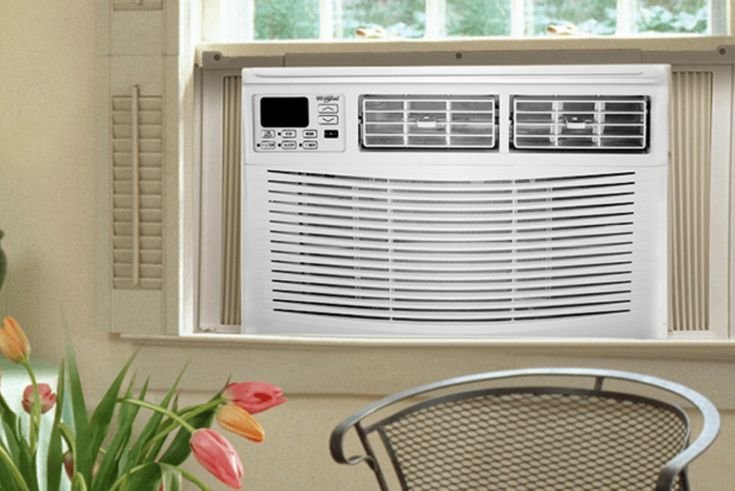
Last July, my window AC started making a sound like a washing machine full of gravel. It was 42°C outside, I had guests coming over, and the repair guy quoted me ₨8,500 just to “come and take a look.” I told him I’d call back.
Instead, I spent an afternoon figuring it out myself — and honestly, it wasn’t that hard. The rattling turned out to be a loose front panel screw. One screwdriver, two minutes, problem solved.
That experience made me realize how many AC issues people pay repair costs for when they could easily fix them at home. Since then, I’ve kept a little mental (and now physical) log of every AC problem I’ve encountered and how I solved it. Here are the six that genuinely saved me the most money.
1. The AC Is Running But Not Cooling — Check the Filter First
This is probably the most common complaint I hear from neighbors and friends: “My AC is on but the room isn’t getting cold.” And almost every time, I already know the answer before I even look at the unit.
A clogged air filter is the number one silent killer of cooling efficiency. When I first moved into my current apartment, the previous tenant had clearly never cleaned the filter — it was black. Like, legitimately coated in a thick layer of dust and lint. The AC was running constantly, my electricity bill was ridiculous, and the room temperature barely dropped.
Once I pulled the filter out, rinsed it under running water, let it dry fully, and popped it back in — the difference was immediate. The air coming out was noticeably colder within 20 minutes.
What to do:
- Turn off the AC and unplug it
- Slide out the front panel (usually just snaps off)
- Remove the filter and hold it up to light — if you can’t see light through it, it needs cleaning
- Rinse with lukewarm water, no harsh soaps
- Let it air dry completely before reinserting (wet filter = mold risk)
- Do this every 2–4 weeks during heavy use months
One thing I learned the hard way: don’t use a hairdryer to speed up the drying. I melted a filter once. Just let it dry naturally.
2. Water Dripping Inside the Room — It’s Almost Always the Drain Pan or Tilt Angle
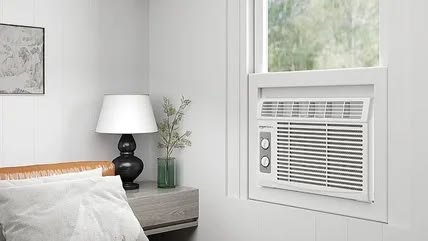
Water dripping from the front of the unit and landing on your floor or windowsill is incredibly annoying — and people assume it means a refrigerant leak or some major internal damage. Nope. Nine times out of ten, it’s one of two things.
Problem A: The unit isn’t tilted correctly
Window ACs are designed to be installed with a very slight backward tilt (toward the outside) so condensation drains outward, not inward. If your unit is level or tilting toward the room, water pools inside and eventually drips on your floor.
I had this exact issue after reinstalling my AC following a deep clean. I’d put it back perfectly level — which felt right but was totally wrong. A quick check with a bubble level confirmed the problem. I shimmed the outer edge with a small piece of rubber and the dripping stopped within an hour.
The tilt should be about ¼ inch downward toward the outside per foot of unit depth. Not dramatic — just a slight lean.
Problem B: Dirty or blocked drain pan
If the tilt is fine, pull out the unit and check the drain pan at the bottom. Mine had accumulated a sludgy mix of dust and algae that was blocking the drain hole. A simple flush with warm water and a few drops of white vinegar cleared it completely.
For a more detailed walkthrough on water leakage fixes, 10 Easy Window AC Cleaning Maintenance Guide Fixes for Water Leakage goes into serious depth on this specific problem.
3. AC Turns On But Shuts Off After a Few Minutes — Short Cycling Is Real
This one had me genuinely confused for a while. The unit would start up, run for maybe 5–7 minutes, then shut off. I’d wait, turn it back on, same thing. I assumed the compressor was dying and started mentally preparing for a full replacement.
Turns out, it was short cycling — and the cause was embarrassingly simple.
What causes short cycling:
| Cause | How Common | DIY Fix? |
|---|---|---|
| Dirty condenser coils | Very common | Yes |
| Oversized AC for the room | Common | Placement adjustment |
| Low refrigerant | Less common | Needs a technician |
| Faulty thermostat | Less common | Sometimes DIY |
| Blocked airflow around unit | Very common | Yes |
In my case, the condenser coils (the metal fins on the back/outside of the unit) were absolutely caked with dust and debris. This causes the unit to overheat internally, and the thermal protection kicks in and shuts it down.
How I fixed it:
- Unplugged the unit and took it outside
- Used a soft brush attachment on my vacuum to gently clean the fins
- Then used a can of compressed air to blow out remaining dust
- Straightened a few bent fins using a thin butter knife (carefully — those fins are sharp)
- Let everything settle, reinstalled, and it ran perfectly
The whole process took about 45 minutes. A technician would have charged me at minimum ₨3,000–5,000 for this.
4. Strange Noises — Rattling, Buzzing, or Grinding
Noise issues are usually one of three categories, and figuring out which sound you’re dealing with tells you almost exactly where to look.
Rattling: Loose parts. Check the front panel, filter frame, and any screws you can see. My “gravel in a washing machine” situation from the intro was just a loose panel screw. Took 30 seconds to fix once I identified it.
Buzzing: Often electrical — could be a loose wire, a failing capacitor, or debris touching the fan blade. If it’s a consistent hum when the unit tries to start but doesn’t, that points to a capacitor issue. That one I did call a technician for, because capacitors store charge even when unplugged and can be dangerous.
Grinding or squealing: Usually the fan motor bearings wearing out. This is a legitimate repair, but before calling anyone, check if there’s debris (a leaf, a twig, something from outside) caught in the fan. I once spent 20 minutes worried about my motor only to find a dried leaf stuck against the fan blade.
A useful approach is to record the sound on your phone and then search for it — there are actually YouTube channels dedicated to AC sound diagnosis and they’re surprisingly helpful.
For more on dealing with noise issues specifically, 7 Powerful Window AC Cleaning Maintenance Guide Solutions for Noisy Units breaks down the different noise types really well.
5. Weak Airflow Even After Cleaning the Filter
You’ve cleaned the filter, the unit is running, but the air coming out feels weak — like it’s barely pushing through. This is frustrating because you’ve done the “obvious” thing and it didn’t fully solve the problem.
Here’s what I’ve found actually causes this:
The evaporator coils are frozen
Yes, the coils inside your AC can literally freeze over, which restricts airflow significantly. This usually happens because of poor airflow to begin with (ironic, right?) — often from a dirty filter that was left too long, or running the AC at very low temperatures in high humidity.
Signs of frozen coils:
- Ice visible around the indoor coil area
- Water dripping more than usual when it eventually melts
- Very weak airflow despite the fan running
What to do: Turn the AC off completely and switch it to “fan only” mode for 2–3 hours. This lets the coils defrost. Do NOT try to chip or scrape the ice off — you’ll damage the coils.
Once defrosted, check your filter and clean the coils gently with a soft brush.
The fan speed selector or settings have an issue
This sounds obvious, but I’ve made this mistake: sometimes the mode selector gets bumped and you’re running on “low fan” without realizing it. Always worth checking before assuming a mechanical problem.
Blocked outdoor side
If your window AC is installed in a tight space or something is obstructing the back of the unit outside — debris, a bush, even badly fitted side panels letting air recirculate — it drastically reduces efficiency. I had a plastic bag that had blown against my unit’s exhaust side. Weak airflow, higher energy use, all from a plastic bag.

6. The AC Won’t Turn On At All — Before You Panic, Check These Things
The absolute worst feeling: you hit the power button, nothing happens. No lights, no sound, nothing.
I’ve had this happen twice. Both times, I immediately assumed catastrophic failure. Both times, the fix took under 10 minutes.
Step 1: Check the power supply
This sounds condescending, but seriously — check the outlet. Plug something else in. Check if the circuit breaker tripped. ACs draw a lot of current, and if there was a power fluctuation or surge, the breaker may have tripped as a protective measure.
I once spent 20 minutes inspecting my AC unit before my wife pointed out the extension cord it was plugged into had a built-in surge protector that had tripped. One reset button press. Done.
Step 2: Look for a reset button on the unit itself
Most modern window ACs have a small reset button — sometimes on the plug itself, sometimes on the control panel. After a power outage or surge, these need to be manually reset. Check your manual for its location (or look it up by model number online — this takes about 30 seconds).
Step 3: Check the timer settings
Some ACs have a timer that was accidentally set. The unit might be in “delayed start” mode and waiting for a scheduled time. I’ve accidentally activated this more times than I want to admit.
Step 4: Remote control batteries
Again, obvious — but dead remote batteries have fooled me. If the unit has a manual power button, try that directly.
Step 5: Check the safety float switch
Some units have a float switch in the drain pan that automatically shuts the AC off when the pan fills with water (to prevent overflow). If your drain was blocked and the pan overflowed, this might have triggered. Drain the pan, clear the blockage, and try again.
A Quick Reference: Problem vs. First Thing to Check
| Problem | First Check | DIY Difficulty |
|---|---|---|
| Not cooling | Air filter | Easy |
| Water dripping inside | Tilt angle + drain pan | Easy |
| Shuts off quickly | Condenser coils | Medium |
| Strange noises | Loose panels + debris | Easy–Medium |
| Weak airflow | Frozen coils + obstructions | Easy |
| Won’t turn on | Breaker + reset button | Easy |
Mistakes I Made (So You Don’t Have To)
A few things I did early on that I’d tell anyone to avoid:
Using a pressure washer on the coils. I thought more pressure = more cleaning. Bent half the fins and had to spend time straightening them. Use low-pressure water or compressed air only.
Reinstalling a damp filter. In a hurry once and put the filter back slightly damp. Within a week there was a musty smell coming from the unit. Had to clean everything again plus deal with mild mold on the filter frame.
Ignoring small noises. A minor rattle I ignored for two weeks became a loose fan bracket that eventually caused the fan to wobble badly enough to scratch the housing. Small problems do become bigger ones.
Running the AC at maximum cold setting all the time. This increases the risk of frozen coils, especially in high humidity. Set it to a reasonable temperature (around 24–26°C) and let it maintain, rather than blasting it at 18°C constantly.
When You Actually Should Call a Technician
To be fair, not everything is DIY territory. Here’s when I pick up the phone without hesitation:
- Refrigerant-related issues — If the unit isn’t cooling and the filter and coils are clean, it might be low on refrigerant. This requires specialized equipment and certification to handle. Not a home fix.
- Electrical smell or visible burning — Immediately unplug and call someone.
- Compressor issues — If the compressor is making loud clunking noises or the unit won’t cool at all despite everything else being clean and functioning, the compressor might be failing. At that point, repair vs. replacement is a real conversation.
- Capacitor failure — As mentioned earlier, capacitors can hold dangerous charges. Unless you know what you’re doing, leave this one to a pro.
The goal of DIY troubleshooting isn’t to replace technicians entirely — it’s to avoid paying them for things you can genuinely handle yourself, and to be an informed customer when you do need to call.
Keeping a window AC running well doesn’t require a technical background. Most issues — the ones that feel alarming — turn out to have simple causes once you know where to look. The six problems above cover probably 80% of what goes wrong with window units in regular home use. Start with the simple checks, work methodically, and you’ll be surprised how often you find the answer yourself.
Also worth reading: 9 Proven Window AC Troubleshooting Tricks You Need — covers some additional scenarios including remote control errors and error code interpretation that pairs well with what’s above.