

5 Powerful Window AC Placement Secrets for Faster Cooling
There’s something oddly satisfying about stepping into a room that cools down within minutes, especially on a blazing summer afternoon. But if you’ve ever felt like your window AC is working harder than it should—or worse, not cooling fast enough—you’re not alone. Many people assume that buying a powerful air conditioner is the solution, when in reality, where and how you place it often matters just as much.
I learned this the hard way. Years ago, I installed a perfectly good window AC unit, only to spend weeks wondering why the room still felt stuffy. It wasn’t until I experimented with placement, airflow, and surroundings that things finally clicked. The cooling became faster, the electricity bill dropped, and the room actually felt comfortable instead of just “less hot.”
This article isn’t just about generic advice. It’s about real, practical placement secrets—small adjustments that make a surprisingly big difference. Let’s dive in.
understanding why placement matters more than you think
Before jumping into the secrets, it’s important to understand one thing: a window AC doesn’t “create cold air” out of nowhere. It removes heat from inside your room and throws it outside. That means airflow, heat exposure, and even the direction your AC faces can influence how efficiently it works.
If your AC struggles, it’s often not because it’s weak—it’s because something around it is working against it.
Think of it like this: even the strongest fan won’t help much if it’s blowing into a wall.
secret 1: install it on the right wall, not just any window
Most people install their AC in whichever window is available. That’s convenient—but not always smart.
The wall you choose directly affects how fast your room cools.
If possible, avoid windows that receive direct sunlight for most of the day. A west-facing window, for example, tends to get intense afternoon heat. Installing your AC there forces it to fight against constant incoming heat, which slows cooling and increases energy use.
Instead, aim for:
- A shaded wall
- A north or east-facing window (in most regions)
- A side of the house that stays cooler during the day
If you don’t have a choice, don’t worry—there are ways to compensate. Adding a simple shade, curtain, or external cover above the unit can significantly reduce heat load.
I once shifted my AC from a sun-facing wall to a shaded one, and the difference was immediate. The room cooled almost twice as fast—not because the AC changed, but because the environment did.
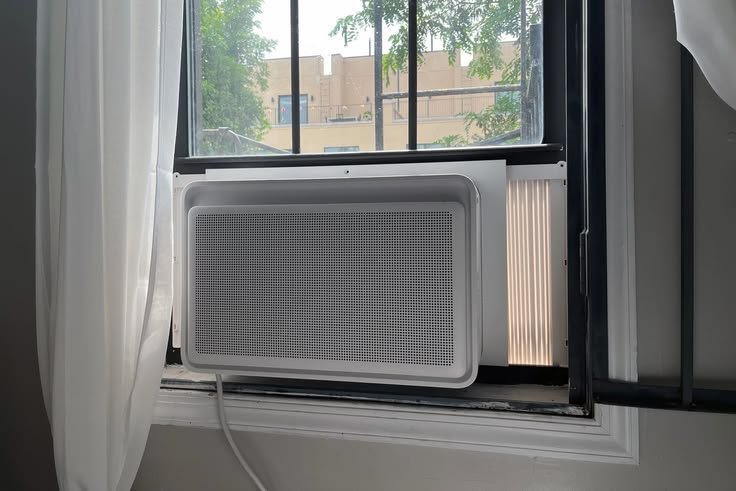
secret 2: height matters more than you realize
Here’s something many people overlook: hot air rises.
If your window AC is installed too low, it ends up cooling only the lower portion of the room while warm air lingers above. This creates uneven cooling and makes the AC run longer.
The ideal placement is slightly above mid-wall height, but not too close to the ceiling.
Why not too high? Because then the cool air may not circulate effectively downward.
A balanced height allows:
- Cool air to spread evenly
- Better air mixing
- Faster temperature stabilization
Also, make sure nothing blocks the airflow—no curtains, shelves, or furniture directly in front of the unit.
A simple test: stand across the room and feel the airflow. If it hits you directly and spreads naturally, you’ve got a good placement.
secret 3: keep the outdoor side free and breathing
This is one of the most powerful yet ignored secrets.
Your window AC has two sides:
- Indoor (cooling your room)
- Outdoor (releasing heat)
If the outdoor side is blocked, your AC struggles to dump heat, which slows cooling inside.
Common mistakes include:
- Installing the AC too close to a wall outside
- Letting plants or grills block airflow
- Covering the unit tightly for “protection”
Instead, ensure:
- At least 1–2 feet of open space behind the unit
- No obstructions around the vents
- Proper ventilation outside
Think of it like breathing. If the AC can’t “exhale” heat properly, it can’t “inhale” warm air efficiently either.
I once removed a decorative metal grill behind my AC, and the cooling improved noticeably within hours. It’s that sensitive.
secret 4: align airflow with your room layout
Cooling isn’t just about producing cold air—it’s about distributing it effectively.
If your AC blows air toward a wall, curtain, or large piece of furniture, that airflow gets trapped. The room may feel unevenly cooled, with some areas staying warm.
Instead, position your AC so the airflow travels across the longest open path in the room.
For example:
- In a rectangular room, aim airflow lengthwise
- Avoid pointing directly at obstacles
- Let air circulate naturally rather than bounce back immediately
You can also slightly adjust the louvers (the directional fins) to guide airflow where it’s needed most.
In my own setup, I redirected the airflow from a corner toward the center of the room. That small tweak made the entire space feel cooler within minutes.
secret 5: seal everything around the unit properly
This might sound basic, but it’s often the biggest hidden problem.
If there are gaps around your window AC, warm air from outside keeps sneaking in. Your AC ends up working nonstop, trying to cool a room that’s constantly being reheated.
Check for:
- Side gaps in the window frame
- Small cracks around the unit
- Loose installation panels
Seal them using:
- Foam insulation strips
- Weather sealing tape
- Proper fitting panels
This creates a closed environment where your AC can actually do its job.
I remember feeling frustrated with slow cooling until I sealed a small gap near the side panel. It didn’t look like much—but once closed, the cooling became noticeably faster and more consistent.
small adjustments that amplify all five secrets
Once you’ve nailed the placement, a few additional tweaks can make your AC feel even more powerful.
Keep doors closed
Open doors let cool air escape and warm air enter. Even the best placement won’t help if the room isn’t sealed.
Use light-colored curtains
They reflect heat instead of absorbing it, keeping the room cooler.
Turn on a ceiling or pedestal fan
This helps distribute cool air faster, especially in larger rooms.
Avoid heat-producing appliances nearby
Devices like ovens, computers, or even bright lights can add heat and slow cooling.
Clean your filters regularly
Dust buildup restricts airflow, reducing efficiency regardless of placement.

real-life impact: what changes should you expect?
If you apply these placement secrets correctly, you’ll likely notice:
- Faster cooling times (often within minutes)
- More even temperature across the room
- Reduced electricity consumption
- Less strain on the AC unit
- Longer lifespan of the appliance
It’s not uncommon for people to think they need a bigger AC when all they really need is better placement.
common mistakes people don’t realize they’re making
Sometimes, it’s not about what you should do—it’s about what you should stop doing.
Installing the AC behind curtains
This blocks airflow completely.
Placing furniture directly in front
It prevents cool air from spreading.
Ignoring outdoor ventilation
This is one of the biggest performance killers.
Using oversized units in small rooms
This leads to short cycling instead of steady cooling.
Skipping proper sealing
Even small gaps can ruin efficiency.
Avoiding these mistakes can be just as powerful as applying the right techniques.
a simple way to test your current setup
If you’re unsure whether your placement is optimal, try this quick check:
- Turn on your AC and close the room.
- Stand in different corners after 10 minutes.
- Notice temperature differences.
- Check airflow direction and strength.
- Look for hot spots or uneven cooling.
If the room cools evenly and quickly, your setup is working well. If not, even one or two of the secrets above can dramatically improve performance.
why these secrets are often overlooked
Most people focus on brand, tonnage, or features when buying an AC. Placement feels like an afterthought.
But here’s the truth: even a high-end AC can perform poorly if installed incorrectly, while a basic unit can work surprisingly well when placed right.
It’s not about spending more—it’s about using what you already have more intelligently.
bringing it all together
Faster cooling isn’t just about power—it’s about strategy.
When you:
- Choose the right wall
- Install at the right height
- Keep the outdoor side clear
- Align airflow properly
- Seal every gap
—you transform your AC from “just working” to working efficiently.
And the best part? Most of these changes don’t cost much. They just require a bit of awareness and effort.
frequently asked questions
- Does window AC placement really affect cooling speed?
Yes, significantly. Poor placement can slow down cooling, while proper positioning can make the room cool much faster without changing the unit itself. - What is the best height for installing a window AC?
Ideally, it should be installed slightly above mid-wall height. This allows better air circulation without trapping cool air at the bottom or top. - Can sunlight directly affect AC performance?
Absolutely. Direct sunlight increases heat load, forcing the AC to work harder. Shaded placement improves efficiency. - How much space should be behind the outdoor side of the AC?
At least 1–2 feet of clear space is recommended to ensure proper heat release and airflow. - Do small gaps around the AC really matter?
Yes. Even small gaps can let warm air in, reducing cooling efficiency and increasing energy consumption. - Should I use a fan along with my window AC?
Using a fan helps distribute cool air more evenly, especially in larger rooms, making the cooling feel faster and more consistent.
In the end, comfort isn’t just about technology—it’s about understanding how to use it. A window AC, when placed thoughtfully, can outperform expectations and turn even the hottest days into something manageable.