8 Quick Window AC Maintenance Tips to Avoid Repairs
Keeping a window air conditioner in good shape is not just about comfort during hot days; it’s also about saving money, avoiding sudden breakdowns, and making sure the unit lasts for years. Many people only think about their AC when it stops cooling properly or starts making strange noises. By that time, the damage is often already done.
Regular maintenance doesn’t have to be complicated or expensive. In fact, a few simple habits can prevent most common AC problems like low cooling, water leakage, bad smell, or compressor failure. These tips are practical, easy to follow, and can be done without professional help in most cases.
Let’s go through eight quick but powerful window AC maintenance tips that help you avoid costly repairs.
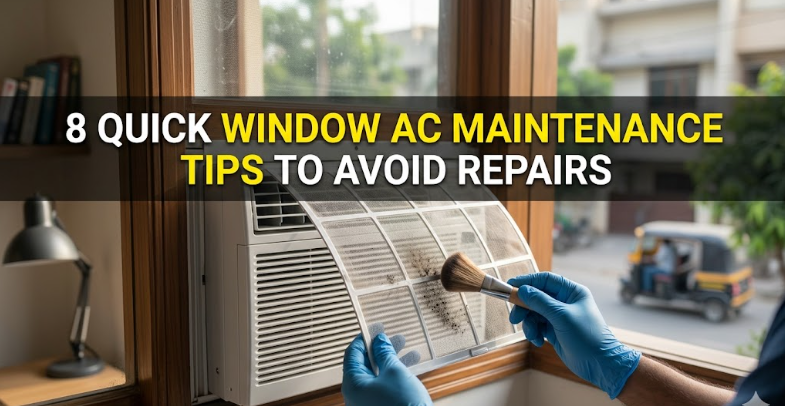
- Clean or replace the air filter regularly
The air filter is one of the most important parts of a window AC. It traps dust, dirt, and other particles before they enter the cooling system. When the filter gets clogged, airflow becomes restricted, and the AC has to work harder than usual.
This not only reduces cooling efficiency but also increases electricity consumption. In many cases, a dirty filter is the main reason behind weak airflow or uneven cooling.
To avoid this:
- Check the filter every 2 to 3 weeks during heavy use
- Wash it gently with water and mild soap if reusable
- Replace it if it looks damaged or too dirty to clean
A clean filter alone can improve cooling performance noticeably.
- Keep the evaporator coils dust-free
Inside the unit, evaporator coils are responsible for absorbing heat from the room. Over time, dust builds up on these coils, forming a layer that blocks heat exchange.
When this happens, your AC may still run, but it won’t cool effectively. You might also notice the compressor running longer than usual.
To maintain coil health:
- Turn off and unplug the AC before cleaning
- Open the front panel carefully
- Use a soft brush or coil cleaner spray
- Avoid bending the delicate fins
Cleaning coils once or twice a season is usually enough for normal home use.
- Check and clean the condenser coils outside
The outdoor part of a window AC handles heat release. If the condenser coils are dirty or blocked by dust, leaves, or insects, heat cannot escape properly.
This causes the system to overheat and may lead to compressor failure over time.
To keep it in good condition:
- Inspect the back of the AC unit regularly
- Remove dust using a soft brush or low-pressure air
- Clear any debris around the unit’s ventilation area
- Ensure at least some airflow space around the back side
Good airflow around the condenser is essential for smooth operation.
- Make sure the drainage system is working properly
Window AC units produce condensation during cooling. This water needs to drain out properly. If the drain pipe or tray is blocked, water may start leaking inside the room.
This is one of the most common complaints among AC users, especially in humid weather.
To avoid drainage problems:
- Check the drain hole for blockages
- Clean accumulated dirt or algae
- Ensure the AC is slightly tilted outward for proper water flow
- Avoid letting dust collect in the drainage tray
A clear drainage system prevents both leakage and unpleasant smells.
- Tighten loose parts and check vibrations
Over time, the constant vibration of a running AC can loosen screws, panels, or mounting brackets. This may lead to noise, rattling sounds, or even physical damage to internal components.
Ignoring small vibrations can eventually lead to major repair needs.
To keep things stable:
- Inspect outer screws and tighten them if needed
- Check the mounting frame for stability
- Look for unusual shaking while the AC runs
- Place rubber pads if vibration is excessive
A stable installation reduces wear and tear significantly.
- Maintain proper airflow around the unit
A window AC needs space to breathe. If furniture, curtains, or walls block airflow, the unit struggles to release heat and circulate cool air.
Poor airflow can lead to overheating and reduced cooling efficiency.
To improve airflow:
- Keep curtains and objects away from vents
- Avoid blocking the front or rear of the unit
- Do not install the AC in a tightly enclosed space
- Ensure air can move freely inside and outside
Good airflow not only improves cooling but also reduces energy consumption.
- Run the AC periodically even in off-season
Many people completely stop using their AC during winter or cooler months. While this seems fine, long periods of inactivity can cause internal parts to stiffen or collect dust.
When you suddenly start the AC after months, it may not work smoothly.
A better approach:
- Run the AC for 10–15 minutes once every few weeks
- Switch to fan mode occasionally if available
- Check cooling performance during these test runs
This keeps internal components active and prevents long-term stagnation issues.
- Schedule basic professional servicing once a year
Even if you do regular cleaning at home, a professional inspection once a year is still important. Technicians can check internal gas levels, motor health, wiring, and other technical parts that are not easy to inspect yourself.
Annual servicing helps detect hidden problems early, before they turn into costly repairs.
During servicing, professionals usually:
- Check refrigerant gas levels
- Inspect compressor performance
- Clean internal components deeply
- Test electrical connections
This small investment often extends the life of your AC significantly.
Extra maintenance habits that also help
Along with the main tips above, a few small habits can further improve your AC’s performance:
- Avoid setting temperature too low for long hours
- Keep windows and doors closed while AC is running
- Turn off the AC when not needed instead of running it continuously
- Use a stabilizer if voltage fluctuates in your area
These simple practices reduce stress on the system and improve efficiency.
Why regular maintenance matters
A window AC is often exposed to dust, heat, humidity, and continuous usage during summer. Without maintenance, small issues slowly turn into bigger mechanical failures.
Regular care helps you:
- Reduce electricity bills
- Improve cooling performance
- Avoid sudden breakdowns
- Extend AC lifespan
- Reduce repair costs
Think of maintenance not as a task, but as protection for your investment.
Conclusion
Window AC maintenance doesn’t require technical skills or expensive tools. Most problems can be avoided with simple, consistent habits like cleaning filters, checking coils, ensuring proper airflow, and keeping drainage clear.
When these small steps become routine, your AC runs more efficiently, lasts longer, and rarely surprises you with unexpected breakdowns. Instead of waiting for repairs, prevention keeps everything smooth and stress-free throughout the hot season.
FAQs
Q1: How often should I clean my window AC filter?
You should clean the filter every 2 to 3 weeks during heavy usage. If the environment is dusty, cleaning it weekly is even better.
Q2: What is the main reason for water leakage in window AC?
The most common reason is a blocked drainage pipe or tray. Poor installation tilt can also cause water to flow back inside.
Q3: Can I clean AC coils at home safely?
Yes, you can clean them gently using a soft brush or coil cleaner spray. However, avoid bending the fins or using excessive force.
Q4: How do I know if my AC needs professional servicing?
If cooling drops, unusual noise starts, or electricity usage increases suddenly, it’s time for professional servicing.
Q5: Does running AC in fan mode help maintenance?
Yes, running it in fan mode occasionally helps keep internal parts active and reduces dust buildup.
Q6: What happens if I ignore AC maintenance?
Ignoring maintenance can lead to higher electricity bills, reduced cooling, frequent breakdowns, and a shorter lifespan of the unit.