
11 Smart Window AC Maintenance Ideas for Summer
Introduction
Summer heat can be exhausting, especially in regions where temperatures rise quickly and stay high for long periods. A window air conditioner becomes more than just a comfort device—it becomes a necessity for daily living, sleep, and productivity. But many people overlook one important truth: a window AC only performs well when it is properly maintained.
Without regular care, even the best air conditioner starts losing cooling power, consuming more electricity, and developing faults that lead to expensive repairs. Dust, clogged filters, blocked airflow, and poor installation are some of the common reasons behind AC inefficiency.
The good news is that maintaining a window AC is not complicated. You don’t need advanced technical skills or expensive tools. With some simple habits and smart practices, you can keep your AC running smoothly throughout the summer season.
This article explains 11 smart window AC maintenance ideas that help improve cooling, reduce electricity bills, and extend the life of your unit. Each idea is practical and beginner-friendly so you can apply it easily at home.
- Clean or replace air filters regularly
One of the most important maintenance tasks for any window AC is cleaning the air filter. The filter traps dust, dirt, pollen, and other airborne particles before they enter the cooling system.
When filters become clogged, airflow reduces significantly. This forces the AC to work harder, which leads to poor cooling and higher electricity consumption.
In summer, it is recommended to clean the filter every 10–15 days if you use the AC daily. If the filter is damaged or too dirty to clean properly, replacing it is the best option.
A clean filter improves airflow, enhances cooling speed, and reduces strain on the compressor. It also helps maintain healthier indoor air quality, especially for people with allergies or respiratory issues.
- Keep the evaporator coils dust-free
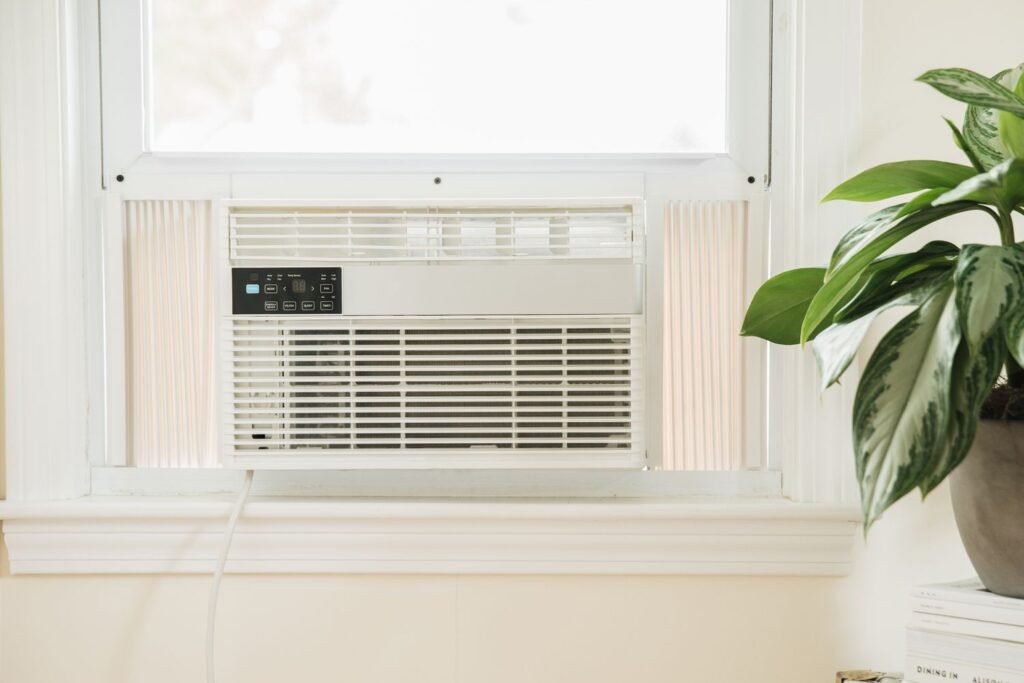
Inside the window AC unit, evaporator coils are responsible for absorbing heat from indoor air. Over time, dust builds up on these coils and creates an insulating layer that reduces heat absorption.
When coils are dirty, cooling becomes weak even if the fan is running properly. To maintain efficiency, gently clean the coils at least once before peak summer use.
You can use a soft brush or a coil cleaner spray designed for air conditioners. Avoid using excessive force because the fins are delicate and can bend easily.
Clean coils help the AC cool faster and maintain consistent temperature without overworking the system.
- Ensure proper sealing around the window unit
A common problem with window AC installations is air leakage. If gaps exist between the AC unit and window frame, cool air escapes outside while hot air enters the room.
This reduces cooling efficiency and increases electricity usage.
To fix this, use insulating foam strips or weather sealing tape around the edges of the unit. Make sure the installation is tight and secure.
A well-sealed AC unit keeps cool air inside the room and prevents outside heat from interfering with performance.
- Clean the condenser fins carefully
The condenser is located on the outer part of the window AC and is responsible for releasing heat outside. Dust, leaves, and pollution particles can block airflow in this section.
Cleaning condenser fins improves heat dissipation and helps the AC run more efficiently.
Use a soft brush or low-pressure water spray to clean the fins gently. Be careful not to bend them, as damaged fins reduce cooling performance.
Keeping the condenser clean ensures that your AC does not overheat during long summer usage.
- Check and clean the drainage system
Window AC units produce water as a byproduct of cooling. This water is drained out through a small pipe or outlet.
If this drainage system becomes blocked, water can leak inside your room or accumulate inside the unit, causing rust and damage.
Regularly check the drain hole and ensure water flows freely. You can use a thin wire or pipe cleaner to remove blockages.
Proper drainage prevents unwanted leakage and keeps the AC running smoothly.
- Maintain proper airflow around the AC unit
Many people unknowingly block airflow by placing curtains, furniture, or other objects near the AC unit. This restricts circulation and reduces cooling efficiency.
Ensure that both indoor and outdoor sides of the AC have enough open space for air to move freely.
Good airflow allows the system to exchange heat properly, resulting in faster cooling and reduced strain on internal components.
- Use a voltage stabilizer for protection
Power fluctuations are common during summer due to increased electricity demand. These fluctuations can damage the compressor or reduce the lifespan of your AC.
A voltage stabilizer helps regulate incoming electricity and protects your AC from sudden spikes or drops.
Using a stabilizer is especially important in areas where power supply is unstable. It acts as a safety shield for your appliance and ensures consistent performance.
- Schedule deep cleaning before peak summer
While regular cleaning is important, a deep cleaning before summer begins ensures your AC is fully prepared for heavy usage.
Deep cleaning involves removing dust from internal components, cleaning coils thoroughly, checking wiring, and inspecting mechanical parts.
If you are not experienced, hiring a technician once a year for deep servicing is a smart investment. It helps detect small issues before they become major problems.
A well-serviced AC performs better, cools faster, and consumes less electricity.
- Avoid overcooling the room
Setting your AC to extremely low temperatures does not cool the room faster. Instead, it forces the compressor to work harder for longer periods.
The ideal temperature for comfort and efficiency is usually between 24°C to 26°C.
Maintaining a moderate temperature reduces energy consumption and keeps the system balanced. It also prevents unnecessary wear and tear on internal components.
Smart temperature settings can significantly reduce electricity bills over time.
- Inspect fan blades and motor performance
The fan inside the window AC plays a key role in circulating air. If fan blades become dusty or the motor becomes weak, airflow decreases.
Check the fan periodically for dust buildup or unusual noise. Clean the blades gently and ensure they rotate smoothly.
If you notice unusual vibrations or slow speed, it may indicate a motor issue that requires professional attention.
Healthy fan performance ensures even cooling across the room.
- Turn off the AC when not needed
One of the simplest yet most effective maintenance habits is to avoid unnecessary usage. Running the AC continuously when it is not needed increases wear and tear and raises electricity costs.
Turn off the AC when the room is cool enough or when no one is present. Use fans to maintain airflow when possible.
This practice not only saves energy but also extends the lifespan of your AC components.
Conclusion
Maintaining a window air conditioner is not a complicated task, but it requires consistency. Small efforts like cleaning filters, checking drainage, sealing gaps, and ensuring proper airflow can make a big difference in performance.
When you take care of your AC, it rewards you with better cooling, lower electricity bills, and longer service life. On the other hand, ignoring maintenance leads to weak cooling, frequent breakdowns, and costly repairs.
By following these 11 smart window AC maintenance ideas, you can stay comfortable throughout the summer without unnecessary stress or expense. Think of maintenance not as a task, but as a habit that protects both your comfort and your investment.
FAQs
- How often should I clean my window AC filter in summer?
If you use your AC daily, cleaning the filter every 10–15 days is recommended. In dusty environments, weekly cleaning may be even better. - Can I clean AC coils myself at home?
Yes, you can clean coils using a soft brush or coil cleaner spray. However, avoid bending the fins and be gentle during cleaning. - Why is my window AC not cooling properly even after cleaning?
Possible reasons include low refrigerant, blocked condenser, poor sealing, or fan issues. A technician may be needed for diagnosis. - Is it safe to run a window AC all day?
Yes, but it is better to give breaks when possible. Continuous running increases electricity use and long-term wear on components. - What temperature is best for a window AC in summer?
The most efficient and comfortable range is between 24°C and 26°C. - How long does a window AC usually last with proper maintenance?
With regular care, a window AC can last 8–12 years or even longer depending on usage and build quality.