
6 essential window AC energy saving tips for homes
There’s something quietly comforting about the steady hum of a window air conditioner on a scorching afternoon. It’s the sound of relief, of survival in heat that seems determined to press in from every direction. But along with that comfort comes a familiar concern—the electricity bill that follows at the end of the month. For many households, especially in warmer regions, the cost of running a window AC can feel like an unavoidable burden.
The good news is that saving energy with a window AC isn’t about complicated upgrades or expensive replacements. It’s about small, intentional changes that add up over time. Some of these habits come from technicians who’ve seen every mistake in the book. Others come from homeowners who’ve learned through trial and error what truly works. Together, they form a practical, realistic approach to staying cool without overspending.
This isn’t a list you skim and forget. Think of it as a set of lived-in practices—things you can actually apply in your daily routine. Because in the end, energy efficiency isn’t about perfection; it’s about consistency.
understanding how your window AC really works
Before getting into tips, it helps to understand the basics. A window AC doesn’t “create” cold air—it removes heat from inside your room and pushes it outside. The faster it can do that, the less energy it consumes. But when something slows that process down—poor airflow, heat leaks, dirty filters—the unit works harder and longer.
Imagine trying to cool a room while someone keeps opening the door to let hot air in. That’s essentially what happens in many homes without people realizing it. Efficiency starts with recognizing these invisible energy leaks.
tip 1: set a realistic temperature, not the lowest possible
One of the most common mistakes people make is setting the AC to the lowest temperature thinking it will cool the room faster. In reality, a window AC cools at a fixed rate. Setting it to an extremely low temperature only makes it run longer, not faster.
A comfortable range is usually around 24–26°C (75–78°F). This range balances comfort and efficiency. Every degree lower can increase energy consumption noticeably over time.
Think of it like this: your AC isn’t a sprint runner—it’s more like a steady walker. If you push it too hard, it doesn’t move faster; it just keeps going longer.
A simple habit that helps is adjusting the temperature based on the time of day. At night, when outdoor temperatures drop, you can raise the setting slightly. You may not even notice the difference, but your electricity meter certainly will.
tip 2: seal the gaps around your AC unit
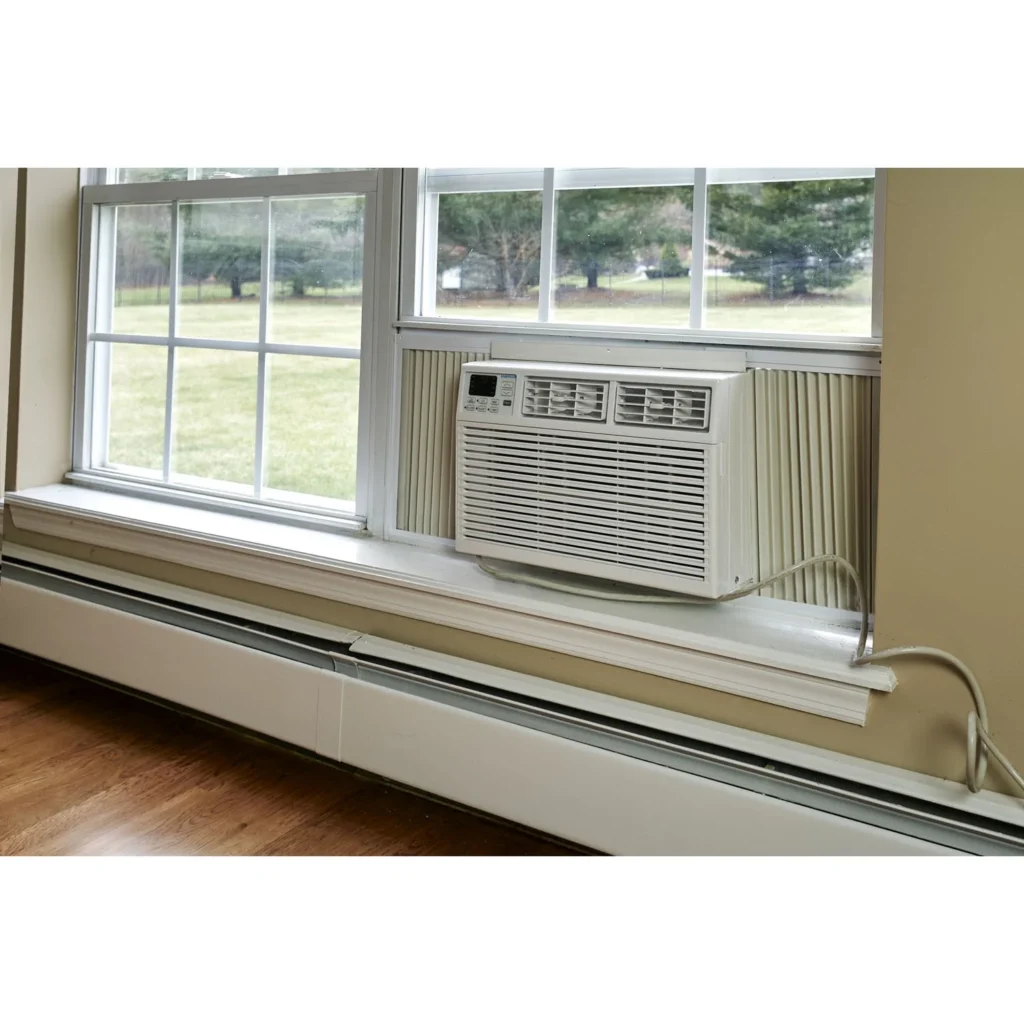
A window AC is only as efficient as the space around it. Small gaps between the unit and the window frame can let hot air seep inside and cool air escape. It’s a subtle problem, but one that has a surprisingly large impact.
Run your hand around the edges of the unit. If you feel warm air coming in, you’ve found an energy leak. These gaps can be sealed with foam strips, weather sealing tape, or even temporary fixes like rolled cloth if needed.
This step often gets ignored because the AC appears to be “working fine.” But efficiency isn’t about whether it works—it’s about how hard it has to work.
Once the gaps are sealed, the difference becomes noticeable. The room cools faster, the unit cycles off more often, and the overall energy use drops.
tip 3: clean or replace the air filter regularly
A clogged filter is one of the biggest enemies of efficiency. Dust and debris restrict airflow, forcing the AC to work harder to pull in air and cool it.
In many homes, filters are forgotten until there’s a noticeable problem—reduced cooling, strange smells, or even water leakage. By that point, the unit has already been working inefficiently for weeks.
A good rule of thumb is to check the filter every two weeks during heavy use seasons. Cleaning it is usually simple: remove, rinse with water, let it dry, and reinstall.
What’s interesting is how immediate the results can be. A clean filter improves airflow almost instantly, which reduces strain on the compressor and lowers energy consumption.
Think of the filter as the lungs of your AC. If they’re clogged, everything else struggles.
tip 4: use curtains, blinds, and shade strategically
Sunlight streaming through windows can raise the temperature of a room significantly, especially during peak afternoon hours. When that heat builds up, your AC has to work overtime to compensate.
Closing curtains or blinds during the hottest parts of the day can make a noticeable difference. Thick curtains or reflective shades are even more effective.
If your window AC is installed in a room that gets direct sunlight, consider adding external shading if possible. Even a simple awning or shade can reduce heat entering through the glass.
This tip works because it reduces the workload before the AC even starts. Instead of fighting incoming heat, the unit maintains a cooler environment more easily.
It’s a quiet kind of efficiency—less about doing more, and more about preventing unnecessary work.
tip 5: avoid heat buildup from appliances and habits
Sometimes the biggest sources of heat aren’t outside—they’re inside your home. Cooking, using ovens, running multiple electronics, or even leaving lights on can all add to the indoor temperature.
Try shifting heat-generating activities to cooler parts of the day. For example, cooking early in the morning or later in the evening can reduce the load on your AC during peak heat hours.
Switching to energy-efficient lighting, like LED bulbs, also helps. Traditional bulbs generate more heat than people realize.
Even small habits, like turning off unused devices, contribute to a cooler environment. It’s not about eliminating comfort—it’s about being mindful of where heat comes from.
tip 6: maintain your AC unit beyond just the filter
While cleaning the filter is essential, it’s only one part of maintenance. The coils, fins, and external parts of the unit also need attention over time.
Dust buildup on the condenser coils (the outdoor part) reduces heat transfer efficiency. If heat can’t escape properly, the system struggles to cool effectively.
At least once a season, inspect the outside portion of the unit. Clear away dirt, leaves, or debris that may have accumulated. Make sure nothing is blocking airflow.
If possible, a more thorough cleaning or professional servicing once a year can keep the unit in top condition. It may seem like an extra expense, but it often pays off through improved efficiency and a longer lifespan.
There’s a certain satisfaction in knowing your AC isn’t just running—it’s running well.
bringing it all together
Energy saving with a window AC isn’t about a single breakthrough trick. It’s the result of several small, consistent actions working together. Setting a reasonable temperature, sealing gaps, maintaining airflow, managing sunlight, reducing internal heat, and keeping the unit clean—each step contributes to the bigger picture.
What makes these tips powerful is their practicality. They don’t require advanced tools or technical expertise. They’re habits you can build into your routine without much disruption.
Over time, these changes do more than reduce your electricity bill. They create a more comfortable living environment, reduce strain on your AC, and extend its lifespan.
And perhaps most importantly, they give you a sense of control. Instead of feeling at the mercy of rising energy costs, you’re actively managing how your home uses power.
frequently asked questions
- does setting the AC to a lower temperature cool the room faster?
No, it doesn’t. A window AC cools at a constant rate. Setting a lower temperature only makes it run longer, which increases energy consumption without speeding up the cooling process. - how often should I clean my window AC filter?
During peak usage seasons, it’s best to check and clean the filter every two weeks. If your environment is dusty, you may need to clean it more frequently. - can sealing small gaps really make a difference in energy usage?
Yes, even small gaps can allow warm air to enter and cool air to escape. Sealing them improves efficiency and helps the AC cool the room faster. - is it better to leave the AC on all day or turn it off when not needed?
It depends on your routine, but generally, turning it off when the room is unoccupied saves energy. Using a timer or thermostat can help manage this efficiently. - do curtains and blinds actually reduce AC energy usage?
Yes, they can significantly reduce heat entering the room, especially during sunny hours. This lowers the workload on your AC and improves overall efficiency. - how do I know if my AC needs professional servicing?
If you notice reduced cooling, unusual noises, higher energy bills, or frequent cycling, it may be time for professional maintenance. Regular servicing helps keep the unit efficient and reliable.
In the end, energy saving isn’t about sacrifice—it’s about smarter use. With a few thoughtful adjustments, your window AC can provide the comfort you need without the financial stress you don’t.