

7 Smart Window AC Installation Tips for Perfect Cooling
There is something oddly satisfying about installing a window air conditioner yourself. Maybe it’s the quiet hum that follows, or the first wave of cool air on a hot afternoon. Or maybe it’s the feeling that you’ve done something practical, something that directly improves your everyday comfort. But anyone who has ever struggled with a rattling unit, uneven cooling, or rising electricity bills knows that installation is not just about placing a machine in a window and plugging it in.
A well-installed window AC can turn a room into a refuge. A poorly installed one can become a constant annoyance. Over time, I’ve learned that the difference comes down to a handful of smart, often overlooked decisions. These are not complicated technical secrets. They are simple, thoughtful steps that make all the difference.
Let’s walk through seven smart window AC installation tips that lead to perfect cooling, along with the small details that often go unnoticed but matter the most.
Understanding the space before anything else
Before even opening the box, the most important step begins with observation. Every room behaves differently. Some trap heat, others allow airflow, and some are exposed to direct sunlight for most of the day.
Take a moment to notice the room. Does sunlight hit the window directly in the afternoon? Are there curtains or blinds? Is the room used constantly, or only at certain times?
These small questions guide everything that follows. Installing an AC in a sun-facing window without shading will force the unit to work harder. Placing it in a room with poor insulation can result in cool air escaping faster than it’s produced.
Instead of rushing into installation, pause and understand the environment. It saves effort later.
Choosing the right window is more strategic than it seems
Not all windows are equal when it comes to AC installation. The instinct is often to pick the most convenient one, but convenience doesn’t always lead to efficiency.
A good window for AC installation should offer stability, minimal direct sunlight, and proper airflow. Ideally, it should not face intense afternoon sun. If that’s unavoidable, simple shading solutions like curtains or external covers can help reduce heat load.
Another overlooked factor is height. Installing the AC slightly higher allows cool air to circulate downward naturally. Since cool air is denser, it spreads better from a higher position.
And then there’s the issue of sealing. Windows with gaps or poor framing can lead to air leakage. Even a small gap can reduce cooling efficiency significantly.
So, instead of choosing the easiest window, choose the smartest one.
Getting the tilt just right
This is one of those details that people often ignore, but it can quietly affect performance.
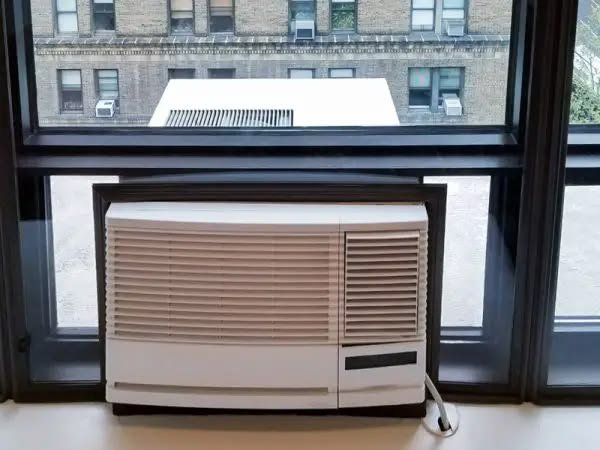
A window AC should never be perfectly flat. It needs a slight tilt toward the outside. This allows condensation to drain properly instead of collecting inside the unit.
Without this tilt, water can accumulate, leading to unpleasant smells, reduced efficiency, and even internal damage over time.
The tilt doesn’t have to be dramatic. Just a slight downward angle toward the outside is enough. It’s a small adjustment, but one that prevents long-term issues.
Many people only realize this after noticing water dripping inside the room or strange noises from the unit. Getting it right from the beginning avoids that frustration.
Sealing gaps is where efficiency is won or lost
Once the AC is placed in the window, the instinct is to move on. But this is exactly where attention to detail matters the most.
Any gap around the unit is an open invitation for warm air to enter and cool air to escape. Over time, this leads to higher electricity consumption and less effective cooling.
Foam strips, weather seals, or even simple insulating materials can be used to close these gaps. It doesn’t have to be expensive or complicated. What matters is that the seal is tight and consistent.
There’s also a psychological benefit here. A properly sealed unit feels solid, stable, and complete. There’s no rattling, no drafts, and no sense of something being unfinished.
It’s one of those steps that doesn’t take long but pays off every single day.
Supporting the unit properly
Window AC units are heavier than they appear. Relying solely on the window frame to support that weight is not always a good idea.
A proper support bracket or external support can make a huge difference. It reduces stress on the window frame and keeps the unit stable, especially during strong winds or vibrations.
Without proper support, the unit may shift slightly over time. Even a small shift can affect alignment, sealing, and drainage.
There’s also a safety aspect to consider. A poorly supported AC unit can become a risk, especially in upper-floor installations.
Adding support may seem like an extra step, but it brings peace of mind. You don’t have to worry about the unit loosening or tilting unexpectedly.
Paying attention to electrical safety
This is one area where shortcuts are never worth it.
A window AC should always be connected to a proper power outlet that can handle its load. Using extension cords or overloaded sockets can lead to overheating and potential hazards.
If possible, use a dedicated outlet. It ensures stable power supply and reduces the risk of fluctuations.
Voltage stabilizers can also be useful in areas where power supply is inconsistent. They protect the unit from sudden spikes or drops.
It’s easy to overlook electrical safety because it’s not visible. But it’s one of the most critical parts of installation.
Taking a few extra minutes to ensure proper wiring can prevent serious issues later.
Testing airflow and positioning after installation
Once the unit is installed, the natural instinct is to turn it on and enjoy the cool air. But there’s one more step that makes a noticeable difference.
Observe how the air flows in the room. Is it reaching all corners? Are there areas that remain warm?
Sometimes, a slight adjustment in direction or angle can improve airflow significantly. Even rearranging furniture can help air circulate better.
Avoid placing large objects directly in front of the AC. They block airflow and create uneven cooling.
Fans can also assist in distributing cool air more effectively, especially in larger rooms.
This final step is about fine-tuning. The installation may be complete, but optimizing airflow ensures that the cooling feels consistent and comfortable.
The small habits that make a big difference
Installation is just the beginning. Maintaining a few simple habits can keep the AC performing at its best.
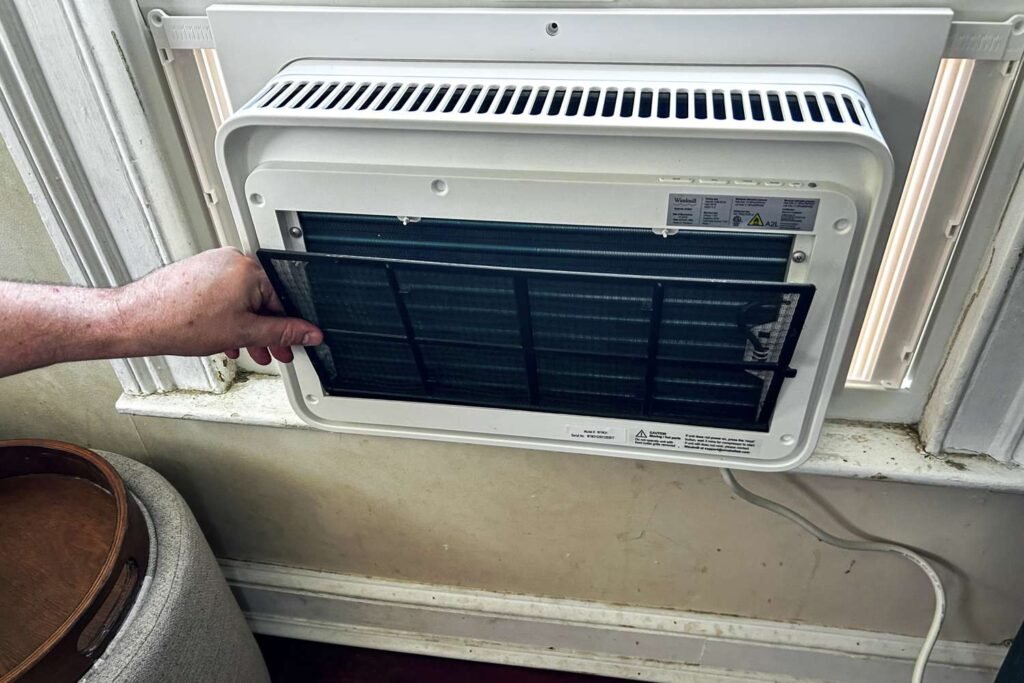
Cleaning the filter regularly is one of the easiest and most effective steps. A clogged filter restricts airflow and reduces efficiency.
Keeping the area around the unit clean also helps. Dust and debris can affect performance over time.
Checking for any loosened seals or supports every few months ensures that everything remains in place.
These habits don’t require much effort, but they extend the life of the unit and maintain its efficiency.
A personal reflection on getting it right
There’s a certain satisfaction in sitting in a perfectly cooled room, knowing that the comfort didn’t come by chance. It came from a series of thoughtful decisions, each one small but meaningful.
The first time I installed a window AC, I rushed through it. It worked, but it wasn’t perfect. There were small annoyances—noise, uneven cooling, a slight draft.
Over time, I learned to slow down and pay attention to the details. The difference was noticeable.
What surprised me most was how these small adjustments changed the experience entirely. The room felt calmer, the cooling felt smoother, and the unit itself seemed to work effortlessly.
It’s not about perfection. It’s about care.
Why these tips matter more than they seem
At first glance, these tips may seem simple. And they are. But simplicity doesn’t mean insignificance.
Each tip addresses a common issue that people face with window AC units. Poor cooling, high electricity bills, noise, water leakage—these problems often trace back to installation choices.
By approaching installation with a bit more thought and attention, these issues can be avoided almost entirely.
It’s not about technical expertise. It’s about awareness.
And once you experience the difference, it becomes second nature.
Frequently Asked Questions
- How high should a window AC be installed for best cooling?
Ideally, a window AC should be installed at a height of about 5 to 6 feet from the floor. This allows cool air to circulate downward naturally, covering the room more effectively.
- Is it necessary to tilt the AC unit?
Yes, a slight tilt toward the outside is important. It helps drain condensation properly and prevents water from collecting inside the unit.
- Can I install a window AC without a support bracket?
While it is possible, it is not recommended. A support bracket adds stability, reduces stress on the window frame, and improves safety.
- Why is my AC not cooling evenly after installation?
Uneven cooling can be caused by blocked airflow, poor positioning, or gaps around the unit. Checking these factors and making small adjustments can improve performance.
- Do I need a voltage stabilizer for my window AC?
If your area experiences frequent voltage fluctuations, a stabilizer is a good investment. It protects the unit and ensures consistent performance.
- How often should I clean the AC filter?
It’s best to clean the filter every two to four weeks, depending on usage. Regular cleaning improves airflow and keeps the unit efficient.
In the end, installing a window AC is not just a technical task. It’s a process of creating comfort in your own space. When done thoughtfully, it transforms not just the temperature of a room, but the way it feels to be in it.