
5 Quick Window AC Energy Saving Fixes That Actually Help
There’s a particular kind of frustration that comes with opening your electricity bill in the middle of summer. You already know why it’s high. The window AC has been running for hours, maybe all day, doing its best to keep your room livable. And yet, despite all that energy, sometimes the cooling isn’t even as satisfying as it should be.
The truth is, most people don’t have a broken air conditioner—they have an inefficient one. And inefficiency rarely comes from one big issue. It usually creeps in through small, overlooked details: a dusty filter, a loose seal, poor placement, or habits that quietly waste power.
The good news? You don’t need to replace your AC or invest in expensive upgrades to see a real difference. A handful of quick, practical fixes can cut down energy use, improve cooling, and extend the life of your unit. These are not theoretical tips—they are grounded in how window ACs actually work in real homes, under real conditions.
Let’s walk through five fixes that genuinely make a difference.
—
Fix 1: Clean or replace the air filter before doing anything else
If there’s one thing that consistently sabotages window AC performance, it’s a dirty air filter. It’s also the easiest thing to fix, yet the most commonly ignored.
Think of the filter as the lungs of your AC. When it’s clean, air flows smoothly, cooling happens efficiently, and the system doesn’t have to struggle. When it’s clogged with dust, pet hair, and debris, everything slows down. Airflow drops, the compressor works harder, and energy consumption quietly climbs.
What’s interesting is how quickly this problem builds up. In a dusty environment or a home near a busy road, a filter can go from clean to restrictive in just a few weeks. You might not notice the gradual change, but your electricity meter definitely does.
The process of cleaning is straightforward. Slide out the front panel, remove the filter, and either rinse it with water or replace it if it’s too worn out. Let it dry completely before putting it back. That’s it.
What many people don’t realize is the ripple effect. A clean filter doesn’t just save energy—it improves air quality, reduces strain on internal components, and even makes the room cool faster. It’s one of those rare fixes where the effort is minimal but the payoff is immediate.
If you do nothing else from this article, do this one thing.
—
Fix 2: Seal the gaps around the AC unit properly
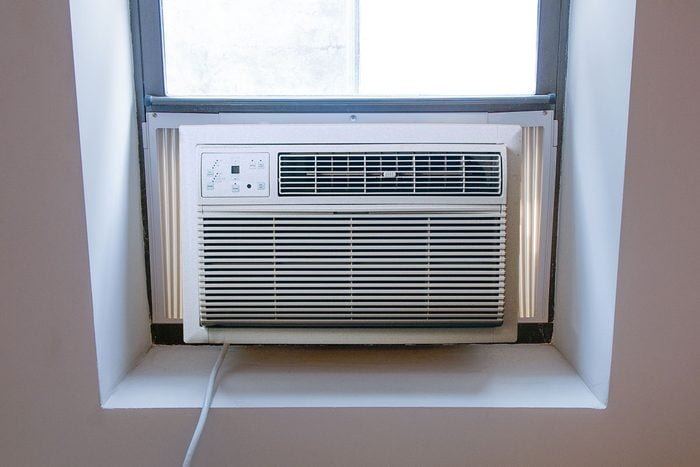
Window ACs are notorious for letting outside air sneak in. It happens through tiny gaps around the frame, poorly fitted panels, or even small cracks you might not notice unless you look closely.
This is more than just a comfort issue—it’s an energy leak.
When hot air from outside enters the room, your AC has to work harder to compensate. It keeps running longer cycles, trying to maintain the set temperature. Meanwhile, cool air is also escaping through the same gaps, creating a constant tug-of-war that your AC can never fully win.
The fix is simple but often overlooked: sealing.
Foam strips, weather sealing tape, or even basic insulating panels can close these gaps effectively. Some people use cardboard as a temporary fix, but more durable materials will give better results over time.
Take a few minutes to inspect the sides and top of the unit. Run your hand along the edges—you can often feel warm air coming in. That’s your cue.
What’s surprising is how noticeable the improvement can be. Once sealed, the room holds cool air much better. The AC cycles off more frequently instead of running endlessly, and the overall cooling becomes more consistent.
It’s one of those changes that feels almost too simple, yet it quietly solves a major inefficiency.
—
Fix 3: Adjust thermostat habits instead of setting extremes
There’s a common instinct during hot weather: set the AC to the lowest possible temperature and hope the room cools faster.
It doesn’t work that way.
A window AC doesn’t cool faster at lower settings. It simply runs longer until it reaches the target temperature. Setting it to an extreme like 16°C doesn’t speed things up—it just guarantees longer operation, more energy use, and often an overly cold room that you’ll later adjust anyway.
A more efficient approach is to find a balanced setting, typically around 24–26°C, depending on your comfort. Pair that with a fan if needed, and the room will feel cooler without forcing the AC to overwork.
Another small but powerful habit is using the timer or sleep mode. Many people leave the AC running all night at full intensity, even when the room has already cooled down. By setting a timer, you reduce unnecessary runtime without sacrificing comfort.
There’s also a psychological shift here. Instead of thinking of the AC as something that needs to blast cold air constantly, think of it as maintaining a comfortable environment. Once the room is cool, the goal is to keep it that way with minimal effort.
This change in mindset alone can reduce energy consumption significantly over time.
—
Fix 4: Improve airflow around and inside the room
Cooling isn’t just about the AC—it’s about how air moves within the space.
You could have a perfectly functioning unit, but if airflow is blocked or uneven, the room won’t cool efficiently. The AC ends up working harder to compensate for poor circulation.
Start with the area around the unit. Make sure there’s nothing blocking the vents—no curtains, furniture, or clutter. Even partial obstruction can disrupt airflow and reduce cooling efficiency.
Then look at the room itself. Is the cool air reaching all areas, or does it stay concentrated near the AC? If it’s uneven, a simple fan can make a big difference. It helps distribute cool air more evenly, reducing hot spots and allowing the AC to cycle off sooner.
Another overlooked factor is the outdoor side of the unit. If the back of the AC is blocked or surrounded by debris, heat can’t dissipate properly. This forces the system to work harder, increasing energy use.
Keeping that area clear ensures the AC can release heat efficiently, which is a critical part of the cooling process.
Airflow might seem like a minor detail, but it’s actually central to how well your AC performs. Improving it often leads to immediate and noticeable results.
—
Fix 5: Reduce heat entering the room during the day
This fix doesn’t involve the AC directly, but it has a huge impact on how much work the AC has to do.
Every bit of heat that enters your room becomes something the AC has to remove. Sunlight through windows, heat from appliances, even warm air from outside—all of it adds to the cooling load.
The simplest solution is to block or reduce that heat.
Curtains, blinds, or reflective window films can significantly cut down on sunlight entering the room. Even closing the curtains during peak daylight hours can make a noticeable difference.
If your room gets direct sunlight, this step becomes even more important. Without it, your AC is essentially fighting against a constant stream of incoming heat.
You can also be mindful of heat-generating activities. Using ovens, stoves, or even certain electronics during the hottest parts of the day adds to the burden on your AC. Shifting these activities to cooler times can help reduce overall energy use.
This fix is about working with your environment instead of against it. By lowering the amount of heat entering the room, you make it easier for your AC to do its job efficiently.
—
Bringing it all together
What makes these five fixes effective is not just their simplicity, but how they address different parts of the same system.
Cleaning the filter improves airflow inside the unit. Sealing gaps prevents energy loss. Adjusting thermostat habits reduces unnecessary workload. Improving airflow ensures even cooling. Reducing heat entry lowers the overall demand.
Each fix on its own helps. Together, they create a noticeable shift in how your AC performs.
You might find that your room cools faster, stays comfortable longer, and requires less runtime to maintain that comfort. Over time, this translates into lower electricity bills and less wear on your AC.
And perhaps most importantly, these changes don’t require technical expertise or major investment. They’re practical, accessible, and grounded in everyday use.
—
FAQs
- How often should I clean my window AC filter?
Ideally, you should check it every two weeks during heavy use and clean it at least once a month. If your environment is dusty or you have pets, you may need to clean it more frequently.
- Does setting the AC to a lower temperature cool the room faster?
No, it doesn’t. The AC cools at a constant rate. Lowering the temperature only makes it run longer, which increases energy consumption without speeding up cooling.
- Can sealing small gaps really make a difference?
Yes, even small gaps can let in warm air and let cool air escape. Sealing them improves efficiency and helps maintain a stable indoor temperature.
- Is it better to leave the AC on all day or turn it off when not needed?
It’s generally better to turn it off when you don’t need it or use a timer. Running it continuously wastes energy, especially when the room is already cool.
- Do fans help reduce AC energy usage?
Yes, fans improve air circulation, making the room feel cooler. This allows you to set the AC at a slightly higher temperature while maintaining comfort.
- What’s the ideal temperature setting for saving energy?
A setting between 24–26°C is usually the most efficient balance between comfort and energy savings, though personal preference and humidity levels can influence this.
—
At the end of the day, saving energy with a window AC isn’t about doing one big thing—it’s about doing a few small things consistently. These fixes don’t demand much, but they reward you every time you switch on the AC and feel the difference.