12 Window AC Troubleshooting Tips to Save Repair Costs
Window air conditioners are one of the most commonly used cooling solutions in many homes, especially in hot climates where summers can become unbearable. While they are generally reliable, they are not immune to issues. The good news is that many common problems can be fixed without calling a technician, which can save both time and repair costs.
Understanding how your window AC works and knowing what to check when something goes wrong can make a big difference. Most issues are not mechanical failures but simple maintenance or setup problems. This guide walks you through 12 practical troubleshooting tips that can help you identify and fix common issues before they turn into expensive repairs.
- Check the power supply first before assuming a breakdown
One of the most overlooked causes of AC failure is the power supply. Before panicking, always check whether the unit is properly plugged in. Sometimes the plug may loosen slightly due to vibration or movement.
Also inspect the circuit breaker. In many homes, a sudden voltage fluctuation can trip the breaker, cutting off power to the AC. If the breaker has tripped, reset it and try turning the AC on again.
Another thing to consider is the wall socket. Try plugging another appliance into the same socket to confirm if electricity is flowing properly. In many cases, the issue is not the AC but the power source.
- Inspect the remote control or thermostat settings
Sometimes the AC is working perfectly, but incorrect settings make it seem faulty. If the temperature is set too high or the mode is incorrectly selected, the cooling effect may not be noticeable.
Check whether the unit is set to “cool” mode instead of fan or dry mode. Also ensure the temperature is set lower than the room temperature.
If you are using a remote control, check the batteries. Weak batteries can send incomplete signals, making the AC unresponsive or inconsistent.
- Clean or replace the air filter regularly
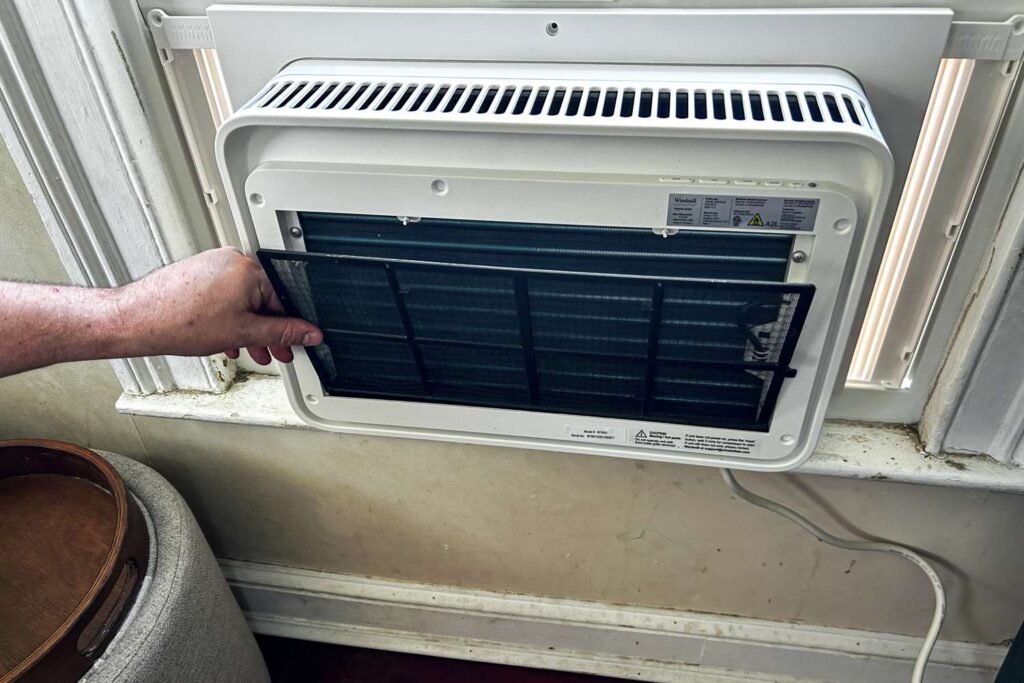
A dirty air filter is one of the most common reasons for poor cooling performance. When dust accumulates on the filter, it blocks airflow and forces the AC to work harder, reducing efficiency.
Remove the filter carefully and wash it with water. Let it dry completely before reinstalling. If the filter is too damaged or clogged beyond cleaning, replace it.
A clean filter not only improves cooling but also reduces electricity consumption and prevents strain on internal components.
- Check for blocked airflow around the unit
Your window AC needs proper ventilation to function efficiently. If curtains, furniture, or objects are blocking the airflow, the cooling will be affected.
Make sure both the indoor and outdoor sides of the unit have enough clearance. The hot air expelled from the back should be able to escape freely.
Poor airflow often causes the AC to overheat, leading to automatic shutdowns or weak cooling performance.
- Inspect the condenser coils for dust buildup
Over time, the condenser coils can collect dust and dirt, especially if the AC is used frequently or installed in a dusty environment.
Dirty coils reduce the system’s ability to release heat, making the AC less efficient. In some cases, it can even cause the compressor to overwork and fail.
Carefully clean the coils using a soft brush or vacuum cleaner. For deeper cleaning, a technician may be required, but regular surface cleaning can go a long way in preventing problems.
- Look for water leakage and drainage issues
If you notice water dripping inside the room, it could be due to a clogged drain pipe or improper installation angle.
Window AC units are designed to drain water outside. When the drainage system gets blocked, water starts accumulating and leaks inside.
Check the drain hole and clear any dust or debris. Also ensure that the unit is slightly tilted outward so that water flows in the correct direction.
- Listen for unusual noises during operation
Strange noises such as rattling, buzzing, or grinding should never be ignored. These sounds often indicate loose parts, fan issues, or debris stuck inside the unit.
Turn off the AC and inspect the front grill and fan area. Tighten any loose screws if visible.
If the noise persists, it could be a motor or compressor issue, which may require professional repair.
- Check refrigerant levels if cooling is weak
Low refrigerant is a serious issue that affects cooling performance. If the AC is running but not cooling effectively even after cleaning filters and coils, refrigerant might be low.
This is not something you can fix on your own, as refrigerant handling requires technical expertise and proper equipment.
Call a certified technician to inspect for leaks and refill the refrigerant if necessary.
- Reset the AC unit to clear electronic glitches
Modern window AC units often have electronic control systems that can occasionally freeze or malfunction.
Switch off the AC, unplug it from the power source, wait for about 5–10 minutes, and then restart it.
This simple reset can clear minor software glitches and restore normal operation.
- Ensure the installation is stable and level
Improper installation is a hidden cause of many AC problems. If the unit is tilted incorrectly or loosely fitted, it can lead to vibration, water leakage, and inefficient cooling.
Check whether the AC is securely mounted in the window frame. It should be slightly tilted outward to allow proper drainage.
If the installation looks unstable, reinforcing it can prevent future issues and improve performance.
- Monitor voltage fluctuations in your area
Voltage instability can seriously affect your AC’s performance and lifespan. Frequent low or high voltage can damage the compressor and other electrical components.
Using a voltage stabilizer can protect your unit from electrical damage.
If your area has frequent power fluctuations, investing in a stabilizer is much cheaper than repairing or replacing a damaged compressor.
- Perform seasonal maintenance before peak summer use
Many AC problems occur because the unit has been unused for months and suddenly put under heavy load.
Before summer begins, run a full check: clean filters, inspect coils, test cooling, and ensure proper airflow.
This preventive maintenance helps identify small issues before they become expensive repairs during peak usage when technicians are also harder to book.
Conclusion
Window air conditioners are durable and efficient, but they require regular attention to perform at their best. Most common problems can be solved with simple troubleshooting steps like cleaning filters, checking power supply, and ensuring proper airflow.
By following these 12 practical tips, you can extend the life of your AC, improve cooling performance, and significantly reduce repair costs. A little maintenance goes a long way in avoiding major breakdowns.
FAQs
- Why is my window AC running but not cooling the room?
This usually happens due to dirty filters, low refrigerant, or blocked airflow. Start by cleaning the filter and checking settings before calling a technician. - How often should I clean my window AC filter?
Ideally, every 2 to 3 weeks during heavy usage seasons. In dusty environments, more frequent cleaning may be needed. - What causes water leakage in a window AC?
Clogged drain pipes, improper installation angle, or excess humidity can cause leakage inside the room. - Can I fix low refrigerant issues myself?
No, refrigerant handling requires professional tools and expertise. It is best to call a certified technician. - Is it safe to run a window AC on a stabilizer?
Yes, using a stabilizer is recommended in areas with voltage fluctuations to protect the compressor and electrical components. - How long does a window AC usually last?
With proper maintenance, a window AC can last 8 to 12 years depending on usage and environmental conditions.