11 Smart Window AC Setup Hacks That Save Energy Fast
There’s something quietly satisfying about walking into a room that feels just right—not too cold, not stuffy, just comfortable enough that you forget the heat outside even exists. A window air conditioner can do that, but only when it’s set up with care. Most people install it, switch it on, and assume the job is done. In reality, how you set it up determines not only how well it cools but also how much electricity it quietly consumes in the background.
If you’ve ever wondered why your AC runs all day yet struggles to cool the room, or why your electricity bill seems to climb every summer, chances are the problem isn’t the unit—it’s the setup. Small adjustments can lead to big differences. The kind of differences you feel in your comfort and notice in your wallet.
Let’s walk through practical, experience-driven hacks that don’t require technical expertise but deliver surprisingly powerful results.
- Choose the right window, not just any window
The first instinct is often to pick the nearest or most convenient window. That works, but it’s rarely the smartest choice.
A window AC performs best when it isn’t fighting direct sunlight for most of the day. If your unit is exposed to harsh afternoon sun, it will constantly work harder to compensate for the heat entering the room. A shaded window—especially one facing north or east—gives your AC a natural advantage.
Also, consider airflow outside. If the back of the unit is blocked by a wall, balcony clutter, or plants, the heat it releases has nowhere to go. That trapped heat loops back, reducing efficiency.
Think of your AC like a person trying to cool off. If they’re standing in the shade with a breeze, they relax. If they’re in direct sun with no airflow, they struggle. Your AC behaves the same way.
- Seal every gap like it matters (because it does)
A tiny gap around your AC might not seem important. It is.
Warm air sneaks in through those gaps, and cool air leaks out. It’s a constant exchange that forces your AC to keep running longer than necessary. Over time, this adds up to noticeable energy waste.
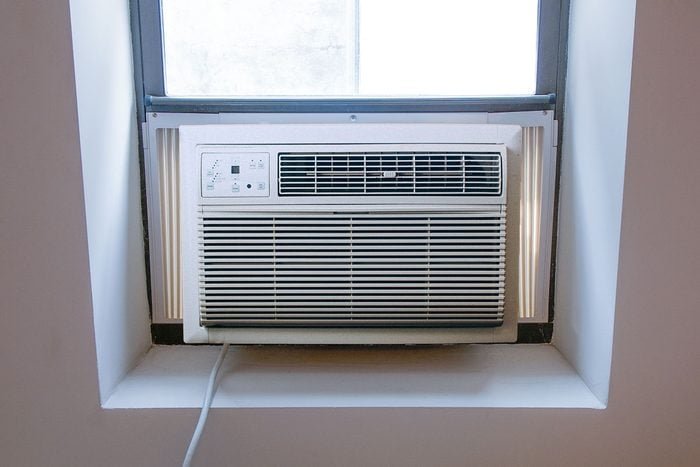
Use foam insulation strips, weather sealing tape, or even a custom-cut panel to close off every opening. Pay special attention to the top and sides—these are often overlooked.
A simple test: stand near the unit when it’s running and feel around the edges. If you notice warm air, that’s energy escaping.
Sealing gaps is one of the cheapest fixes with one of the biggest payoffs.
- Tilt the unit slightly outward
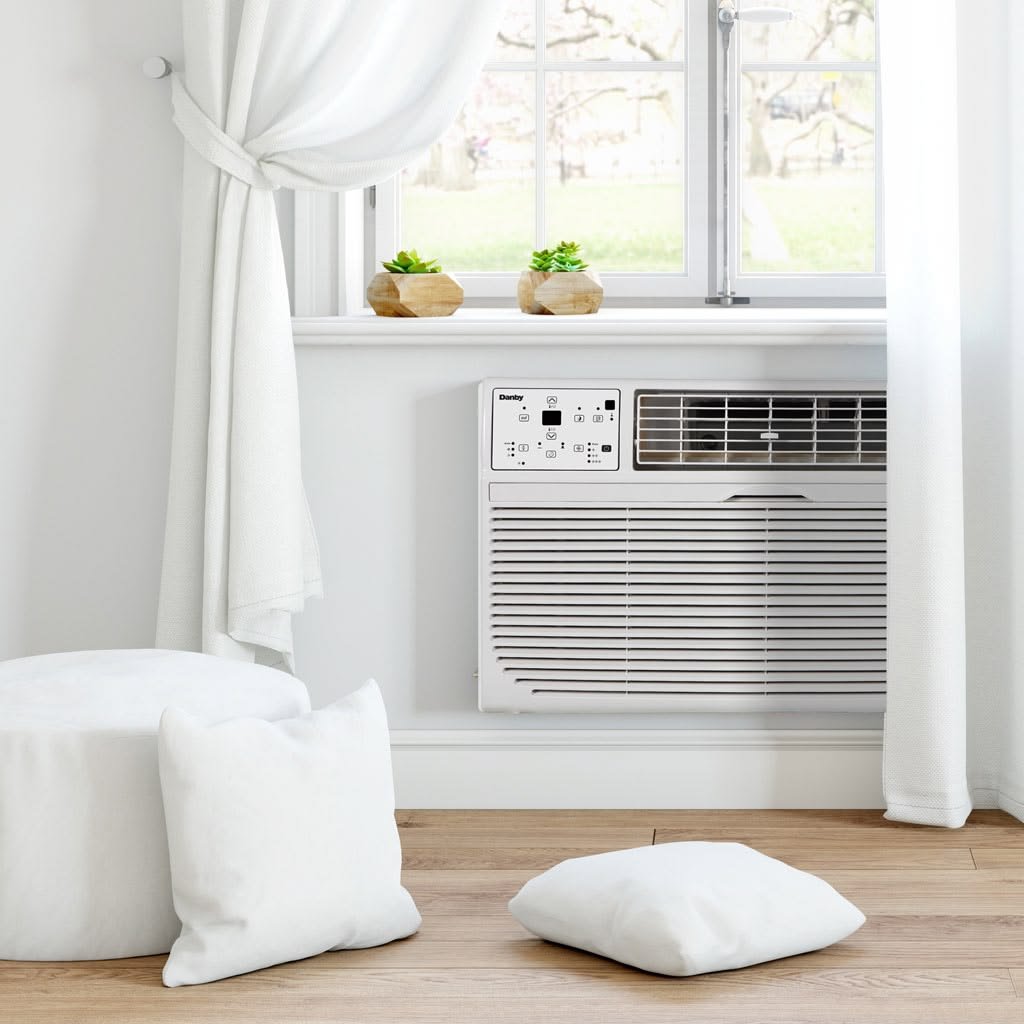
It sounds like a small detail, but the angle of your AC matters more than most people realize.
A properly installed window AC should tilt slightly outward. This helps condensation drain outside instead of pooling inside the unit. When water accumulates, it can reduce efficiency and even lead to internal damage over time.
You don’t need a dramatic tilt—just a subtle angle is enough. Too much tilt, and you risk stability issues. Too little, and water doesn’t drain properly.
It’s one of those setup tweaks that you only notice when it’s wrong.
- Don’t oversize your AC
Bigger isn’t always better. In fact, an oversized AC can waste more energy than a correctly sized one.
A unit that’s too powerful cools the room quickly and then shuts off. That might sound efficient, but it doesn’t run long enough to remove humidity properly. The result is a room that feels cold but damp.
On the other hand, a properly sized unit runs in balanced cycles—cooling and dehumidifying at the same time. This creates a more comfortable environment while using energy more efficiently.
If your AC frequently turns on and off in short bursts, it might be too large for your space.
- Use a reflective barrier outside the window
Here’s a clever trick that many people overlook: block heat before it even reaches your AC.
Installing a reflective panel, shade, or even a simple awning outside the window can dramatically reduce the heat load. Less heat entering means less work for your AC.
Even a light-colored cloth or reflective sheet placed strategically can make a difference. It’s not about blocking airflow—it’s about reducing direct heat exposure.
You’re essentially giving your AC a head start.
- Clean the filter more often than you think
A dirty filter is one of the most common—and most ignored—reasons for poor performance.
When dust builds up, airflow becomes restricted. Your AC has to work harder to pull in air, cool it, and push it back out. That extra effort translates directly into higher energy consumption.
Cleaning the filter is simple. In most units, it slides out easily and can be rinsed with water. Let it dry completely before putting it back.
If you live in a dusty area or use your AC daily, aim to clean the filter every two weeks. It’s a small habit with a big impact.
- Position furniture with airflow in mind
You might not associate furniture placement with energy savings, but it plays a role.
If your sofa, bed, or curtains block the airflow from the AC, the cool air doesn’t circulate properly. This creates uneven cooling, causing the AC to run longer to reach the desired temperature.
Make sure there’s a clear path for air to travel across the room. Think of airflow like water—it needs space to move freely.
Sometimes, shifting a chair a few inches can make a noticeable difference.
- Use curtains strategically, not just decoratively
Curtains aren’t just for privacy—they’re part of your cooling strategy.
During the hottest part of the day, close curtains or blinds to block sunlight. This reduces the amount of heat entering the room, allowing your AC to maintain the temperature more easily.
At night or during cooler hours, you can open them to let in natural air.
Blackout curtains are especially effective in rooms that receive strong sunlight. They act as a barrier, keeping heat out and cool air in.
It’s a passive method that works quietly in the background.
- Set a realistic temperature
It’s tempting to set the AC to the lowest possible temperature and expect rapid cooling. In reality, this approach wastes energy without delivering faster results.
Most experts recommend setting your AC between 24–26°C for a balance of comfort and efficiency. Each degree lower can increase energy consumption significantly.
Instead of chasing extreme cold, aim for steady comfort. Your body adjusts quickly, and your energy bill will thank you.
Pair this with a ceiling fan if possible—it helps distribute cool air and makes the room feel cooler without lowering the temperature further.
- Turn on eco mode or use a timer
Modern window AC units often come with energy-saving modes or timers, but many people ignore them.
Eco mode adjusts the compressor and fan speed to maintain temperature with minimal energy use. It avoids unnecessary cycling and keeps things efficient.
A timer, on the other hand, ensures the AC doesn’t run when you don’t need it. For example, you can set it to turn off after you fall asleep or before you wake up.
These features are designed to save energy—you just have to use them.
- Keep the outdoor side clean and clear
The part of the AC that sticks outside does more work than you might think. It releases the heat extracted from your room.
If dust, leaves, or debris accumulate on the coils, heat transfer becomes less efficient. The unit struggles, consumes more power, and cools less effectively.
Occasionally check the back of the unit. Gently clean it if needed, and make sure nothing is blocking airflow.
It’s not glamorous, but it matters.
Bringing it all together
Energy efficiency isn’t about one big change—it’s about a series of small, thoughtful decisions. Each of these hacks contributes a piece to the puzzle. Together, they create a system that works smarter, not harder.
You don’t need to replace your AC or invest in expensive upgrades. Often, the difference lies in how you install, maintain, and use what you already have.
The next time your room cools down faster than usual or your electricity bill feels lighter, you’ll know these small adjustments are quietly doing their job.
FAQs
- How often should I clean my window AC filter for best efficiency?
Ideally, every two weeks during heavy use. If your environment is dusty, you may need to clean it even more frequently. - Does setting the AC to a lower temperature cool the room faster?
No. It only makes the AC run longer. The cooling speed remains the same, but energy consumption increases. - Is it okay to run a window AC all day?
Yes, but it’s more efficient to use eco mode or a timer to avoid unnecessary operation when cooling isn’t needed. - Can I install a window AC without sealing gaps?
You can, but it will significantly reduce efficiency. Sealing gaps prevents cool air loss and keeps warm air out. - Why does my AC cool unevenly across the room?
This is often due to blocked airflow or poor air circulation. Rearranging furniture or using a fan can help distribute cool air evenly. - Does sunlight really affect AC performance that much?
Yes. Direct sunlight increases the heat load on your AC, making it work harder and consume more energy. Blocking sunlight can noticeably improve efficiency.