
5 Simple Window AC Maintenance Checks You Must Do
Window air conditioners are often taken for granted until the day they stop cooling properly, start making strange noises, or cause electricity bills to spike unexpectedly. Most of these problems don’t happen overnight. They build up slowly due to neglected maintenance. The good news is that you don’t need to be a technician to keep your window AC running efficiently. A few simple checks done regularly can dramatically extend its life, improve cooling, and save money on repairs.
This guide walks you through five essential maintenance checks that every window AC owner should do. These are practical, easy to follow, and designed for real-life use, especially in hot climates where air conditioners run for long hours.
Understanding why window AC maintenance matters
Before jumping into the checks, it’s important to understand what is happening inside your AC. A window air conditioner works by pulling warm air from the room, cooling it using refrigerant coils, and then pushing the cool air back into your space. Over time, dust, dirt, moisture, and environmental pollutants start affecting its performance.
When filters get clogged, airflow reduces. When coils get dirty, heat exchange becomes inefficient. When drainage is blocked, water starts leaking inside the room. Even a small issue, if ignored, can force the compressor to work harder, increasing electricity consumption and reducing the lifespan of the unit.
Regular maintenance is not about fixing big problems. It is about preventing small ones from turning into expensive repairs.
Check 1: Air filter cleanliness and airflow condition
The air filter is the first line of defense in your window AC. It traps dust, pollen, pet hair, and other airborne particles before they enter the internal components of the unit. In places with heavy dust or frequent AC use, filters can get clogged surprisingly fast.
When the filter is dirty, you may notice weak airflow, uneven cooling, or a musty smell coming from the unit. In some cases, the AC may run continuously without reaching the desired temperature.
To check the filter, turn off the AC and unplug it for safety. Open the front panel and gently slide out the filter. Hold it against light. If you cannot see light passing through easily, it needs cleaning.
Cleaning is simple. Wash it under lukewarm water and gently scrub with a soft brush if needed. Avoid using harsh chemicals. Let it dry completely before reinstalling it.
Doing this every two to three weeks during peak summer can significantly improve cooling performance and reduce energy consumption.
Check 2: Cooling coil condition and frost buildup
The cooling coils inside your AC are responsible for absorbing heat from indoor air. When they become dirty or develop frost buildup, the cooling efficiency drops sharply.
Frost on coils is often a sign of restricted airflow or low refrigerant levels. However, in many cases, it is simply caused by dirty filters or blocked air movement.
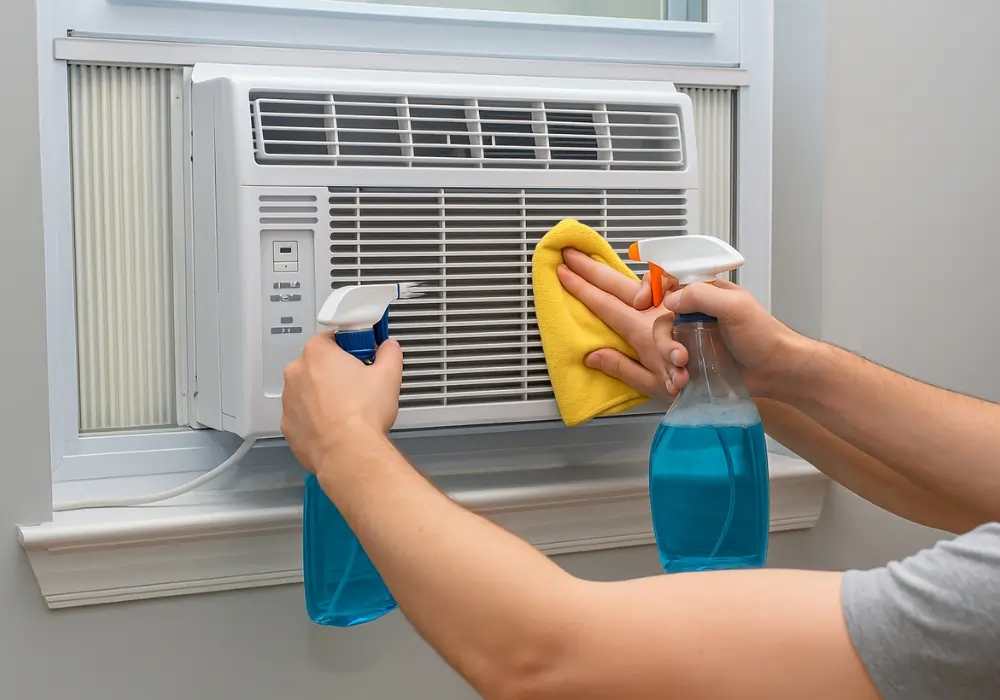
To inspect the coils, remove the front cover of the AC carefully. Look for dust accumulation or ice formation on the metal fins. If you notice dust, you can gently clean it using a soft brush or a coil cleaning spray designed for air conditioners.
If frost is present, turn off the AC and allow it to defrost completely before restarting. Also check whether the airflow is strong enough and the filter is clean.
Ignoring coil maintenance can lead to serious cooling issues over time. Clean coils allow efficient heat transfer, meaning your room cools faster while the AC uses less power.
Check 3: Drainage system and water leakage inspection
A window AC removes humidity from the air as part of the cooling process. This moisture collects and drains out through a pipe or drainage hole. When this pathway gets blocked, water starts accumulating inside the unit and may leak into the room.
One of the most common complaints from AC users is water dripping from the indoor side of the unit. This is usually not a serious fault but a maintenance issue.
To check the drainage system, locate the drain outlet at the back of the AC. Make sure it is not blocked by dust, algae, or debris. You can gently clean it using a thin wire or pipe cleaner. Be careful not to damage the internal parts.
Also check the tilt of your AC installation. Window units are designed with a slight backward tilt so water flows outside properly. If the unit is tilted incorrectly, water may come inside the room instead of draining out.
Regular drainage checks prevent leakage, mold growth, and unpleasant odors.
Check 4: Fan blades and airflow balance
The fan system in a window AC helps circulate air across the coils and into the room. If the fan blades are dirty or unbalanced, airflow becomes weak and noisy.
Over time, dust accumulates on fan blades, making them heavier and uneven. This can cause vibration, rattling sounds, or reduced air throw distance.
To check the fan condition, switch off and unplug the AC. Open the cover and visually inspect the fan. If you see dust buildup, clean it gently using a soft cloth or brush. Avoid bending the blades.
Also listen carefully when the AC is running. Unusual sounds like buzzing, clicking, or grinding may indicate imbalance or loose components.
Good airflow is essential for consistent cooling. Even if the compressor is working perfectly, poor airflow can make the room feel warm and uncomfortable.
Check 5: Electrical connections and power performance
Electrical health is often ignored in AC maintenance, but it plays a crucial role in safety and performance. Loose connections, worn-out wires, or unstable voltage can affect cooling efficiency and even damage internal components.
Start by checking the plug and socket. Ensure they are not loose or discolored due to overheating. If you notice burning marks or a plastic smell, stop using the AC immediately and consult a technician.
Also observe how the AC behaves when it starts. If it frequently trips the breaker or takes too long to start, there may be an electrical issue.
In many homes, voltage fluctuations can affect AC performance. Using a stabilizer can help maintain consistent voltage and protect the compressor from damage.
Regular inspection of electrical components ensures both safety and long-term reliability of the unit.
Extra tips to improve overall AC performance
While the five checks above are essential, a few additional habits can further improve performance.
Keep the area around the AC clean and dust-free. Avoid blocking airflow with curtains or furniture. Clean the exterior body of the AC to prevent dust buildup. During long periods of non-use, cover the unit to protect it from dust and moisture.
Also, avoid setting extremely low temperatures unnecessarily. A moderate setting not only saves energy but also reduces strain on the compressor.
Finally, schedule a professional servicing at least once a year. Even if everything seems fine, internal components benefit from deep cleaning and inspection.
Common mistakes people make with window AC maintenance
Many users unintentionally shorten the life of their AC by making simple mistakes. One common mistake is cleaning only the front filter while ignoring coils and drainage. Another is running the AC continuously without breaks, which increases wear on internal parts.
Some people also delay cleaning until the AC performance drops significantly. By that time, dirt buildup has already affected efficiency.
Another mistake is ignoring unusual noises or leaks, assuming they will fix themselves. In reality, early action can prevent costly repairs.
Understanding these mistakes helps you maintain your AC more effectively and avoid unnecessary expenses.
How often should you perform these checks
Not all maintenance tasks need to be done daily. A simple schedule works best:
Air filter cleaning: every 2–3 weeks during heavy use
Coil inspection: once every 1–2 months
Drainage check: once a month
Fan inspection: every 2–3 months
Electrical check: every 3–6 months
Following this routine ensures smooth performance throughout the cooling season.
Final thoughts
A window air conditioner is a long-term investment, and like any machine, it performs best when cared for properly. Most performance issues do not come from manufacturing faults but from lack of maintenance.
These five simple checks—air filter, cooling coils, drainage system, fan condition, and electrical connections—are enough to keep your AC running efficiently for years. They do not require technical expertise, just a little time and consistency.
When done regularly, these small actions lead to better cooling, lower electricity bills, fewer repairs, and a more comfortable living space during hot weather.
FAQs
- How often should I clean my window AC filter?
During peak summer use, cleaning every 2–3 weeks is ideal. If your environment is dusty, you may need to clean it more frequently. - Why is my window AC not cooling properly even after cleaning?
It could be due to dirty coils, low refrigerant, blocked airflow, or electrical issues. A deeper inspection may be needed. - Can I clean AC coils myself at home?
Yes, light cleaning can be done using a soft brush or coil cleaner spray. However, deep cleaning is better done by a professional. - Why does water leak inside my room from the AC?
This is usually caused by blocked drainage or incorrect installation tilt. Cleaning the drain and checking alignment often fixes it. - Is it safe to run a window AC all day?
Yes, but it increases wear and electricity usage. Regular maintenance becomes even more important with long usage hours. - Do I need professional servicing if I do regular maintenance myself?
Yes, at least once a year. Professional servicing ensures internal parts are thoroughly cleaned and checked for hidden issues.