Last summer, my window AC started blowing air that smelled like a wet gym bag. I’d had the unit for three years and honestly never gave it much thought — turn it on, enjoy the cool air, repeat. But that smell was a wake-up call. I pulled off the front panel and nearly gagged. The filter looked like it had been collecting dust since the Stone Age.
That was the moment I actually learned how to clean a window AC properly. Not just a quick wipe-down, but a real, thorough cleaning that brought the unit back to life. If you’re reading this, you’re probably in a similar spot — or smart enough to want to avoid it. Either way, here’s everything I’ve figured out, the hard way and the easy way.
1. Always Unplug Before You Do Anything — No Exceptions
This sounds obvious, but you’d be surprised how many people skip it. I’ve seen people spray water near a running unit. Just don’t. Unplug the AC completely before touching anything inside. Not just turn it off — fully unplug from the wall. Give it 10–15 minutes before you start, especially if it was running.
2. Clean the Filter Every 2–3 Weeks During Heavy Use
The filter is the first line of defense against dust, pet hair, and pollen. Most people clean it once a season — or never. The right frequency is every 2 to 3 weeks if you’re running it daily during summer.
Here’s my routine: I slide the filter out, take it to the bathroom, rinse it under warm running water from the back side (so you’re pushing the dirt out the same way it came in), and let it air dry completely before putting it back. Takes maybe 5 minutes.
Never put a wet filter back in. I made that mistake once. It created a mold situation inside the unit that took forever to fix.
| Filter Condition | Cleaning Frequency |
|---|---|
| Light use (few hours/day) | Every 3–4 weeks |
| Moderate use (6–8 hrs/day) | Every 2 weeks |
| Heavy use (all day) | Every 10–14 days |
| Pet hair or dusty home | Every week |
3. Use a Fin Comb on the Coil Fins — Most People Have No Idea This Exists
Inside your window AC, there are two sets of aluminum fins — one on the evaporator coil (inside) and one on the condenser coil (outside). These fins get bent over time and when they’re squished together, airflow drops significantly.
A fin comb costs around $8–12 on Amazon and it’s one of those tools that genuinely makes a difference. You run it gently between the fins to straighten them back out. I did this once on my old AC and the airflow noticeably improved within an hour of running.
Be gentle — they bend easily in both directions.
4. Vacuum the Coils Before You Spray Anything
Before using any coil cleaner spray, run a soft brush vacuum attachment along the coils to pull out loose dust and debris. If you spray on top of packed dust, you’re just making mud.
I use a regular handheld vacuum with the brush attachment. Slow strokes, following the direction of the fins. Takes about 3–4 minutes but it makes the spray cleaning much more effective afterward.
5. Use a No-Rinse Coil Cleaner Spray (This Is a Game-Changer)
Evaporator coil cleaner foam — brands like Nu-Calgon or AC-Safe — is something HVAC techs use regularly that most homeowners have never heard of. You spray it on the evaporator coils (the inside ones), it foams up, loosens the grime, and the condensate water drains it away when the unit runs.
No rinsing required. It just works.
Spray it evenly, let it sit for a few minutes, then run the AC. You’ll often see dirty water draining out the back — which is a good sign. I do this once at the start of summer and once in the middle.
One caution: don’t use it on the condenser coils (the outside-facing ones) unless you’re prepared to rinse thoroughly, because there’s no condensate there to drain it.
6. The Drain Pan Gets Gross — Clean It Every Month
Sitting below the evaporator coil is a drain pan. Water collects here as the AC removes humidity from the air. When it doesn’t drain fast enough or at all, you get standing water, algae, and eventually mold.
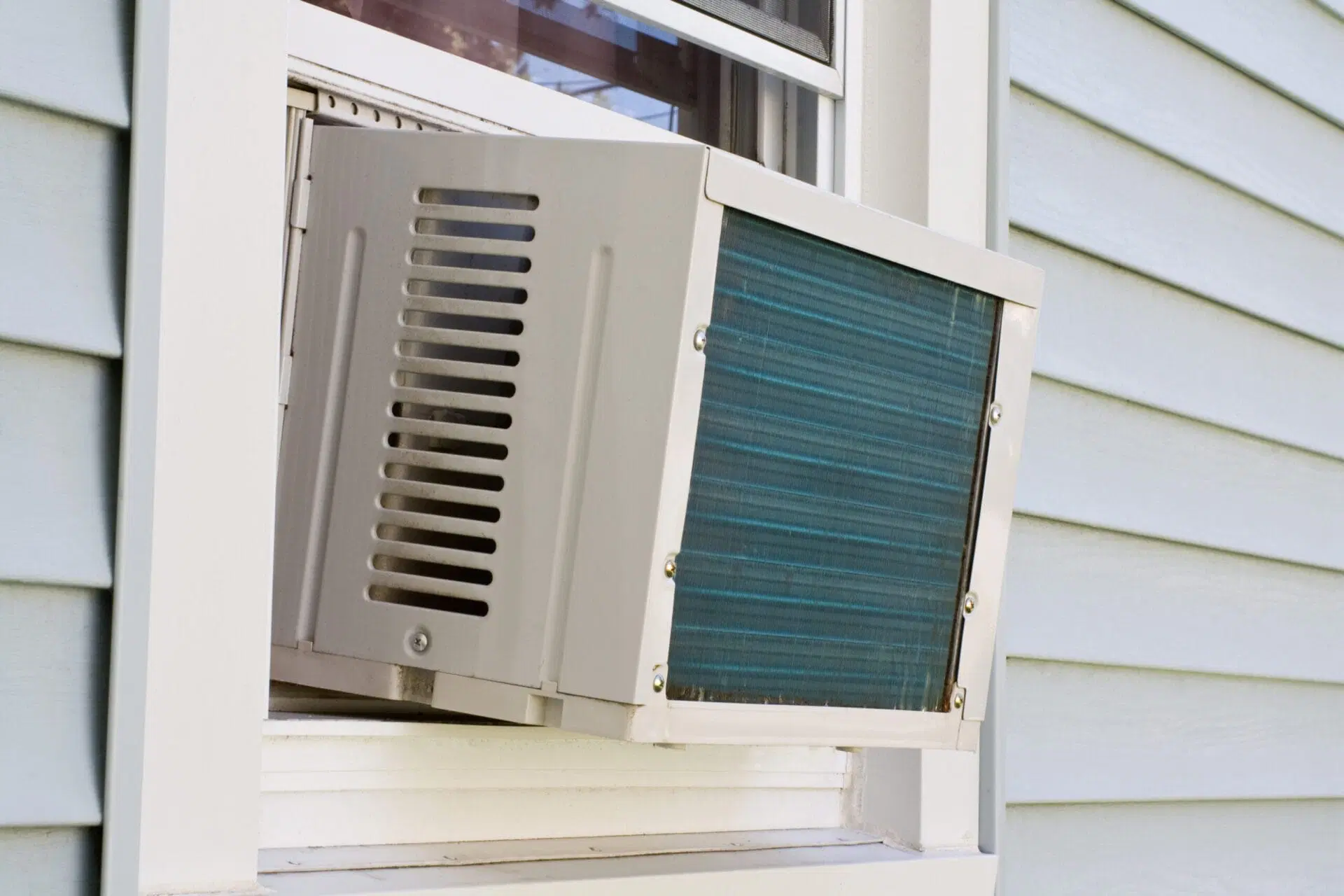
Pull the unit forward slightly (or remove it from the window if you can), tilt it toward the back, and check the drain pan. If there’s any slime or buildup, clean it with a 50/50 mix of white vinegar and water. Use an old toothbrush to scrub corners.
Drop a drain pan tablet (available at hardware stores) in afterward. They dissolve slowly and prevent algae buildup for weeks.
7. Don’t Forget the Blower Wheel — This One Actually Fixed My Smell Problem
Going back to my gym bag smell situation — the culprit wasn’t the filter. It was the blower wheel (also called the squirrel cage fan). It had a thick layer of dust and mold baked onto it from years of moisture cycling through.
Accessing it requires removing the unit from the window and taking off the housing — a bit more involved, but not complicated. Once you can see it, spray it with the coil cleaner or a diluted bleach solution (1 tablespoon bleach per gallon of water), let it soak, then rinse carefully.
After cleaning the blower wheel, that smell was completely gone. Filters and coils get all the attention, but the blower wheel is often the real source of bad odors.
8. Clean the Exterior Vents and Louvers With a Damp Cloth + Old Paintbrush
The louvers — those little slats that direct airflow — collect a ridiculous amount of dust, especially on the sides. A damp microfiber cloth gets the flat surfaces, but for the gaps between slats, an old 1-inch paintbrush works perfectly.
I started doing this monthly and it made a visible difference in the airflow pattern. Blocked louvers make the AC work harder than it needs to.
9. Check and Clear the Drainage Hole at the Back
Most window ACs have a small drain hole at the back exterior. This is where condensate water is supposed to exit. When it gets clogged — which it does with debris, algae, and sometimes insects — water backs up into the unit and you get leaking inside your room.
Use a pipe cleaner or a thin wire to poke through and clear the hole. Takes 30 seconds. I do this every time I clean the drain pan.
If you’ve ever had water dripping inside your room from the front of the AC, a clogged drain hole is almost always the reason.
For more specific help with leaks, check out 10 Easy Window AC Cleaning Maintenance Guide Fixes for Water Leakage — it covers this issue in solid detail.
10. Use Compressed Air for Tight Spaces You Can’t Reach
A can of compressed air (the kind used for cleaning keyboards) is perfect for blasting dust out of tight spots — around electrical components, in between the fins where your vacuum can’t reach, and around the control panel.
Important: hold the can upright and use short bursts. If you tip it sideways or spray too long, liquid propellant can come out and damage electrical parts.
I keep a can in my cleaning kit specifically for the AC. It costs about $7 and lasts through multiple cleanings.
11. Sanitize After Cleaning — Most People Skip This Step
After everything is clean and dry, give the interior a light spray with a disinfectant safe for HVAC units. Lysol makes one specifically for air conditioners — it kills mold spores and bacteria before they get a chance to settle in.
This is especially important if anyone in your home has allergies or asthma. The AC is essentially pumping air through a box that sits in a window exposed to outside elements all day. Without sanitizing, you’re just blowing filtered but not necessarily clean air around the room.
I started doing this after my partner started getting sneezing fits every time the AC came on. One sanitizing session fixed it completely.
12. Reassemble Carefully and Run a Test Cycle
Once everything is dry and back in place, plug the unit in and run it on the highest fan speed for 10–15 minutes before cooling mode. This helps dry out any remaining moisture inside and tells you if anything sounds off.
Listen for any rattling (something might not be seated right), unusual vibrations, or reduced airflow. Also check the drainage — a small amount of water coming out the back after 10–15 minutes is completely normal and actually a good sign.
If you hear a grinding noise you didn’t hear before, check that the blower wheel is properly seated and nothing got knocked into its path.
13. Set a Cleaning Schedule — and Actually Stick to It
Here’s the real secret: none of these tips matter if you do them once and forget about them. A simple schedule makes all the difference.
| Task | Frequency |
|---|---|
| Wipe down exterior/louvers | Every 2 weeks |
| Clean or rinse filter | Every 2–3 weeks |
| Check drain pan + hole | Monthly |
| Vacuum and spray coils | Once per season (start of summer) |
| Clean blower wheel | Once a year |
| Sanitize interior | Once per season |
| Check/straighten fins | Once a year |
I keep this on a sticky note on the inside of my AC’s side panel. Old-school, but it works.
If you’re looking for more habits that help prevent breakdowns before they happen, 7 Smart Window AC Cleaning Maintenance Guide Habits That Prevent Breakdowns is worth a read.
Common Mistakes I Made (So You Don’t Have To)
- Putting the filter back wet. Always wait until it’s fully dry — at least 30–45 minutes in a well-ventilated area.
- Using a pressure washer on the fins. Too much force bends the fins worse than before. Gentle spray or foam cleaner only.
- Spraying coil cleaner on electrical components. Mask off the electrical area with a plastic bag before you spray anything.
- Skipping the drain pan because it “looked fine.” Looks can be deceiving. If water’s been sitting in it, there’s usually algae starting even if you can’t see it clearly yet.
- Reassembling before everything is dry. Moisture + electrical components + closed housing = potential problem. Be patient.
A Quick Look at How Cleaning Affects Performance
Here’s a rough idea of what a neglected vs. maintained AC looks like in practice:
| Factor | Neglected AC | Well-Maintained AC |
|---|---|---|
| Cooling efficiency | Drops 15–25% | Stays near factory level |
| Energy use | Increases over time | Stays consistent |
| Air quality | Dusty, may have odors | Clean, fresh |
| Unit lifespan | May fail in 5–7 yrs | Can last 10–15 yrs |
| Repair costs | Higher | Significantly lower |
These aren’t made-up numbers — HVAC professionals regularly point out that a dirty AC can lose nearly 20% efficiency just from a clogged filter alone. The blower wheel and coils push that number even higher.
Final Thoughts
Cleaning a window AC is genuinely one of those tasks where a little effort pays off enormously. Not just in air quality or electricity bills, but in how long the unit actually lasts. My current AC is going on seven years and still cools like it did the first summer — because I stopped ignoring it.
You don’t need special skills or expensive equipment. A vacuum, a fin comb, some coil cleaner spray, vinegar, and a little patience cover most of what you need.
Start with the filter today if you haven’t touched it in a while. Work your way down the list from there. Your lungs (and your electricity bill) will thank you.
And if you run into airflow issues even after a thorough cleaning, take a look at 8 Proven Window AC Cleaning Maintenance Guide Tricks to Fix Airflow Problems — it covers a few less obvious causes that might still be affecting your unit.
Frequently Asked Questions
Q1: How often should I do a full deep clean on my window AC? Once a year is the minimum — ideally at the start of summer before heavy use begins. If you’re in a humid climate or run the unit almost daily, doing a lighter mid-season cleaning (coils and drain pan) is a smart habit.
Q2: Can I use dish soap to clean the AC coils? It’s not ideal. Dish soap can leave a residue that attracts more dust over time and may not rinse off completely from the fin areas. Purpose-made coil cleaner foam is a much better option and costs under $15 for a can that lasts multiple seasons.
Q3: My AC smells musty even right after cleaning — what’s going on? The blower wheel is almost certainly the issue. It’s often overlooked but it holds onto mold and mildew from months of condensation cycling through it. Cleaning it usually eliminates persistent odors that don’t go away after cleaning the filter and coils.
Q4: Is it okay to clean my window AC without removing it from the window? Yes, for most cleaning tasks — filter, louvers, accessible coil surfaces, drain pan. For a thorough blower wheel cleaning or full deep clean, removing it makes the job much easier and more complete.
Q5: What’s the best way to dry the unit after cleaning before turning it back on? Let it air dry in a well-ventilated spot for at least 45–60 minutes after cleaning. If you’re in a hurry, run a fan near it. Once reassembled, run it on fan-only mode (no cooling) for 10–15 minutes to push out any remaining moisture before switching to cooling mode.
Also worth reading: 9 Smart Window AC Cleaning Tricks to Boost Cooling — some clever techniques in there that complement everything covered above.