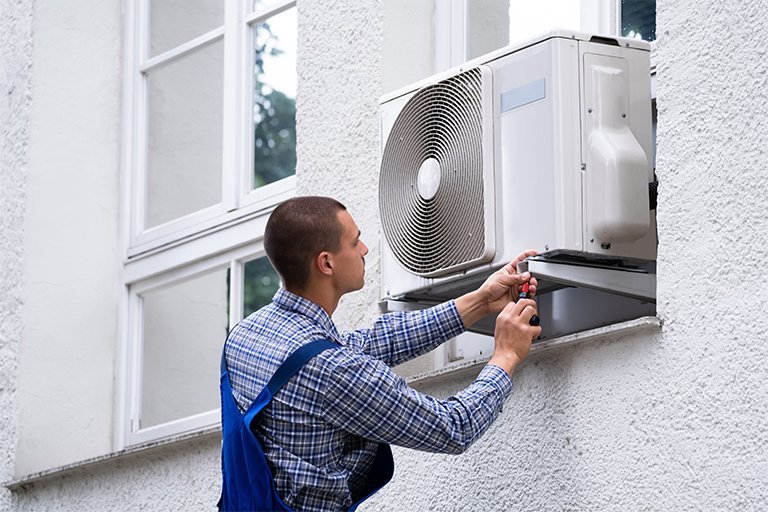
Last summer, my window AC unit started making this weird rattling noise around week three of a brutal heat wave. I ignored it for a few days — big mistake. By the time I actually looked into it, the filter was so clogged it looked like a gray wool blanket, and the coils were half-frozen. The unit wasn’t cooling properly, my electricity bill had quietly crept up by almost 30%, and I was one bad week away from a full breakdown.
That experience taught me more about window AC maintenance than any YouTube video ever could. So here’s everything I’ve learned — the hard way and the right way — about keeping a window AC running strong for years.
1. Clean or Replace the Air Filter Every 2–4 Weeks
This is the one most people skip, and it’s also the one that causes the most damage over time.
A dirty filter restricts airflow, which forces your unit to work harder to push air through. More work = more energy = higher bills. Worse, restricted airflow causes the evaporator coil to freeze up, and a frozen coil means zero cooling until it thaws out.
Most window ACs have a removable mesh filter behind the front panel. Pull it out, rinse it under warm water, let it dry completely, and slide it back in. That’s it. Takes about five minutes.
If your filter looks gray, bent, or torn, just replace it. Replacement filters are cheap — usually under $10 — and they make a noticeable difference in air quality too.
Quick tip: Set a phone reminder every three weeks during summer. You’ll forget otherwise.
2. Keep the Coils Clean (Yes, Both of Them)
Your window AC has two sets of coils — the evaporator coil (inside, facing the room) and the condenser coil (outside, facing outdoors). Both collect dirt and grime, and both need attention.
The evaporator coil is usually accessible after removing the front panel and filter. Use a soft brush or a can of compressed air to gently clean off dust. For heavier buildup, a no-rinse coil cleaner spray works great — you spray it on, and it drips off taking the dirt with it.
The condenser coil faces outside and gets hit with dust, leaves, and pollution. When I cleaned mine for the first time, I found a small insect nest tucked into the fins. Not fun. A garden hose on a gentle setting works perfectly — just spray from the inside out to push debris away from the unit.
Do this at the start of every cooling season and once mid-summer if you run the unit constantly.
3. Straighten the Fins (They Bend More Than You Think)
Those thin metal fins on your coils bend easily — a strong wind, a misplaced hand during installation, even just years of vibration. Bent fins block airflow and reduce efficiency.
You can buy a fin comb for a few dollars at any hardware store. Run it gently through the bent sections to straighten them out. It’s oddly satisfying, honestly. Just be careful — the fins are sharp.
4. Check the Drainage System and Clean the Drain Pan
Window ACs remove humidity from the air as they cool, and that moisture has to go somewhere. It collects in a drain pan at the bottom of the unit and either evaporates, drips outside, or flows out through a drain hole.
When that drain hole gets clogged with algae, dirt, or debris, water backs up. That’s usually what causes water leaking inside your room — not a broken unit, just a blocked drain.
Once a month during heavy use, pour a small cup of diluted white vinegar into the drain pan. It kills algae and keeps things flowing. You can also use a thin wire or a pipe cleaner to clear the drain hole if it seems blocked.
I learned this after coming home to a small puddle on my windowsill. The fix took three minutes.
5. Inspect the Weatherstripping and Seal Gaps
Here’s one that almost no one thinks about until their electricity bill is inexplicably high.
The foam and weatherstripping around your window AC unit degrades over time. When it does, hot outside air leaks in around the sides of the unit, and your cooled indoor air escapes. Your AC ends up fighting a losing battle — cooling air that immediately gets replaced by warm outdoor air.
Every spring before you start running the unit, check the foam side panels and any tape or sealant around the frame. If it’s crumbling or compressed flat, replace it. Foam weatherstripping tape is inexpensive and takes fifteen minutes to install.
For more detailed setup tips, 7 Smart Window AC Installation Tips for Perfect Cooling covers this really well alongside proper mounting technique.
6. Clean the Front Panel and Vents Regularly
This sounds basic, but people genuinely forget it. Dust collects on the front vents and louvers, gets pulled back into the unit, and adds to filter and coil buildup over time.
Wipe down the front panel with a damp cloth every week or two. For the vent slats, a thin brush (even an old toothbrush) works well for getting into the gaps. Some front panels are removable and dishwasher-safe — check your manual.
7. Check the Refrigerant (But Don’t DIY This One)
Low refrigerant is one of the less obvious reasons a window AC stops cooling effectively. Signs include the unit blowing room-temperature air, ice forming on the coils even with a clean filter, or a hissing/bubbling sound from the back of the unit.
Unlike cleaning tasks, refrigerant is something you genuinely should not handle yourself. It requires certification to purchase and handle legally, and improper handling is both dangerous and damaging to the unit.
If you suspect low refrigerant, call a certified technician. It’s one of those things where the service call is worth every rupee.
8. Run the Fan-Only Mode Occasionally
Most window ACs have a fan-only setting that circulates air without activating the compressor. Running this mode for an hour or two on mild days does a couple of useful things.
First, it helps dry out any residual moisture inside the unit, which prevents mold and mildew from developing. Second, it reduces wear on the compressor — the most expensive part of the unit — by giving it a rest while still circulating air.
I started doing this on spring evenings when it’s not quite hot enough to need full cooling. The unit smells fresher, and I feel better about its long-term health.
9. Store It Properly During Winter (Or Cover It Right)
If you remove your unit for winter, proper storage matters. Don’t just toss it in a garage corner and forget it. Cover it with the original box or a heavy-duty AC cover to keep dust and moisture out. Store it upright — laying a window AC on its side can cause refrigerant oil to migrate into the compressor lines, which causes problems when you start it up again.
If you leave it installed through winter, an outdoor AC cover is essential. Without one, cold air seeps in through the unit and around the edges, making your home harder to heat. A well-fitted cover also protects the condenser coil and fins from winter debris.
10. Listen for Unusual Sounds — They’re Always Telling You Something
A healthy window AC makes a consistent low hum. Anything else is worth paying attention to.
| Sound | Likely Cause |
|---|---|
| Rattling | Loose panel, debris inside unit, or loose screws |
| Squealing | Worn fan belt or dry bearings |
| Clicking repeatedly | Electrical issue or failing capacitor |
| Hissing/bubbling | Possible refrigerant leak |
| Banging | Fan blade hitting something inside |
When I heard that rattling last summer, it turned out to be a small twig that had gotten pulled into the condenser section. Took two minutes to remove once I knew where to look. The point is — don’t ignore it and assume it’ll go away.
For a broader look at diagnosing common problems yourself before calling anyone, 5 Smart Window AC Cleaning Maintenance Guide Checks Before Calling a Technician is genuinely useful.
11. Don’t Ignore Energy Bills — They’re a Maintenance Signal
If your electricity bill spikes during a month when your usage habits haven’t changed much, your AC is often the culprit. A unit working harder than it should — due to dirty coils, low refrigerant, clogged filters, or poor sealing — draws more power to deliver the same cooling output.
Track your monthly usage during cooling season. Most utility apps now show daily consumption, which makes it easy to spot a sudden jump and connect it to when you started running the AC.
A well-maintained window AC should deliver consistent cooling at consistent energy use. If efficiency drops noticeably, treat it as a prompt to inspect the unit rather than just paying the higher bill.
For practical ways to cut those costs back down, 10 Smart Window AC Cleaning Maintenance Guide Tips to Reduce Electricity Bills has some genuinely actionable suggestions.
12. Schedule a Deep Clean at the Start and End of Every Season
Everything above is easier to stay on top of if you build two dedicated maintenance sessions into your year — one before cooling season starts, one after it ends.
Pre-season checklist:
- Clean or replace filter
- Clean both coils
- Straighten fins
- Clear drain hole and clean drain pan
- Inspect and replace weatherstripping
- Check for any visible damage from storage
Post-season checklist:
- Run fan-only mode for a few hours to dry out the unit
- Clean the interior one last time
- Cover or store properly
- Note any performance issues to address before next year
This two-session approach means you’re never starting a hot summer with a unit that hasn’t been touched in eight months. It also means any developing problems get caught before they become expensive ones.
The Maintenance Schedule at a Glance
| Task | Frequency |
|---|---|
| Filter cleaning | Every 2–4 weeks during use |
| Wipe front panel/vents | Every 1–2 weeks |
| Clean drain pan | Monthly during heavy use |
| Inspect weatherstripping | Start of each season |
| Clean coils | Start of season + mid-summer |
| Straighten fins | Annually |
| Deep clean | Start and end of cooling season |
| Check for sounds/performance | Ongoing |
| Professional check (refrigerant, etc.) | Every 2–3 years or as needed |
A Few Mistakes Worth Mentioning
Running the unit on the coldest setting constantly thinking it’ll cool faster — it won’t. It’ll just freeze the coil and stop cooling entirely. Use a moderate temperature setting and let the thermostat do its job.
Spraying water directly into the interior without knowing what you’re doing. Electrical components are in there. Stick to targeted cleaning with appropriate tools.
Forgetting to turn the unit off before any cleaning. Always unplug it first. Always.
And the biggest one — waiting until something breaks to do any of this. By then, you’re either paying for repairs or replacing the unit entirely. Fifteen minutes of monthly maintenance genuinely does extend the life of these things by years.
Taking care of a window AC isn’t complicated. It’s mostly just not ignoring it. Once you build the habits, it takes almost no time, and the payoff — reliable cooling, lower bills, and a unit that lasts — is absolutely worth it.
Also worth reading: 11 Easy Window AC Cleaning Secrets I Wish I Knew Sooner