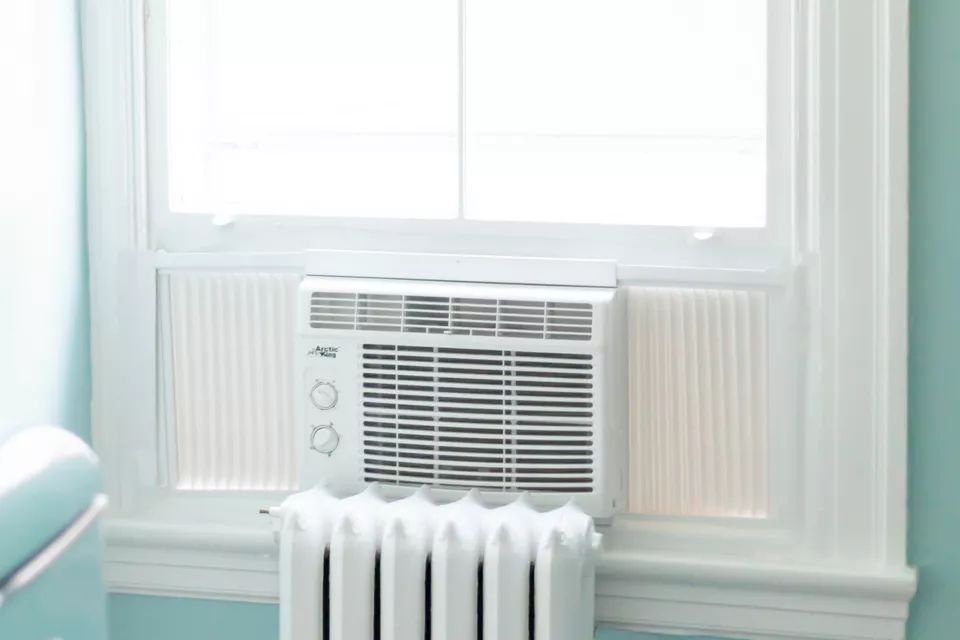
Last summer, my window AC unit died on the hottest day of the year. Peak heat, 42°C outside, and my unit just… stopped. Not a dramatic shutdown — it just started blowing warm air like it forgot its entire purpose in life.
The technician showed up two days later (two days!), took one look inside, and said something I’ll never forget: “Bhai, yeh toh sirf cleaning se theek ho jaata.” Translation: this could’ve been fixed with just regular cleaning.
I felt like an idiot. I’d had that AC for three years and never done a single thing to maintain it — no filter cleaning, no coil check, nothing. Just turned it on every summer and expected it to perform.
That breakdown cost me ₹4,800 in repairs, two days of misery, and a lot of embarrassment. But it also taught me everything I needed to know about keeping a window AC running without drama.
So here are the 5 habits I’ve built since then — the ones that have kept my AC running perfectly for two summers straight without a single service call.
1. Clean the Air Filter Every 2–3 Weeks (Not “When You Remember”)
This is the big one. The filter is basically your AC’s lungs. When it’s clogged with dust and debris, the unit has to work twice as hard to pull air through — which means more electricity, less cooling, and eventually a burned-out compressor.
I used to think filters only needed cleaning “a few times a season.” Wrong. If you’re running your AC daily (which most of us do in summer), every 2–3 weeks is the sweet spot.
Here’s how I do it:
- Turn off the AC and unplug it — always.
- Open the front panel (usually slides or clips off).
- Pull out the mesh filter carefully.
- Take it to the sink and rinse it under running water. I use a soft brush (an old toothbrush works great) to gently scrub out the dust.
- Let it dry completely — this is important. Putting a wet filter back causes mold.
- Slide it back in, close the panel, plug it in.
That’s it. Takes maybe 10 minutes.
I actually set a reminder on my phone — every 15 days during summer, it pops up saying “AC filter.” Sounds obsessive, but my electricity bill dropped noticeably after I started doing this consistently. When airflow improves, the unit doesn’t have to run as long to cool the room.
Quick tip: Hold the dry filter up to a light bulb. If you can’t see light through it, it needs cleaning regardless of how recently you did it. Dusty homes, pets, and cooking all clog filters faster.
2. Check and Clear the Drainage System Before It Becomes a Problem
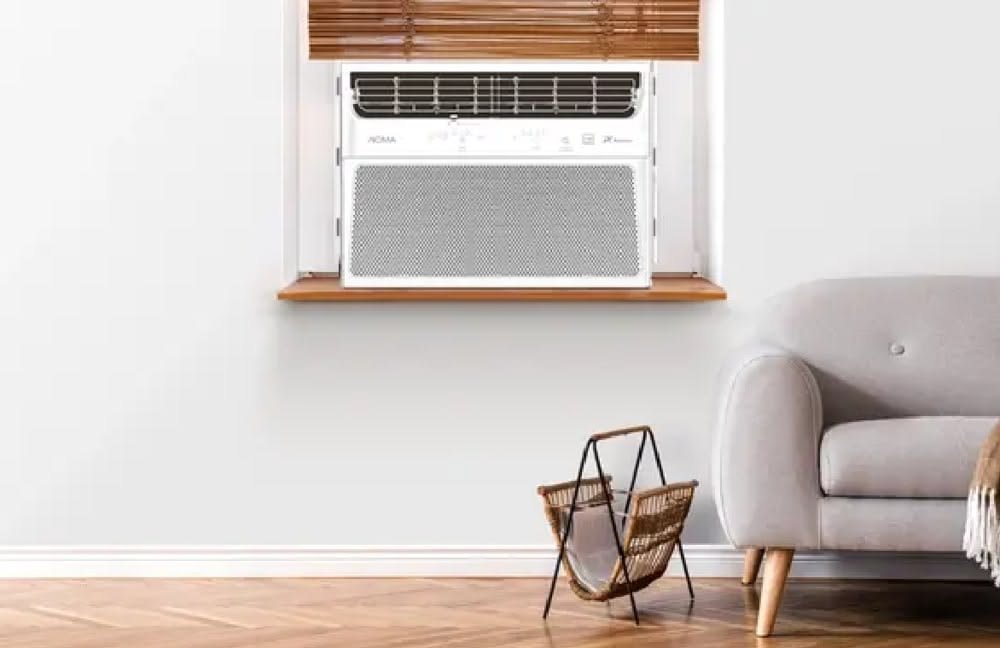
This one sneaks up on people. Window ACs pull humidity out of the air, and that moisture has to go somewhere. It drips out through a drainage hole or tray at the back of the unit. When that gets blocked — usually by algae, dust, or grime — water has nowhere to go.
The result? Water starts leaking inside your room, dripping down the wall, or pooling inside the unit itself. That pooled water can damage the electrical components, cause rust, and create the perfect breeding ground for mold and that musty smell everyone hates.
I learned this the hard way when I noticed a damp patch on my wall. Took me a week to figure out the drain hole was completely blocked with gunk.
How to check your drainage:
- Once a month, look at the back of your unit (from outside if possible). You should see a small trickle of water dripping when the AC is running. That’s normal and healthy.
- If there’s no drip at all on a humid day, your drain might be blocked.
- To clear it, use a thin wire or a pipe cleaner to gently poke through the drain hole.
- You can also pour a small amount of diluted white vinegar into the drain pan (after turning off the unit). This kills algae and breaks up buildup naturally.
For a more thorough guide on dealing with water issues, check out these 10 Easy Window AC Cleaning Maintenance Guide Fixes for Water Leakage — it covers some situations I hadn’t even thought of.
I now check the drain every time I clean the filter. Two tasks, one visit. Makes it easy to stay consistent.
3. Keep the Condenser Coils Clean (Most People Skip This Entirely)
Okay, this is the one that almost nobody does — and it’s probably the biggest reason window ACs die young.
Your window AC has two sets of coils: evaporator coils (inside, facing your room) and condenser coils (outside, facing the street or exterior wall). The condenser coils release heat from the refrigerant into the outside air. When they’re coated in dirt, dust, or even bird droppings, they can’t release heat efficiently.
The result is that your compressor keeps running and running trying to do a job it can’t properly do. Eventually, it overheats and fails. Compressor replacement = expensive. Sometimes more expensive than just buying a new unit.
How to clean the condenser coils:
- Turn off and unplug the unit.
- If you can safely access the back of your AC (from outside), use a soft brush to gently brush away loose debris from the fins.
- You can use a can of compressed air (like the ones sold for cleaning keyboards) to blow dust out of the fins. Always blow outward, not inward.
- For stubborn grime, a coil cleaning spray is available at most hardware stores. You spray it on, let it sit for a few minutes, and it foams up and loosens the dirt. Then rinse carefully with low-pressure water.
- Make sure everything is completely dry before plugging back in.
Once before summer, once mid-season if you’re in a very dusty area. That’s the minimum.
I also check if the aluminum fins (the thin metal slats on the coils) are bent. Bent fins reduce airflow. You can actually buy a “fin comb” for about ₹200–300 online that straightens them out. Tiny tool, surprisingly useful.
4. Inspect the Seals and Weatherstripping Around the Unit
This one surprised me when I first heard about it, but it makes complete sense.
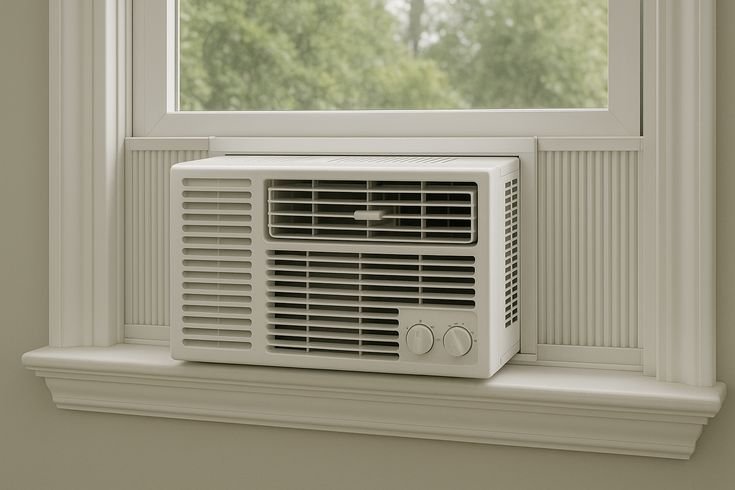
When your window AC is installed, there’s supposed to be a tight seal between the unit and the window frame — foam strips, side panels, or weatherstripping. Over time, this sealing material deteriorates, compresses, or falls off. When that happens, you’re basically air conditioning the outdoors.
Hot air leaks in around the sides. Cool air escapes. Your unit runs constantly trying to hit the set temperature, and it never quite gets there — or it does but takes forever and uses way more electricity than it should.
I noticed one summer that one side of my room was always warmer near the window. Thought it was a cooling problem with the AC itself. Turns out the foam seal on the right side had completely degraded and there was a visible gap letting hot air straight in.
A ₹150 foam weatherstripping roll from the hardware store fixed it in 20 minutes.
What to check:
- Run your hand along the edges of the unit while it’s running. Feel any warm air coming in? That’s a leak.
- Visually inspect the foam or rubber seals for cracks, compression, or gaps.
- Check the side accordion panels — these often tear or warp after a season or two.
Replacing weatherstripping is cheap and takes almost no skill. But if ignored, it forces your AC to work harder than necessary every single day. Over a full summer, that’s a significant amount of wasted energy and wear on the compressor.
If you want to go deeper on energy efficiency habits, these 7 Smart Window AC Energy Saving Tips That Cut Bills Fast pair really well with this habit — because sealing and efficiency go hand in hand.
5. Give the Unit a Full Deep-Clean at the Start of Every Season
Think of this as the annual health checkup for your AC. Before you fire it up for the first time each summer, spend an hour giving it a proper, thorough clean. This single habit does more for long-term reliability than almost anything else.
Here’s what a proper start-of-season clean looks like:
Step 1 — Clean the filter (as described in Habit 1).
Step 2 — Clean the evaporator coils (inside). Use a soft brush or a can of compressed air. You can also buy evaporator coil cleaner spray — no-rinse versions are the easiest to use.
Step 3 — Clean the condenser coils (outside, as described in Habit 3).
Step 4 — Wipe down the interior with a damp cloth. Get into the corners where dust collects.
Step 5 — Check the drain pan and drain hole. Clear any buildup.
Step 6 — Inspect the electrical connections visually — look for any burnt smell, discoloration, or loose wires. If you see any of these, don’t run the unit. Call a technician.
Step 7 — Check the fan blades for dust accumulation. Gently wipe them down.
Step 8 — Inspect the seals (as described in Habit 4).
Step 9 — Run the unit for 15–20 minutes and check: Is it cooling properly? Any unusual sounds? Any water leaking inside? If everything checks out, you’re good to go.
This full process takes about 45–60 minutes the first time. Once you know what you’re doing, you can knock it out in 30. It sounds like a lot but remember — you’re doing it once a year, and it’s the difference between a unit that lasts 8–10 years and one that dies in 4.
For anyone who’s never done this before, these 9 Powerful Window AC Cleaning Maintenance Guide Steps I Wish I Knew Earlier walk through the process in even more detail with some things I didn’t cover here.
Common Mistakes That Undo All Your Good Habits
Even with the best intentions, a few mistakes can cancel out everything you’re doing right:
| Mistake | Why It’s a Problem | What to Do Instead |
|---|---|---|
| Putting a wet filter back | Causes mold and musty smell | Always let it dry fully (1–2 hours minimum) |
| Using high-pressure water on coils | Bends the fins and damages the unit | Use low pressure or compressed air only |
| Running AC with a blocked drain | Water pools inside and causes corrosion | Check drain monthly |
| Ignoring unusual sounds | Rattling or grinding means something is loose or worn | Investigate early, don’t wait |
| Skipping the pre-season check | Lets small problems become big ones over winter | Always inspect before first use |
| Setting thermostat too low | Forces constant running, wears out compressor faster | Set to 24–26°C for efficiency |
The thermostat one is something I still catch myself doing on really hot days. Setting it to 16°C doesn’t cool the room faster — it just makes the compressor run non-stop. Set it to 24°C and let it work at a comfortable pace.
How Long Should a Window AC Last? (And What Affects It)
A well-maintained window AC should last anywhere from 8 to 12 years. Here’s a rough breakdown of what affects lifespan:
| Factor | Impact on Lifespan |
|---|---|
| Regular filter cleaning | +2 to 3 years |
| Annual deep cleaning | +2 years |
| Proper sealing | +1 year (efficiency savings) |
| Ignoring drainage | -2 to 3 years |
| Skipping coil cleaning | -2 to 4 years |
| Running at extreme low temps constantly | -1 to 2 years |
These aren’t exact numbers obviously — they vary by brand, usage hours, and climate. But the point is clear: maintenance has a real, measurable effect on how long your unit survives.
A Few Tools Worth Having
You don’t need a lot of equipment to maintain a window AC. Here’s what I keep handy:
- Soft-bristle brush — for coil and fan blade cleaning
- Old toothbrush — for the filter mesh
- Compressed air can — quick and effective for fins and vents
- Coil cleaner spray (no-rinse type) — available on Amazon or at hardware stores for ₹300–600
- Fin comb — for straightening bent fins (₹200–300 online)
- White vinegar — natural drain cleaner
- Foam weatherstripping roll — for sealing gaps
- Phone reminder app — honestly the most important tool on this list
The phone reminder part is not a joke. Maintenance habits only work if you actually do them. Setting a recurring reminder every 15 days costs you nothing and takes 3 seconds. I use Google Calendar for this — a recurring event labeled “AC filter check” every 14 days from June through September.
Wrapping Up
Three years ago I was the person who never touched their AC until it broke. Now I’m the person in my building that neighbors ask for AC advice — which is a weird turn of events, honestly.
The thing is, none of these habits are complicated. You don’t need special skills or expensive equipment. You just need to be consistent. A little attention every couple of weeks prevents the kind of breakdown that ruins your hottest summer days and drains your wallet.
The biggest shift for me was treating the AC like something that needs care, not like a toaster you just plug in and forget about. Once that clicked, everything else followed naturally.
Start with the filter. Get that habit locked in first. Then add the others one by one. By next summer, you’ll have a unit that runs efficiently, cools properly, and doesn’t surprise you with repair bills.
Also worth reading: If your unit is already showing some signs of trouble — weak cooling, strange noises, or water leaks — before calling a technician, go through these 7 Quick Window AC Troubleshooting Tips That Actually Work. You might fix it yourself in under an hour.