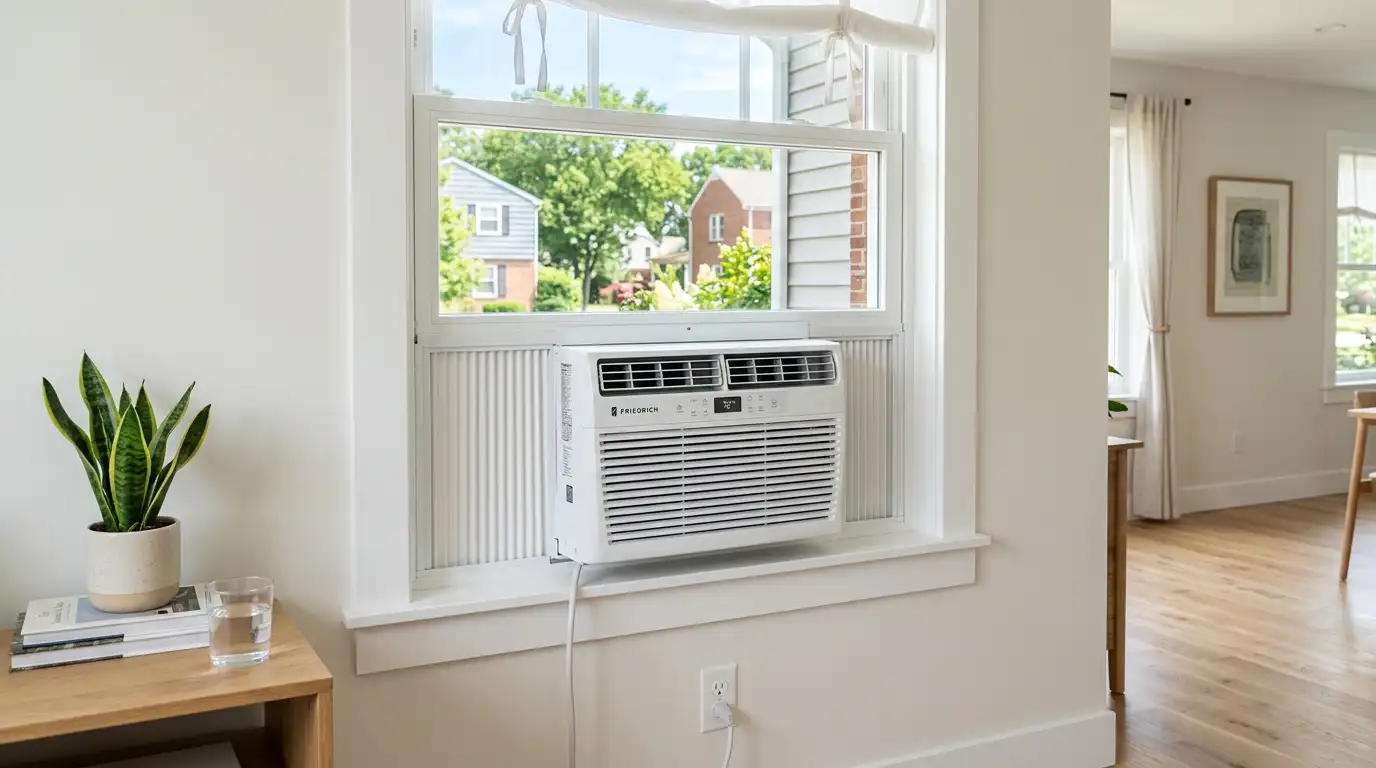
Last July, my electricity bill hit a number that made me physically sit down. I’m not exaggerating — I had to check it twice. The same window AC I’d been running for three summers suddenly felt like it was printing money for the power company. I hadn’t changed anything. Same unit, same room, same habits. Or so I thought.
Turns out, I had changed a lot of things — just not on purpose. And when I actually started paying attention to how I was running my AC, not just that I was running it, everything shifted. My next bill dropped by almost 30%. Same unit. Same heat outside.
So here’s what I actually learned — no fluff, no generic advice you’ve heard a hundred times.
1. Stop Cooling a Room You’re Not In
This sounds obvious, but hear me out. I used to turn on the AC in my bedroom first thing in the morning “so it’s cool by the time I need it.” That’s anywhere from 2 to 4 hours of cooling an empty room.
The fix? I picked up a basic digital timer plug (I use the BN-LINK model, costs about $12 on Amazon) and set it to kick on 30 minutes before I actually need the room. That’s it. One small change.
Modern window ACs with remote controls often have built-in timers too — most people just never use that feature. Dig out your manual or look up your model on YouTube. It takes 5 minutes to set up and saves hours of unnecessary runtime every single day.
Quick math on wasted cooling:
| Daily Idle Hours | Avg AC Wattage | Wasted kWh/Day | Monthly Cost (at $0.13/kWh) |
|---|---|---|---|
| 2 hours | 1,200W | 2.4 kWh | ~$9.36 |
| 4 hours | 1,200W | 4.8 kWh | ~$18.72 |
| 6 hours | 1,200W | 7.2 kWh | ~$28.08 |
That “cool room waiting for me” habit was costing me nearly $20 a month. Yikes.
2. The Filter Is Doing More Work Than You Think
I once went a full summer without cleaning my AC filter. I genuinely thought it was fine because the air still felt cold. What I didn’t realize is that a clogged filter makes the unit work much harder to push the same amount of air through — which means more electricity for less cooling.
When I finally pulled the filter out, it looked like a small gray blanket. Embarrassing, honestly.
Clean your filter every 2–3 weeks during heavy summer use. It takes 5 minutes: pull it out, rinse it under warm water, let it dry, pop it back in. That’s it.
After I started doing this consistently, I actually noticed the room cooled faster — and the unit didn’t run as long to hit the set temperature. Less runtime = lower bill. It’s that direct.
3. Your Thermostat Setting Is Probably Too Low
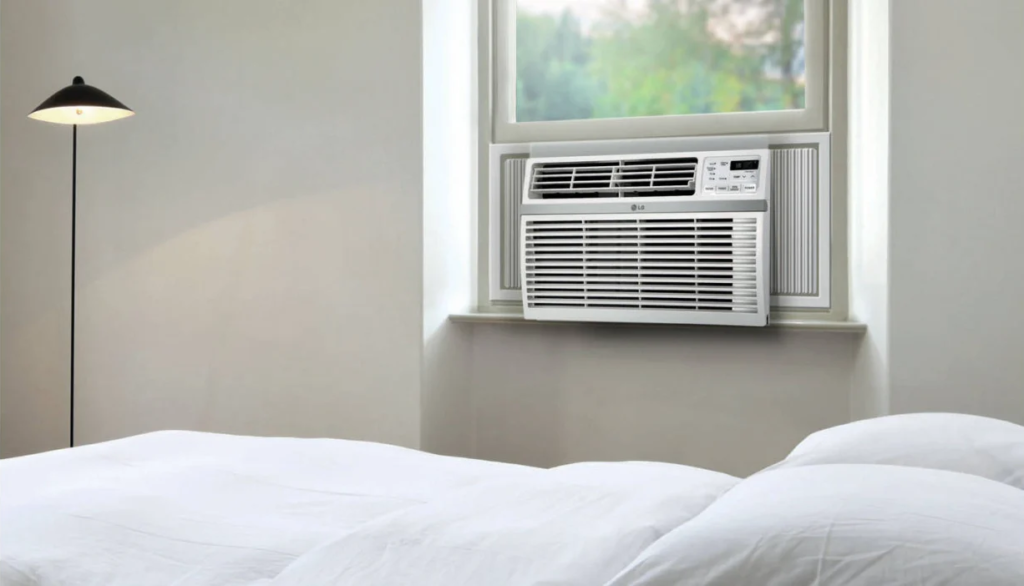
There’s this psychological thing where people set the AC to the lowest temperature thinking it’ll cool faster. It doesn’t. Your window AC doesn’t cool faster at 60°F vs 72°F — it just runs longer trying to reach an impossible target (especially in a hot room), which burns more electricity.
The sweet spot most energy experts agree on is 78°F (25–26°C) when you’re home. Every degree you go below that adds roughly 6–8% to your cooling costs.
I tested this myself over two weeks — one week at 72°F, one week at 78°F. The difference in my partial bill estimate (I tracked it on the Sense energy monitor app) was clear. The 78°F week used noticeably less energy, and honestly? I barely felt the difference once the room was actually cooled down.
The real discomfort comes from humidity, not just temperature — which leads to the next point.
4. Use Fan Mode More Than You Think You Should
Here’s one I never hear anyone talk about: fan-only mode is your best friend during mild evenings.
When the outdoor temperature drops (say, after 9 PM in summer), your AC doesn’t need to run the compressor at all to keep you comfortable. Just running the fan circulates air and feels significantly cooler than stale, still air.
Compressor running = big electricity draw. Fan only = tiny electricity draw. We’re talking the difference between ~1,200 watts and ~100 watts.
I started switching to fan mode after 9 PM and didn’t turn the compressor back on until I actually felt warm. Some nights, I never switched back. That alone shaved runtime significantly.
5. Seal the Gaps Around Your Unit — Seriously, Check Right Now
Go look at your window AC right now. Look at the sides where those accordion-style plastic panels stretch out to fill the window gap. Are they properly sealed against the window frame? Is there daylight visible anywhere?
I found a gap on the left side of mine that I could literally feel outdoor air coming through. I had been cooling the outside for two summers without knowing it.
The fix is cheap: foam weatherstripping tape (around $6 at any hardware store) pressed along any gaps does the job perfectly. You can also use AC window insulation kits — they’re basically foam-sided panels that compress for a tighter seal.
One afternoon of checking and sealing made a noticeable difference. The room held its temperature longer, which meant the unit cycled off more often. Fewer cycles = less electricity.
For a proper guide on keeping your unit in top shape overall, check out these 11 proven window AC cleaning and maintenance tips for dust-free cooling — they cover airflow and efficiency in detail.
6. Sunlight Is Your AC’s Worst Enemy
I have a west-facing window where my AC is installed. Every afternoon, direct sunlight pours into the room for about 4 hours. My AC was basically fighting the sun the entire time — and losing.
The fix I found most effective: blackout curtains on any windows that get direct afternoon sun. Not just regular curtains — proper blackout or thermal curtains. The difference in room temperature with curtains closed vs open on a sunny afternoon is wild. I measured it once with a simple indoor thermometer: 6°F difference. That’s 6 degrees your AC doesn’t have to fight.
You can also use reflective window film (around $15–25 for a standard window roll) which blocks heat while still letting in some light. It’s not as dramatic as blackout curtains but works well if you don’t want a dark room.
Sun control comparison:
| Method | Cost | Heat Reduction | Light Loss |
|---|---|---|---|
| Nothing | $0 | 0% | 0% |
| Regular curtains | $15–40 | ~10–15% | Moderate |
| Blackout curtains | $25–60 | ~25–35% | High |
| Reflective window film | $15–25 | ~30–40% | Low |
| Solar shades | $30–80 | ~20–30% | Low-Medium |
Blackout curtains were my go-to. Room stays cooler, AC runs less. Simple.
7. The Eco Mode Actually Works (Stop Ignoring It)
Almost every window AC sold in the last 5 years has an Eco or Energy Saver mode. I ignored it for two full summers because I assumed it was just a marketing label that didn’t do anything real.
I was wrong.
Eco mode works by automatically cycling the compressor off once the room hits your set temperature, then cycling the fan intermittently to check if the temperature has risen. If it has, the compressor kicks back on. If not, it stays off.
Compare this to “Cool” mode, which runs the compressor continuously regardless of room temperature.
Switching to Eco mode on my 8,000 BTU unit reduced its runtime significantly on moderate days. The room still felt comfortable — it just wasn’t working as hard as it used to.
There’s a catch: Eco mode doesn’t work well on extremely hot days when the room can’t hold temperature. On those days, Cool mode is the right call. But on average summer days? Eco mode every time.
You can also combine Eco mode with the timer strategies from tip #1 for even better results. Want to dig deeper into smart AC usage habits? These 7 smart window AC energy-saving tips that cut bills fast are worth reading through.
8. Where You Place the AC in the Room Matters More Than BTUs
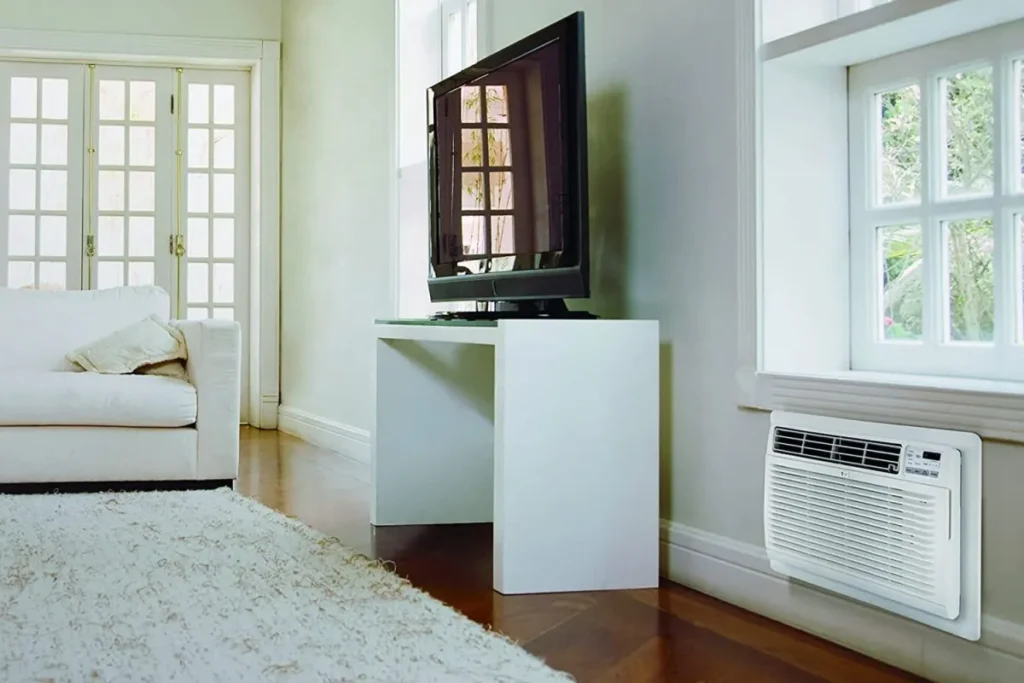
People obsess over getting the right BTU rating, which matters — but placement of the unit within the room matters just as much for efficiency.
Here’s what I discovered by accident: I moved my unit from one window to another (for an unrelated reason), and the room cooled noticeably faster from the new position. The reason turned out to be airflow direction.
Cold air sinks and warm air rises. Your AC should ideally be positioned so that it can push cold air across the widest part of the room. If it’s blowing cold air directly at a wall 3 feet away, you’re not getting efficient distribution.
A few placement rules that actually help:
- Point vents slightly upward so cold air travels across the room before sinking
- Don’t block the unit with furniture, curtains, or shelving on either side
- Keep the front intake clear — most window ACs also pull room air through the front to circulate it
- Use a small fan to help push cooled air deeper into the room if it’s large or oddly shaped
That last one sounds counterintuitive (running a fan to reduce AC use?) but a $20 box fan on low setting helping distribute cool air is far cheaper than running the AC harder to compensate for poor air distribution.
For more on this, check out these 5 powerful window AC placement secrets for faster cooling — really practical stuff in there.
9. Track Your Usage So You Can Actually Improve It
This was the one that tied everything together for me. I was making all these changes but had no way of knowing which ones were actually working.
I picked up a Kill A Watt meter (around $25) — you plug it into your outlet, plug the AC into it, and it tracks real-time wattage and cumulative kWh. It’s not fancy, but it’s genuinely eye-opening.
Once I could see actual numbers — “this AC just used 3.2 kWh today” — I could connect my behavior to real results. I could see that:
- Cleaning the filter reduced average wattage by about 80–100 watts
- Switching to Eco mode cut daily kWh noticeably on mild days
- Sealing the window gap reduced how long the compressor ran per cycle
If you want to go a step further, smart plugs with energy monitoring (like the Kasa EP25 or Emporia Vue 2) give you this data on your phone and let you track trends over time. The Sense home energy monitor is the premium option if you want whole-home visibility.
But even just a basic Kill A Watt meter for a couple of weeks gives you more useful data than a year of guessing.
Common Mistakes That Undo All Your Savings
A few things I’ve seen (and done) that quietly wipe out everything above:
Leaving doors and windows open while the AC is running. Seems obvious, but I’ve caught myself doing this while getting something from another room. Even 10 minutes with a door open forces the AC to restart its cooling cycle.
Setting the temperature too aggressively when you first turn on the unit. You don’t cool faster at 65°F. You just run the compressor to its limit for longer. Set it at your target temperature from the start.
Skipping seasonal maintenance. Before summer hits, it’s worth doing a proper cleaning of the coils, checking the drainage, and inspecting the seal. An hour of prep work saves hours of inefficient running all summer. These 9 essential window AC cleaning and maintenance tips are a solid reference for that.
Running the AC with the “maximum cool” fan speed all the time. Higher fan speed moves more air, which sounds good, but the unit is also working harder. Medium speed is often more efficient for sustained cooling.
What Actually Moved the Needle for Me
After implementing everything above over two summers, here’s roughly how much each change contributed to my savings:
| Change Made | Estimated Monthly Savings |
|---|---|
| Timer plug (no idle cooling) | $15–20 |
| Regular filter cleaning | $8–12 |
| Thermostat at 78°F instead of 72°F | $12–18 |
| Blackout curtains | $6–10 |
| Sealing window gaps | $5–8 |
| Using Eco mode | $8–14 |
| Fan mode in evenings | $5–10 |
| Total estimate | $59–92/month |
Your numbers will vary based on your local electricity rates, your unit’s age and efficiency, and how hot your summers get. But the point is — none of these changes were expensive, and most were free.
Running a window AC efficiently isn’t about buying a new unit or making sacrifices in comfort. It’s mostly about paying attention to the small things you’ve probably been ignoring for years. I know I was.
Start with just one or two things from this list — the filter cleaning and the timer plug are the easiest wins. Once you see actual results on your next bill, you’ll be motivated to work through the rest.
Also worth reading: 10 Smart Window AC Energy Saving Tips to Reduce Electricity Bills — goes deeper into long-term efficiency strategies that complement everything covered here.