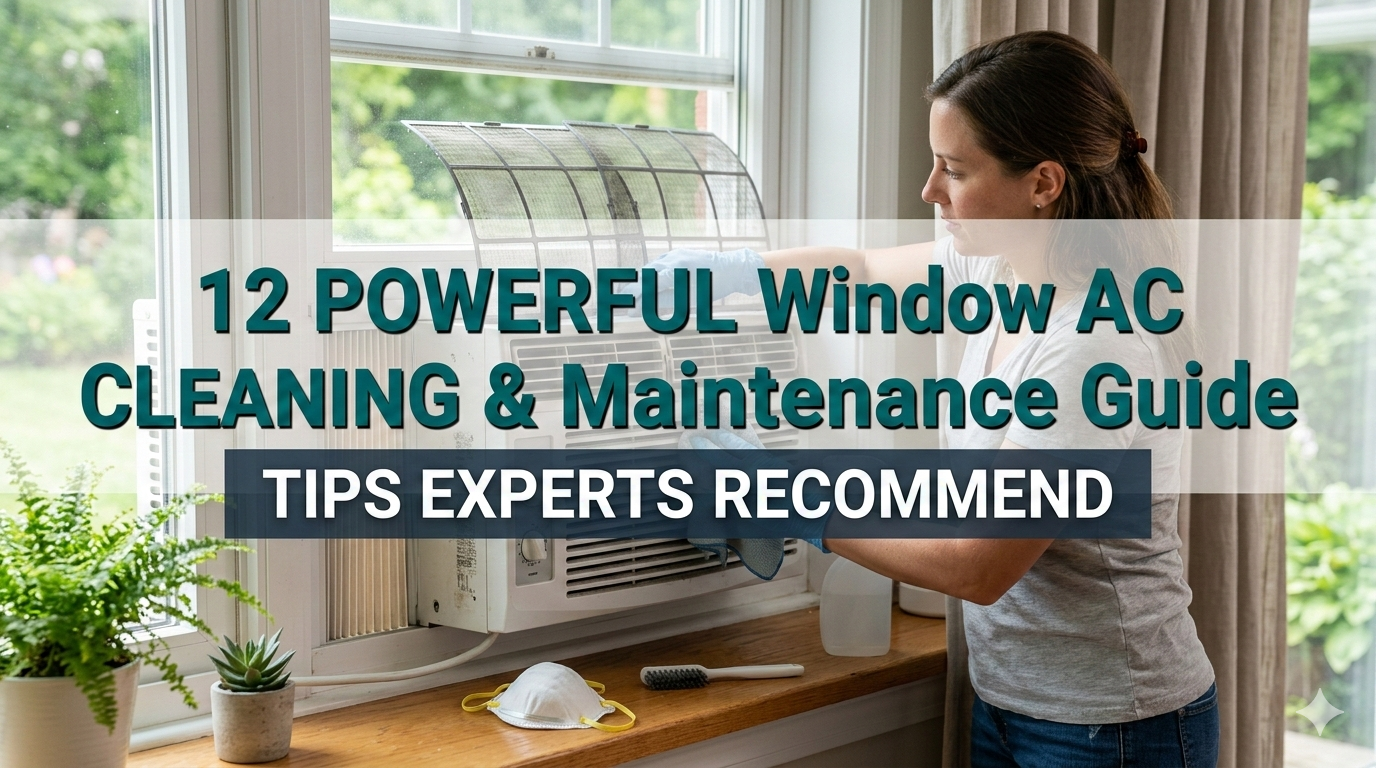
12 Expert-Recommended Window AC Cleaning & Maintenance Guide
Meta Description: 12 things every homeowner should need some tips on cleaning & maintaining Window AC to improve performance and lower energy bills while maximizing the longevity of your unit.
Your Window AC Is Overexerting Itself
When was the last time you did a cleaning on your window air conditioner? If you’re blanking, you’re not alone — and your energy bill is likely paying the price.
A filthy window AC does not only cool badly. It runs around the clock, consumes huge amounts of electricity, and can even spurt dusty, moldy air directly into your home. According to the U.S. Department of Energy, one clogged AC filter can typically drop efficiency by 5–15%.
That’s money going out the window — literally.
In this handy window AC cleaning & maintenance guide, we break down 12 practical tips that experts swear by which anyone can follow. No special tools. No HVAC degree required. Just simple measures that ensure your unit stays cool, clean, and efficient all season long.
When Do You Really Need Regular Window AC Maintenance?
Before we get into the tips, let’s discuss why this is so important.
Window AC units are positioned in one of the toughest spots in your home — exposed to outdoor dust, pollen, mosquitoes, and rain on one side, and indoor air, pet dander, and humidity on the other. All of that adds up over time.
This is what happens when maintenance goes neglected:
| Issue | Root Cause | Consequence |
|---|---|---|
| Weak Airflow | Clogged Filter | Room Warms Up |
| Higher Energy Bills | Dirty Coils | Longer Running Cycle |
| Strange Smells | Mold/Mildew Growth | Poor Quality of Air |
| Ice Build-Up | Blocked Evaporator | System Shutdown |
| Shorter Life | Accumulated Wear | Expensive Replacement |
A minimum of cleaning can accomplish a lot. Most experts suggest a complete clean at least once per season, and filter checks every 2–4 weeks in heavy use.
Before You Start: What You’ll Need
Collect the following basic supplies before you start working:
- Screwdriver (Phillips and flathead)
- Soft brush or old toothbrush
- Fin comb (optional but helpful)
- Mild dish soap
- Warm water
- Spray bottle
- White vinegar
- Hydrogen peroxide
- Microfiber cloths
- Vacuum with brush attachment
- Gloves and a face mask
Now, let’s get into the tips.
Tip 1: Always Shut Off Power First
This may sound obvious, but it’s the step that is skipped the most.
Unplug the unit from the wall before you touch anything. Don’t just power it down — unplug it. A lethal combination is water, electricity, and metal parts.
If your unit is hardwired to the wall or fits into a built-in sleeve, switch off the dedicated circuit breaker. After you have turned it off, wait a minimum of 5 minutes before opening any panels. There can still be enough of a residual charge stored in the capacitor to deliver an unpleasant jolt.
Pro tip: Put a note on the breaker box that says “AC unit off for cleaning” so no one accidentally restores power while you’re working.
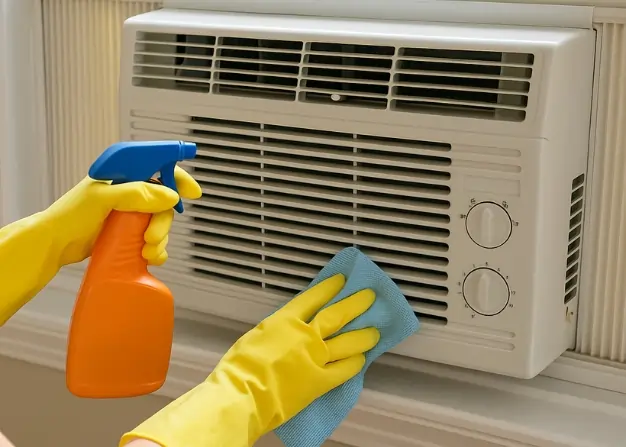
Tip 2: Check and Clean or Replace the Air Filter Monthly
The filter acts as the lungs of your window AC. It traps dust, pollen, pet hair, and particulate matter in the air before it reaches the internal components.
When it clogs up, air can hardly get through. The unit strains. You pay more. The room cools less.
How to clean a reusable filter:
- Take the front panel off from the AC unit
- Slide out the filter carefully
- Gently tap it over a trash can to dislodge loose dust
- Rinse it under warm water
- Try a soft brush with mild soap for tough grime
- Wash until the water is running clear
- Allow it to air dry completely before reinstalling
Never reinstall a wet filter. In-unit moisture causes mold.
If the filter appears crumpled, twisted, or simply will not come clean, it’s time to buy a new one. The majority of window AC filters are around $5–$20 and readily available online or in hardware stores.
Tip 3: Vacuum the Evaporator and Condenser Coils
The coils are where the real cooling magic happens. There are two sets:
- Evaporator coils (facing your room) absorb heat
- Condenser coils (located on the outside) transfer that heat to the outdoors
Both accumulate dust, grime, and even mold over time. When they’re dirty, heat transfer really slows down.
With a vacuum fitted with a soft brush attachment, carefully pull away surface buildup from both sets of coils. Work along the fins — never across them, as the fins bend easily.
If deep cleaning, a commercial no-rinse coil cleaner spray works well. It foams, it dissolves grime, and it flushes out through the condensate pan. Follow product instructions carefully.
Important: Never use a pressure washer or high-powered hose on coils. The delicate aluminum fins will be crushed and airflow diminished for good.
Tip 4: Use a Fin Comb to Straighten Bent Fins
Examine the metal grill on the front of your unit. Those thin, parallel strips are called fins and they assist with moving air through the coils.
After a season or two, many fins bend or get crushed — from debris, hail, rough handling, or just plain old age. Bent fins block airflow and make your unit work harder.
A fin comb is an inexpensive plastic device (generally less than $10) that you slide in between the fins and straighten them back into proper alignment. It is a minor tweak that can have a shockingly large impact on efficiency.
Work slowly and gently. Try starting from the top and going down in flowing strokes. If you encounter resistance, don’t force the comb — back up and try again.
Tip 5: Clear the Condensate Drain Pan
Your AC cools the air by pulling moisture out of it. That moisture drips into a drain pan at the bottom of the unit and (ideally) drains to the outside.
When there’s an algae, mold, or debris buildup in the drain, water won’t flow. You might notice:
- Water dripping inside your room
- A musty or sour smell
- Visible mold at the bottom of the unit
How to clean the drain pan:
- Remove the AC cover and find the drain pan
- Suck out any standing water with a wet/dry vacuum
- Wipe the pan with a rag soaked in white vinegar
- Run a 50/50 solution of water and white vinegar through the drain line
- Allow it to sit for 10 minutes, then flush with clean water
Do this at the beginning and end of each season. Toss a condensate drain tablet into the pan to avoid algae buildup during heavy-use months.
Tip 6: Clean the Front Cover and Vents
The first thing you see — and the dirtiest, in many cases — are the front grille and vents.
Dust, grease (notably in kitchens), and pet hair all accumulate there. Aside from looking dirty, clogged vents reduce the airflow that blows cool air into your room.
If your model has a removable front cover, take it off completely. Scrub it with warm soapy water, use an old toothbrush to get between the slats, and rinse well. Allow it to dry completely before snapping it back on.
Use a vacuum with a narrow attachment for non-removable grilles, then wipe with a damp microfiber cloth and some multipurpose cleaner.
Tip 7: Inspect and Clean Fan Blades
Your window AC has two fans: a blower fan (inside) and a condenser fan (outside). Both circulate air through the coils, and both accumulate grime.
Dirty fan blades cause an imbalance — kind of like a washing machine with clothes bunched on one side. This leads to vibration, noise, and increased load on the motor.
To clean them:
- Gently wipe each blade with a damp cloth
- A used toothbrush is useful for reaching tight areas
- Check for wobble or damage after cleaning
- A blade that’s slightly bent can usually be straightened with a gentle hand
Replace any cracked or broken blades before running the unit again. A damaged fan blade can break off at high speed and cause severe internal damage.
Tip 8: Check the Window Installation and Reseal
Your AC unit perched crookedly in the window isn’t simply an eyesore — it’s an efficiency leak.
Gaps around the unit allow hot outdoor air to sneak back in. It forces your AC to constantly battle against itself. It also allows insects, moisture, and noise inside.
What to check:
- Are the foam side panels properly aligned and compressed?
- Is the unit tilted slightly backward? (It should be — about ¼ inch, for drainage)
- Are there gaps between the unit and the window frame?
Seal any gaps using foam weatherstrip tape. It’s inexpensive, easy to apply, and genuinely impactful. Replace it each season as it compresses and loses effectiveness.
Also inspect the window latches and the accordion side panels. Replace cracked or holed side panels — most manufacturers supply replacements.
For more in-depth seasonal prep advice, visit Window AC Maintenance — a helpful resource dedicated entirely to keeping your window unit running at peak performance.
Tip 9: Deal With Mold and Mildew Directly
Mold loves window AC units. The convergence of dampness, dust, and dark enclosed spaces is essentially a five-star hotel for mold spores.
If you notice dark spots on the filter, coils, or drain pan — or smell something musty when the unit runs — mold is probably growing.
Safe mold removal steps:
- Make sure to wear gloves and a face mask before you begin
- Apply a 50/50 solution of hydrogen peroxide and water to the affected areas
- Let it sit for 10 minutes
- Scrub with a soft brush
- Wipe clean with a dry cloth
- Air dry everything before putting it back together
Stay away from bleach on metal — it corrodes over the long haul. Hydrogen peroxide works just as well but is far kinder to your unit’s parts.
Prevention tip: After you turn off the cooling, let the fan-only mode run for 15–20 minutes. This dries up internal moisture and significantly inhibits mold growth.
Quick Reference: Seasonal Maintenance Checklist
| Task | How Often |
|---|---|
| Clean or check air filter | Every 2–4 weeks |
| Vacuum coils | Once per season |
| Clean drain pan | Start and end of season |
| Inspect window seal | Once per season |
| Check fan blades | Once per season |
| Straighten fins | As needed |
| Mold inspection | Monthly during summer |
| Full deep clean | Once per year |
| Professional tune-up | Every 2–3 years |
Tip 10: Choose Appropriate Settings for Less Wear
If you’re running your unit in ways that cause extra strain, cleaning alone won’t keep it healthy.
Here are some smart habits that extend your unit’s life:
Set a consistent temperature. Turning it to the lowest setting doesn’t make it cool faster — it just runs longer. Keep it between 72–76°F and allow it to cycle normally.
Use the energy saver mode. Most modern window ACs have this. It cycles the fan off when the compressor isn’t running, reducing motor wear and electrical usage.
Don’t block the vents. Furniture, curtains, and objects sitting in front of the unit block airflow and make the system work harder.
Close doors in the room. Window ACs are zone coolers. They’re most effective at cooling a single enclosed space — not an entire floor.
Use a programmable timer. Don’t run the unit all day while you’re out — pre-cool your room before you arrive.
Tip 11: Store It Properly for Winter
How you store your window AC at the end of the season can make a big difference in how it performs the next summer.
Option A — Take it out and store indoors:
This is the ideal solution, if you can manage it. Bring the unit indoors, let it dry completely, and store it in a clean, dry place — preferably in its original box or wrapped securely in a breathable fabric cover.
Before storing:
- Run fan-only mode for 30 minutes to dry internal moisture
- Clean the filter, coils, and drain pan
- Wipe down all surfaces
- Store upright — never on its side
Option B — Leave it in the window:
If you can’t take it out, cover it with an outdoor AC cover to protect it from winter elements. Ensure the cover fits tightly but still allows some ventilation to prevent moisture buildup.
Insulate the inside with a foam panel or heavy curtain to reduce drafts.
Tip 12: Know When to Call in a Pro
This window AC cleaning & maintenance guide includes everything that is safe for a homeowner to do at home. But some problems need professional help.
Contact an HVAC technician if you observe:
- Refrigerant leaks (oily residue near coils, ice forming mid-summer)
- Loud grinding, squealing, or clicking sounds
- The unit continues to trip the circuit breaker
- Electrical burning smell
- The compressor runs but produces no cooling at all
- Significant motor vibration that wasn’t fixed with cleaning
Handling refrigerant is regulated — you can’t legally refill it yourself. Electrical problems involve real safety hazards. The expense of a professional is more than worth it in these scenarios.
A basic HVAC tune-up generally costs $75–$150 and can catch small problems before they grow into costly ones.
How Frequently Should You Deep Clean Your Window AC?
Here’s a basic breakdown by usage level:
| Usage Level | Filter Cleaning | Full Deep Clean |
|---|---|---|
| Light (occasional, guest room) | Every 4–6 weeks | Once per year |
| Moderate (daily, bedroom) | Every 2–3 weeks | Twice per year |
| Heavy (running most of the day) | Every 1–2 weeks | Every season |
| Home with pets | Weekly | Every season |
| Allergy sufferers | Weekly | Every season |
Signs Your Window AC Is Begging to Be Cleaned Right Now
Unsure if your unit is overdue? Watch for these warning signs:
- Hot air from the vents — even on full blast
- Visible dust or dark streaks on the front grille
- Musty, sour, or earthy smell when it runs
- Ice forming on the coils during operation
- Water dripping inside instead of outside
- Sudden spike in electric bills with no lifestyle change
- New loud rattling or vibrating noise
- Gradual temperature drop — room takes a long time to cool down
Any of these is a clear sign it’s time to run through this window AC cleaning & maintenance guide from top to bottom.
FAQs On Window AC Cleaning & Maintenance
How often do I need to clean my window AC unit?
At a minimum, wash the filter every 2–4 weeks while in active use and do a full deep clean once per season. If you have pets or allergies, clean even more often.
Is it OK to spray my window AC with a hose?
You can rinse the coils carefully with a light spray of water, but you should not use a pressure washer. Always take the unit out of the window first, then allow it to dry completely before plugging back in.
Why does my window AC smell musty?
The most common offenders are mold and mildew developing in the drain pan, on the coils, or in the filter. Cleaning with a hydrogen peroxide solution usually eliminates the odor.
Can bleach be used to clean window AC parts?
Bleach is a no-go on metal parts as it degrades them over time. Instead, use white vinegar or a 50/50 solution of hydrogen peroxide and water — both are just as effective and far safer on aluminum fins and coils.
How do I know if my window AC needs a refrigerant refill?
Symptoms include the unit running constantly yet not cooling, ice on the coils in warmer weather, and oily residue around the coil area. Handling refrigerants requires a licensed HVAC technician — don’t try this at home.
Can I clean my window AC without taking it out?
Yes, you can clean the filter, front grille, and drain pan without having to remove it. But the coils and fan blades are much easier to deep clean thoroughly with the unit removed or partially pulled out.
Will cleaning my window AC truly reduce my electric bill?
Absolutely. According to the U.S. Department of Energy, a clean filter alone can increase efficiency by 5–15%. Clean coils and free-flowing air lessen the amount of time and energy the compressor must run.
How long do window AC units last with regular maintenance?
A well-maintained window AC can last 10–15 years. Neglected units usually break down within 5–7 years. Regular cleaning is the most important thing you can do to make it last.
Keep It Clean, Keep It Cool
Your window AC doesn’t demand much — only a bit of attention several times a year.
Follow these 12 tips in this window AC cleaning & maintenance guide and you’ll see real differences: quicker cooling, lower energy bills, cleaner air, and a unit that lasts years longer than a neglected one would.
Start with the filter today. It takes less than 10 minutes and dramatically improves performance immediately. Then go through the rest of the list at your own pace.
A clean AC is not only about comfort — it’s also about not paying money you don’t need to.
Stay cool. Clean smart.