
Meta Description: Window AC cleaning & maintenance guide habits can prevent costly breakdowns. Discover 7 smart, easy-to-follow tips to keep your unit running cool all season long.
7 Habits Of Smart Window AC Cleaning & Maintenance Guide That You Must Follow To Avoid Breakdowns
Summer heat is no joke. And when your window AC dies suddenly on the hottest day of the year, it seems like a calamity.
The good news? The majority of AC failures are totally avoidable.
With the proper window AC cleaning & maintenance guide habits, you can have your unit running smoothly for years. No surprise repair bills. No sweaty nights. Just cool, fresh air when you want it.
In this guide, you’ll discover 7 smart habits real homeowners use to protect their window AC units — and why each one counts even more than you think.
Let’s get into it.
Why Do Window ACs Give Up So Early?
Window ACs are designed to last for roughly 10 to 15 years. However, the majority of units fail within 5 to 7 years. Why?
Neglect. Plain and simple.
Dust builds up. Filters get clogged. Coils get dirty. Drainage lines get blocked. And slowly the unit keeps working harder and harder, until something breaks.
The ironic thing is that most of these will take you less than an hour to solve — if you spot them early.
That is precisely the goal of these 7 habits.
Habit #1: Change or Clean the Air Filter Every 2–4 Weeks
This is the single best thing you can do for your window AC.
The unit’s first line of defense is the air filter. It traps dust, pet hair, pollen, and other airborne nuisances before they enter the machine.
When the filter clogs up, airflow decreases. It must work twice as hard to push air through the unit. That puts a strain on the motor, freezes the coils, and sends your electricity bill through the roof.
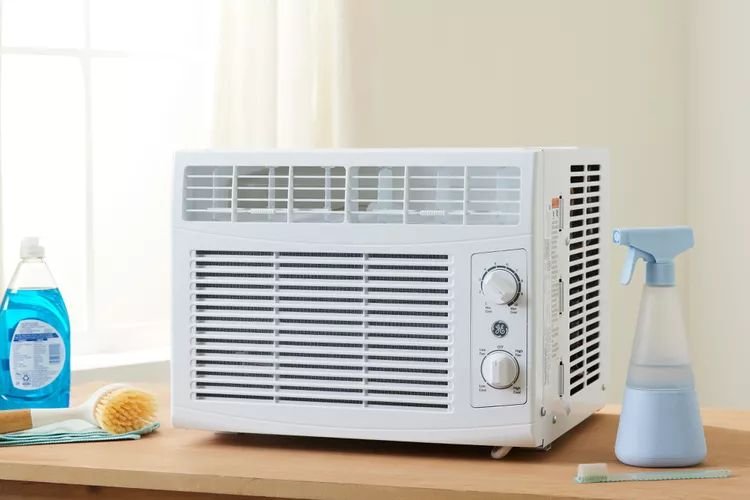
How to Properly Clean the Filter
- Ensure the AC unit is turned off and unplugged.
- Open the front panel and pull out the filter.
- Shine a light through it — if you cannot see through it, then it needs cleaning.
- Flush it under warm running water.
- Allow it to dry before returning it. Never reinsert a wet filter.
Most window AC filters can be reused. But if yours is torn or warped, get a new one. Replacing it with a new filter typically costs less than $10.
Pro tip: During peak summer use, set a phone reminder every 3 weeks. It takes under 5 minutes and makes a huge difference.
| Filter Condition | Action Required | Frequency |
|---|---|---|
| Slightly dusty | Light rinse | Every 2–3 weeks |
| Heavy dust accumulation | Deep clean with soap | Every 4 weeks |
| Torn or bent | Complete replacement | As required |
| Moldy or smelly | Immediately replace | Immediately |
Habit #2: Maintain Clean Evaporator and Condenser Coils
Most people clean the filter and move on. But the coils are just as important — if not more.
Your window AC unit has two sets of coils:
- Evaporator coils (inside) — removes heat from your room
- Condenser coils (outside) — dissipate the heat into the outside air
When these coils are covered in dirt and grime, heat transfer slows down tremendously. It takes longer for your room to cool. The compressor overheats. And eventually, it gives out.
Steps to Clean Your Coils
No expert required for this one. Here’s what to do:
- Unplug the unit.
- Gently remove the outer casing (refer to your manual).
- Gently scrub dirt from the coil fins with a soft brush.
- Spray with a no-rinse coil cleaner (found at any hardware store).
- Let it foam and run off — the gunk goes with it.
- Reassemble once dry.
Do this once at the beginning of the season, and once again at the end. That’s it.
Caution: Do not bend the coil fins. They’re delicate. If they become bent, airflow decreases and cooling performance suffers. If they’re bent, use a fin comb to straighten them.
Habit #3: Prioritize Unclogging the Drainage System Before Water Damage Occurs
This is the one that most people ignore until it’s too late.
As it cools, a window AC unit pulls humidity out of the air. That moisture has to leave somewhere — and it drains out through a tiny drain pan and drain hole at the very bottom of the unit.
If that drain becomes clogged with mold, algae, or debris, water backs up inside the unit. You’ll start to notice:
- Water dripping inside your room
- A musty smell from the AC
- Visible mold growth
If left untreated, this can harm your walls, your floors, and the AC unit itself.
How to Keep the Drain Clear
- Once a month, pour about half a cup of diluted white vinegar into the drain pan. It naturally kills algae and mold.
- If the drain hole appears blocked, a thin wire or pipe cleaner can be used to loosen any debris.
- Look for standing water in the drain pan. There should be none.
This five-minute routine can save you from a very costly water damage repair.
Habit #4: Regularly Straighten and Protect the Coil Fins
Examine the metal fins on your AC’s exterior. They resemble little, close-packed rows of aluminum.
These fins channel air through the coils. When they are bent — by impact, pressure washing, or rough cleaning — the airflow becomes uneven. That will make the unit work harder.
What You Should Do
- Check the fins at least twice a season.
- Carefully straighten any bent fins with a fin comb (about $10).
- Do not spray high-pressure water directly on the fins.
- Make sure no bushes, leaves, or debris are touching the outdoor side of the unit.
It’s a tiny habit with huge benefits. Straight fins = better airflow = a cooler, more efficient unit.
Habit #5: Inspect and Clean the Fan Blades
Your window AC unit has two fans — one blows cool air into your room, while the other pushes hot air outside.
As time passes, the blades gather dust and dirt. That throws them off balance. An unbalanced fan vibrates more, is louder, and wears out sooner.
Fan Blade Cleaning Routine
- Unplug the unit.
- Navigate to the front panel or gently remove the casing to access the fan blades.
- Wipe down each blade with a damp cloth. Remove all dust and buildup.
- Turn the blades by hand — they should turn freely and not wobble.
- Replace a blade if it is cracked or damaged.
Signs your fan blades need attention:
- Rattling or vibrating sounds
- Reduced airflow from the vents
- Exterior of unit feels hotter than usual
Do this cleaning once a season, or any time you hear strange noises.
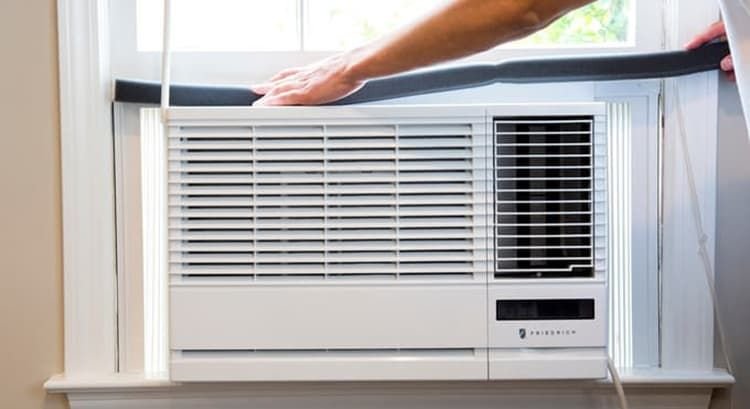
Habit #6: Check the Seal and Weatherstripping Around the Unit
This one is sneaky. It may seem harmless to have a little gap around your window AC. But it’s quietly draining your energy bill and your comfort.
When warm outdoor air seeps in along the edges of the unit, your AC has to work extra hard to compensate. That is wasted energy and additional wear on the compressor.
How to Check and Fix the Seal
- On a sunny day, feel the edges of the unit with your hand. Feel for warm air coming in.
- Inspect the foam strips or weatherstripping on each of the side panels. If they’re cracked, flat, or missing, they should be replaced.
- Seal any gaps with foam weatherstripping tape (very inexpensive at any hardware store).
- Verify that the window is snugly closed against the top of the unit.
A well-sealed unit saves not only energy — it also keeps out bugs and humidity.
| Seal Problem | What It Causes | Fix |
|---|---|---|
| Gaps on the sides | Warm air leaks in | Foam weatherstripping tape |
| Cracked side panels | Drafts, humidity | Replace accordion panels |
| Loose window frame | Air bypass | Reposition and secure unit |
| Missing bottom foam | Heat gain from below | Add new foam strip |
Habit #7: Deep Clean the Unit Completely Each Season
Consider this the annual checkup you give your AC.
A full top-to-bottom clean at the beginning of summer (before you turn it on) and at the end (before you store it) is strongly recommended. This gets everything back on track and stops small issues from snowballing into big ones.
Your Seasonal Deep Clean Checklist
Before the season starts:
- Clean the filter
- Clean the evaporator and condenser coils
- Clear the drain pan and drain hole
- Inspect and straighten fins
- Wipe down fan blades
- Check the seal and weatherstripping
- Check for signs of mold, rust, or pest activity
Before storing for winter:
- Repeat all of the above
- Dry out the unit completely to prevent mold
- Cover the outdoor side with a breathable AC cover
- If you remove it from the window, store it in a dry, clean spot
This full clean takes 45 minutes to an hour. But it can extend the life of your AC by years.
For more in-depth seasonal maintenance tips and product recommendations, visit Window AC Maintenance — a dedicated resource for keeping your unit in peak condition all year round.
Bonus Tips to Prevent Breakdowns All Year Long
These additional habits can complement the 7 core habits and add even more protection:
Keep the area around the unit clean. Don’t lean furniture or curtains against it. Blocked airflow is one of the biggest silent killers of AC units.
Don’t run the unit at full blast all the time. Instead of constantly cycling it up and down, set it to one steady, comfortable temperature. According to the U.S. Department of Energy, 78°F is the sweet spot for energy efficiency when you’re home.
Listen to your unit. Early warning signs include clicking, grinding, hissing, or rattling sounds. If you catch them early, you may just need a cleaning. Neglect them and you may find yourself facing a complete replacement.
Inspect the power cord and plug. Check for signs of fraying, burn marks, or overheating around the outlet. It is both a fire hazard and a sign of electrical strain on the unit.
Write down your model number. Keep it somewhere safe. You will need it if you ever require a replacement part or filter.
Window AC Maintenance Schedule at a Glance
| Task | Frequency |
|---|---|
| Clean/check filter | Every 2–4 weeks |
| Pour vinegar in drain pan | Monthly |
| Wipe fan blades | Monthly |
| Check weatherstripping/seal | Monthly |
| Clean coils | Beginning and end of season |
| Full deep clean | Twice a year |
| Inspect fins | Twice a season |
| Check power cord and plug | Once a season |
Print this out. Stick it on your fridge. Your future self will be very grateful.
Just How Much Can Maintenance Save You?
Now let’s spend a moment on numbers.
Common window AC repair costs — such as a refrigerant recharge or fan motor replacement — range from $100 to $400. A complete replacement can cost $300 to $700 or more.
Regular maintenance costs? Perhaps $20 to $30 a year in supplies (coil cleaner, vinegar, foam tape, replacement filters).
That’s potentially saving hundreds of dollars each and every year — from just a few simple habits.
And that doesn’t include the energy savings. A well-maintained AC can consume 10 to 25% less electricity than a neglected, dirty one. That can really add up over an entire summer on your electric bill.
FAQs About Window AC Cleaning & Maintenance
Q: How often do I need to overall clean my window AC unit?
A total clean twice a year (beginning and end of season) is the minimum. But you need to check and clean the filter every 2 to 4 weeks during heavy use.
Q: Should I use a pressure washer to clean the coils?
No. High-pressure water will just bend the sensitive fins and force water into electrical components. Instead, use a gentle spray bottle or no-rinse coil cleaner.
Q: My AC has a musty or moldy smell. What could be happening?
Usually, that means the drain pan is filled with standing water or mold growth. Empty the drain pan, unclog the drain hole, and clean the inner compartment with a diluted white vinegar solution. If the odor continues, there may be mold on the coils — clean those as well.
Q: Can I run my window AC in the rain?
Yes. Window ACs are designed to handle outdoor weather on the condenser side. Just be sure your window seal is tight so rainwater doesn’t get in around the edges.
Q: How do I know when to replace rather than repair?
If the unit is over 10 years old, requires regular repairs, or isn’t cooling well even after a thorough clean, it may be time to replace it. A new Energy Star-rated unit will also save you money on electricity.
Q: Can I clean the window AC without removing it from the window?
Yes, for most simple tasks such as cleaning filters, spraying coils, and drain maintenance. To deep clean the fan blades and internal parts, it can help to remove the unit — but it’s not always required.
Q: When is the best time to do a full maintenance check?
The best time is late spring, right before you regularly turn on the AC. And again in early autumn, before you store it or cover it for winter.
In Conclusion: Small Habits, Big Changes
Here’s the truth: a window AC failure rarely occurs out of the blue. It accumulates gradually — through neglected filters, blocked-up drains, dirt-encrusted coils, and worn-out seals.
But when you follow a solid window AC cleaning & maintenance guide routine, you stay one step ahead of it all.
You protect your investment. You cut costs on energy and repairs. And you get cool, clean air all summer long — without a single stressful breakdown.
Choose one habit from this list to implement starting today. Then build from there. You don’t have to do it all at once — consistency is so much more important than perfection.
Your window AC works hard to keep you comfortable. A little care goes a long way.