
Meta Description: Window AC cleaning & maintenance tips explaining how to breathe cleaner air, save on energy bills & extend your window unit life can all be done easily by following simple DIY steps anyone is able to do.
12 Simple Tips to Clean & Maintain Your Window AC for Better Air Quality
If you’ve been running your window AC for some time now, it’s definitely working harder than it needs to be — and blowing dirtier air than you might expect.
Dust, mold and bacteria love to hide inside AC units. So when you run a dirty unit, all of that just blows directly into your home. That includes allergies, musty rooms and bigger electric bills.
The good news? You don’t have to be a technician to solve this.
In this window AC cleaning & maintenance guide, we bring you 12 simple yet effective tips to help you keep your unit tuned-up and running efficiently, enhance your indoor air quality, whilst also saving on costs in the long run.
Let’s get into it.
Why It Actually Matters to Clean Your Window AC
People often only think about their AC when it fails. By then, it’s too late — the damage is done.
A dirty AC unit can:
- Decrease cooling efficiency by as much as 25%
- Circulate airborne dust, mold spores, and allergens
- Increase your monthly energy bill
- Reduce the longevity of the unit
According to the U.S. Department of Energy, a properly maintained air conditioner uses much less energy than one that has been neglected. Cleaning regularly is the single easiest thing you can do to protect your health — and your wallet.
Before You Begin: What You’ll Need
Before you get into the tips, here are some basic supplies to collect:
| Supply | Purpose |
|---|---|
| Screwdriver | Remove front cover |
| Soft brush or vacuum | Clean dust from filters and coils |
| Mild dish soap | Make solution to wash filter |
| Spray bottle | Applicator of cleaning solutions |
| Hydrogen peroxide or white vinegar | To kill mold and bacteria |
| Fin comb | Straighten bent coil fins |
| Microfiber cloth | Wipe off equipment |
| Coil cleaner spray | Deep clean the evaporator coils |
| Gloves and mask | Personal protective gear |
Beyond that, most of these items go for under $20 total. You likely already have some at home.
Tip 1 — Always Shut Off the Power First
It seems obvious, but lots of people don’t do it.
Before touching anything on your AC unit, unplug it from the wall. Don’t simply turn it off with the remote or by pressing a button. Unplug it completely.
Window AC units draw an amount of electrical current that can seriously injure or kill. The risk is even greater with water and cleaning sprays.
Wait 10–15 minutes after unplugging before you start working on the unit. This allows any residual charge to dissipate and gives the coils a chance to dry out if condensation is present.
Safety first. Always.
Tip 2 — Clean or Change the Air Filter Every 2–4 Weeks
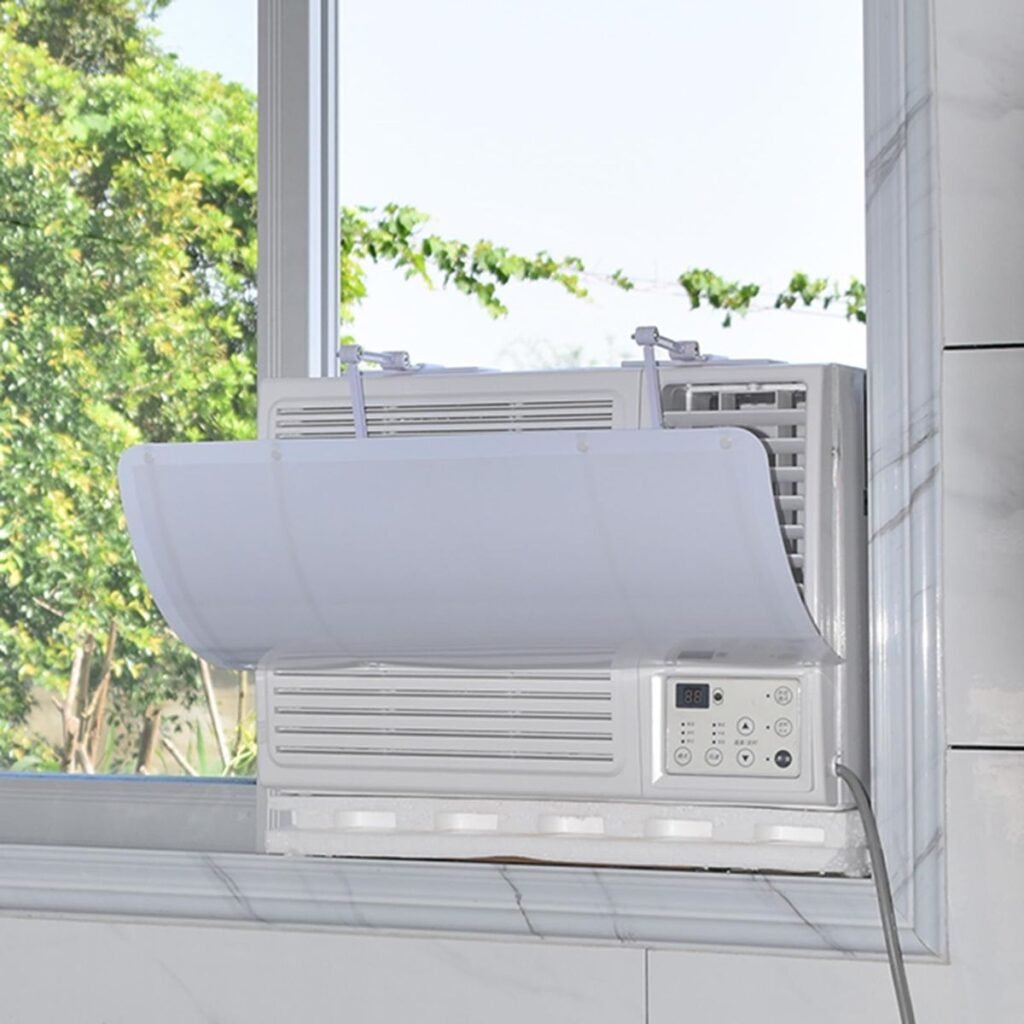
An air filter is the first line of defense against dust and debris. It’s also the least frequently touched part of any window AC unit.
A clogged filter blocks airflow. When airflow is limited, your AC must work twice as hard in order to cool the same area. It’s energy wasted and money wasted.
How to clean the filter:
- Take off the front panel (it typically snaps off, or is held with 2 screws)
- Slide out the filter
- Shine a light through it — if you don’t see light shining through, it needs cleaning
- Wash it under warm running water
- Put a dot of dish soap and scrub gently with a soft brush
- Rinse well then air dry completely
- Re-insert only when fully dry
Never reinsert a wet filter back into the unit. That’s how mold starts.
If the filter is ripped, warped or has a lot of discoloration, it needs to be replaced. Replacement filters typically range from $5 to $15.
Tip 3 — Deep Clean Your Evaporator Coils Once a Season
The evaporator coils are located just behind the filter. They are what make air cooler. Over time they acquire a film of dust and grime that acts like an insulating blanket — making it difficult for heat to transfer.
How to clean them:
- Brush off loose dust lightly with a soft brush
- Evenly apply a no-rinse coil cleaner over the coils
- Let it fizz and drip into the pan beneath
- Use a microfiber cloth to wipe away any excess
A no-rinse coil cleaner can be found in any hardware store for approximately $10. It’s an investment that pays off big time for your unit.
Never use a pressure washer or hard stream of water. Coil fins are very fragile and can bend easily.
Tip 4 — Use a Fin Comb to Straighten Bent Coil Fins
While you’re cleaning the coils, check out the fins — the thin aluminum slats that run alongside the coils.
Like a clogged filter, bent fins limit airflow. Even gentle bends can have a significant impact on efficiency.
A fin comb (available online for under $10) can straighten these fins without damaging the coils. Gently slide it through the bent part and pull up in one smooth motion.
Doing just that one simple thing can make a significant difference in airflow and cooling output, particularly on older units.
Tip 5 — Clean the Condenser Coils at the Back of the Unit
The condenser coils are on the outdoor-facing side of your window unit. They expel heat from inside your house to the outside air.
Those coils are exposed to everything — leaves, pollen, bugs, bird droppings and city grime.
To clean them:
- Gently take the unit out from the window (or work from outside if possible)
- Turn a garden hose on low and spray the coils from inside out
- Let the unit dry completely in the sun before reinstalling
Do this at least once a season, ideally before the summer starts.
Tip 6 — Inspect & Clean the Drain Pan
All window AC units accumulate condensation when they cool the air. That water drips into a drain pan, and then runs out through a drain hole.
Water backs up when the drain pan becomes filled with algae, mold or debris. That puddle of standing water can become a bacteria farm — and eventually it can spill over into your wall or floor.
To clean the drain pan:
- Take it out, if possible (check the manual for your unit)
- Wash it down with warm soapy water
- Kill mold and algae with a combination of equal parts water and white vinegar
- Clear the drain hole with a wire or pipe cleaner
Repeat this every month during high-use months.
Tip 7 — Disinfect Inside to Keep Mold from Growing
Mold inside an AC unit is more prevalent than many people know — and more harmful.
When mold spores float through your home, they may cause asthma, allergies and respiratory problems. Those with compromised immune systems are particularly vulnerable.
To disinfect:
- Fill half the spray bottle with water and the other half with hydrogen peroxide
- Lightly spray all interior surfaces — the housing, drain pan and fan blades
- Let it sit for 10 minutes
- Wipe down with a clean cloth
- Allow to fully air dry before running the unit
Avoid spraying directly on electrical components.
If repeated once a month throughout the cooling season, this can help prevent any chance for mold to take hold at all. For more detailed seasonal maintenance routines, visit Window AC Maintenance — a helpful resource covering everything from basic upkeep to advanced care tips.
Tip 8 — Clean the Fan Blades
The fan blades in your window AC unit spin thousands of times every hour. Over time they collect dust, grease, and grime.
Fan blades with a buildup of dirt are less aerodynamic. And they also send particles right into the airstream — so you inhale whatever’s on them.
To clean fan blades:
- Use a damp microfiber cloth
- Wipe each blade from base to tip, gently but thoroughly
- Use a cotton swab for tight corners
- Lightly mist with disinfectant spray and wipe clean
Be gentle. Fan blades can be delicate, particularly on older units.
Tip 9 — Check the Window Seal & Weatherstripping
This tip is constantly overlooked — but it makes a massive impact on efficiency.
Your window AC unit should fit snug against the window frame. If there are gaps, warm outside air leaks in and cold conditioned air bleeds out. Your unit runs non-stop trying to make up for it.
Check for gaps by:
- Running your hand around the edges of the unit on a hot day
- Looking for daylight visible around the unit from indoors
- Checking if the foam strips on the sides are flattened or torn
Install foam tape from any hardware store in place of worn weatherstripping. It’s under $5 and it can make a huge difference in how hard your unit has to operate.
Tip 10 — Keep the Area Around the Unit Clear
Your window AC needs airflow — both indoors and outdoors.
Inside: Avoid positioning furniture, curtains and shelves directly in front of the unit. Blocking the airflow means the cool air can’t circulate effectively.
Outside: Ensure that nothing is stacked against the back of the unit. If the condenser coils are covered by leaves, vines or debris, your unit will overheat and shut down.
Leave at least 12–18 inches of clearance on all sides when possible.
Tip 11 — Plan a Complete Deep Clean at the Start and End of Every Season
This is a biannual reset for your unit.
At the start of summer:
- Full filter cleaning
- Coil cleaning (evaporator and condenser)
- Drain pan check
- Mold disinfection
- Seal inspection
Late summer (pre-storage):
- Full cleaning as above
- Let the unit dry completely
- Put a breathable AC cover on it or keep it indoors
- Never put a wet unit away — mold will set in during the off-season
A clean unit that’s been put away properly is always ready for good performance on day one next season.
Tip 12 — Call an Expert When You Need To
Doing your own maintenance can only go so far — some problems need a professional.
Notify a technician if you notice:
- Ice on the coils even after cleaning
- Strange grinding, squealing or rattling noises
- The unit is blowing warm air even though it is set to cool
- A burning smell coming from the unit
- Oily residue or fluid deposit near the coils
Refrigerant problems in particular should never be attempted at home. Refrigerant is a regulated chemical that must be handled safely with specialized equipment and certification.
A professional tune-up once a year runs $75–$150 and can detect problems before they lead to expensive breakdowns.
Window AC Cleaning Schedule at a Glance
| Task | Frequency |
|---|---|
| Wash or replace the air filter | Every 2–4 weeks |
| Wipe down all exterior surfaces | Every 2 weeks |
| Clean fan blades | Monthly |
| Disinfect inside for mold | Monthly |
| Clear and clean drain pan | Monthly |
| Clean evaporator coils | Once a season |
| Clean condenser coils | Once a season |
| Inspect window seals | Once a season |
| Full deep clean and storage prep | Twice yearly |
| Professional inspection | Once yearly |
The Science of How a Clean AC Improves Air Quality
Here’s a quick breakdown of what really is happening inside your unit and why cleanliness matters so greatly for the air you breathe:
Stage 1 — Air Intake Room air is drawn into the unit through the front grille. When the filter is dirty, dust and common allergens simply flow around the filter and into the system.
Stage 2 — Filtration Particles are captured by the filter. A clean filter can trap dust mites, pet dander, pollen and smoke particles. A dirty filter lets them pass right through.
Stage 3 — Cooling Air flows over the evaporator coils. If the coils are covered with grime, they can’t cool well — and any mold or bacteria settled on those coils gets blown right into the room.
Stage 4 — Circulation The fan pushes cooled air back out. Dirty fan blades distribute whatever they’ve gathered. Clean blades mean cleaner air.
Result: Clean system = clean air. Dirty system = pollution machine.
Warning Signs That Your Window AC Needs Immediate Attention
Don’t wait for it to break down completely. Watch for these warning signs:
- Funky or sour odor — typically indicates mold inside the unit
- Weak airflow — clogged filter or dirty coils
- Water leaking indoors — clogged drain pan or improper slope
- Increased electric bill — unit is running overtime due to clogs
- Running on and off excessively — may indicate dirty coils or a refrigerant problem
- Visible dust blowing out — severely clogged filter
Any of these is a signal to stop, unplug and give the unit a good cleaning before running it again.
Frequently Asked Questions
How often do I need to clean my window AC unit? If used frequently, clean the filter every 2–4 weeks. Perform a complete deep clean at the start and end of each cooling period. Disinfect the interior a minimum of once a month.
Is it possible to use bleach to clean the interior of my AC? Bleach is effective on mold but can damage metal parts and leave a toxic residue. White vinegar or hydrogen peroxide is safer and equally effective for home use.
What happens if I don’t clean my window AC? A dirty unit operates less efficiently, increases energy costs, and circulates allergens and mold spores, as well as having a shorter overall lifespan. Poor maintenance is responsible for the majority of premature AC breakdowns.
Can you clean window AC coils yourself? Yes, using a soft brush and no-rinse coil cleaner for basic cleaning. But if the coils are severely damaged or you think there is a refrigerant leak, contact a professional.
How can I tell if my window AC has mold? The telltale sign is a musty smell when the unit runs. You might also notice dark spots or stains on the filter, drain pan or interior housing.
Can a dirty AC make you sick? Yes. Dirty AC units can circulate mold spores, bacteria, dust mites and allergens — all of which can aggravate allergies, trigger asthma and cause respiratory irritation.
How long does a window AC unit last with proper maintenance? With regular cleaning and proper care, a good window AC unit can last 10–15 years. That number drops to 5–7 years or less without maintenance.
Do I need to cover my window AC during winter? If you keep it installed, cover it with a breathable exterior cover to protect it from debris and moisture. Better yet, clean it up and store it indoors.
Wrapping It Up
Your window AC unit has a tough job — and it does its best work when you help it along.
The 12 tips in this window AC cleaning & maintenance guide are not difficult. They mostly take under 30 minutes and cost next to nothing. But taken together, they have a huge impact on the air quality in your home, how efficiently your unit works and how long it lasts.
Start with the filter. Get into the coils, the drain pan, and the seals. Make a simple schedule and stick to it.
Clean air isn’t a luxury. It’s something you can create, given a bit of time and the right guidance.
Now you have both.