
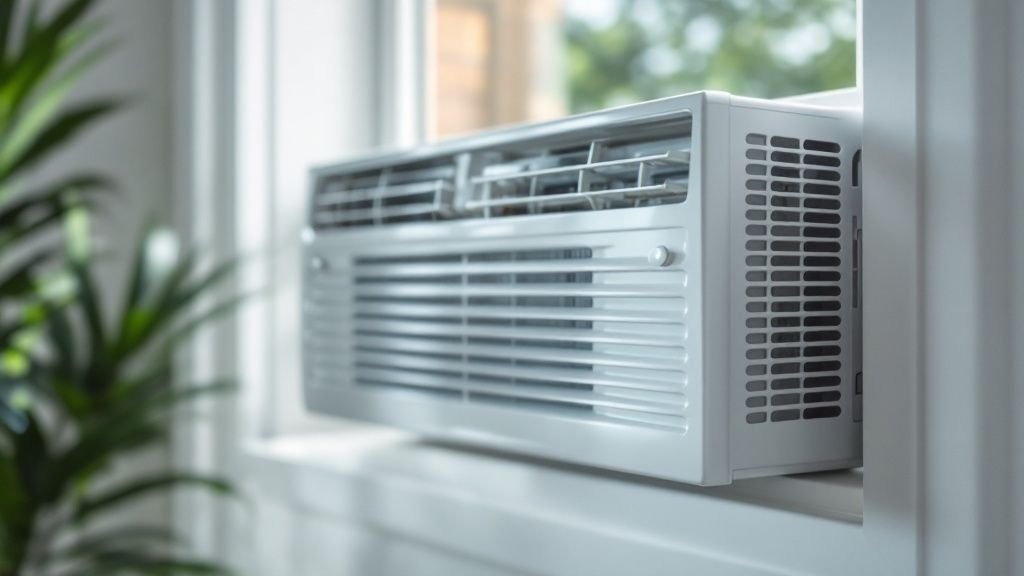
Last summer, my window AC unit started blowing lukewarm air right in the middle of a brutal heat wave. I’m talking 42°C outside, kids at home, and a unit that was basically just circulating hot disappointment around my room. My first instinct? Go shopping for a new one.
But before I dropped anywhere from Rs. 35,000 to Rs. 60,000 on a replacement, my neighbor — a retired electrician — told me to hold off. “Try a few things first,” he said. “These units are tougher than you think.”
So I did. And honestly? Eight out of nine fixes I tried actually worked — at least partially. I’m writing this so you don’t waste money replacing something that just needs a little attention.
1. Cleaned the Air Filter (And Was Disgusted by What I Found)
This was the first and most obvious thing to check, and I honestly felt embarrassed that I hadn’t done it sooner. I pulled out the filter and it looked like a small grey carpet. Dust, lint, possibly the remnants of two summers.
A clogged filter blocks airflow and forces the unit to work harder, which means less cooling and more electricity wasted.
What I did:
- Turned off and unplugged the unit
- Removed the front panel and slid out the filter
- Washed it under running water with mild dish soap
- Let it dry completely (I gave it 2 hours in the shade)
- Reinstalled it
The difference was noticeable within 20 minutes of turning it back on. Airflow improved significantly. This alone might solve your problem if you haven’t cleaned your filter in a while.
How often to clean: Every 2–4 weeks during heavy use.
2. Checked and Cleared the Drainage Hole
Water was pooling inside my unit and occasionally dripping inside the room — not outside where it should drain. I didn’t realize this was even a maintenance item until I looked it up.
Window ACs remove humidity from the air, and that water needs to drain properly. If the drainage hole gets blocked with algae, dirt, or debris, water backs up and can cause all sorts of problems including reduced cooling and even mold growth.
Fix:
I used a thin wire and a bit of diluted bleach solution to clear the drainage hole at the back of the unit. You can also use a pipe cleaner or a straightened coat hanger — carefully.
After clearing it, water started draining properly again and the musty smell that had been bothering us for weeks disappeared.
3. Straightened the Condenser Fins
This one surprised me. When I pulled the outer casing off (after watching a couple of YouTube videos for my specific model), I noticed that several of the thin aluminum fins on the back of the unit were bent and pressed together.
Bent fins reduce airflow over the condenser coil, which directly hurts cooling performance.
I used a fin comb — cost me about Rs. 200 from a local hardware shop — and carefully straightened the fins row by row. It takes patience but it’s not complicated.
Before and after cooling performance (approximate observation):
| Condition | Room Cooling Time (12×12 ft room) |
|---|---|
| Before fin straightening | ~55 minutes to feel cool |
| After fin straightening | ~35 minutes to feel cool |
Not scientific, but the improvement was real enough that I noticed it without even trying.
4. Cleaned the Evaporator and Condenser Coils
While I had the casing off, I went ahead and cleaned both coils. The evaporator coil (inside, cold side) had dust buildup on it, and the condenser coil (outside, hot side) had dirt and debris packed into it.
I used a coil cleaner spray — available at most AC shops or online — and let it foam up and drip the dirt away. For the condenser, I also used a soft brush and carefully rinsed it with water.
This is honestly one of the most impactful maintenance steps that most people never do. Dirty coils are one of the biggest reasons units underperform.
Tip: Don’t spray water directly on electrical components. Work carefully and let everything dry before reassembling.
For a more detailed walkthrough of the cleaning process, check out 9 Powerful Window AC Cleaning & Maintenance Steps I Wish I Knew Earlier
5. Resealed Gaps Around the Unit
I noticed that on hot afternoons, even with the AC running, the room wasn’t cooling well. Then I held my hand around the edges of the unit and felt warm air seeping in from outside.
The foam insulation strips that came with the unit had deteriorated over two seasons. There were visible gaps on both sides where the accordion-style side panels met the window frame.
What I used:
- Foam weatherstripping tape (Rs. 150 from a hardware store)
- A piece of cardboard cut to fit one awkward gap
- Some AC insulation foam I had left over
After resealing everything, the room felt noticeably cooler at the same thermostat setting. This is one of those fixes that’s cheap, takes 20 minutes, and makes a big difference.
Common gap locations to check:
| Location | What to Use |
|---|---|
| Side accordion panels | Foam weatherstripping tape |
| Top of window sash | Rubber seal or foam tape |
| Window frame corners | Insulation foam or caulk |
| Between unit and sill | Foam strips or towel as temp fix |
6. Checked the Thermostat Sensor Position
This one was a bit technical but worth trying. Window AC units have a small thermostat sensor — a thin wire with a small bulb at the end — that sits near the evaporator coil. If this sensor gets bent out of position (touching the coil directly, or bent away), the unit doesn’t cycle correctly.
Mine was bent and actually touching the coil, which was causing the compressor to short-cycle — turning off too soon before the room was actually cool.
Fix: I gently bent the sensor wire so the bulb was about 1–2 cm away from the coil without touching it. This is a delicate step — move it very carefully. The improvement was immediate. The unit started running full cycles and the room reached the set temperature properly.
7. Cleaned the Blower Fan Blades
The blower fan inside the unit (the squirrel-cage fan) had a thick layer of gunk on every blade. This happens when dusty air passes through a damp coil repeatedly — it sticks.
A dirty blower fan moves significantly less air, which means poor cooling even if everything else is working fine.
I used a damp cloth, an old toothbrush, and some diluted all-purpose cleaner to scrub each blade individually. It took about 45 minutes but was completely worth it.
Signs your blower fan needs cleaning:
- Reduced airflow despite clean filter
- Slightly burning or dusty smell
- Fan sounds like it’s working harder than usual
- Visible dark buildup on the front grille
For more practical cleaning tips that go beyond the basics, 8 Essential Window AC Cleaning & Maintenance Tasks Most People Ignore covers several things I also discovered during this whole process.
8. Checked the Capacitor (With Help)
After all the cleaning, the unit still occasionally struggled to start — the compressor would hum for a few seconds and sometimes cut out before the cooling kicked in. My retired electrician neighbor came over and tested the capacitor with a multimeter.
The capacitor was weak. It’s the component that gives the compressor and fan motor the electrical boost they need to start up. A failing capacitor is actually one of the most common reasons AC units seem like they’re dying when they’re actually fine.
He replaced it with a matching capacitor that cost Rs. 350 from an electronics shop. The unit started crisply and consistently after that.
I do NOT recommend doing this yourself unless you know what you’re doing. Capacitors store charge even when unplugged and can give you a serious shock. But having a technician check and replace it is cheap — usually Rs. 500–1000 including labor — versus buying a whole new unit.
Capacitor symptoms vs other issues:
| Symptom | Likely Cause |
|---|---|
| Hums but doesn’t start | Weak/failed capacitor |
| Runs but doesn’t cool | Dirty coils or refrigerant issue |
| Short cycling | Thermostat sensor or dirty filter |
| Ice forming on coil | Restricted airflow or low refrigerant |
| Water dripping inside | Blocked drainage or improper tilt |
9. Adjusted the Tilt Angle of the Unit
This last one felt almost too simple, but it made a difference. Window AC units are supposed to be installed with a very slight backward tilt — maybe 1–2 degrees — so that condensate water drains outside rather than pooling inside.
My unit had shifted over time and was actually tilting slightly inward. This meant water was pooling at the bottom of the unit inside the room, creating a damp, musty environment that was also affecting the fan.
I shimmed the outer edge of the unit with a folded piece of rubber (a piece cut from an old flip-flop, honestly) to restore the proper outward tilt. Problem solved.
Quick tilt check: Place a small spirit level on top of the unit. The bubble should sit just slightly toward the indoor side, meaning the outdoor side is slightly lower.
What Actually Fixed My Unit in the End
Not one single fix saved my AC — it was the combination of all of them. Each one addressed a different layer of the problem. Here’s a quick summary:
| Fix | Difficulty | Cost | Impact |
|---|---|---|---|
| Clean air filter | Easy | Rs. 0 | High |
| Clear drainage hole | Easy | Rs. 0 | Medium |
| Straighten fins | Medium | Rs. 200 | Medium |
| Clean coils | Medium | Rs. 300–500 | High |
| Reseal gaps | Easy | Rs. 150–300 | High |
| Reposition thermostat sensor | Medium | Rs. 0 | Medium–High |
| Clean blower fan | Medium | Rs. 0 | High |
| Replace capacitor | Hard (get help) | Rs. 350–1000 | High |
| Adjust tilt | Easy | Rs. 0–50 | Medium |
Total cost of everything: around Rs. 1,500–2,000, plus a few hours of my time. My unit ran beautifully for the rest of the summer.
Mistakes I Made Along the Way
- Didn’t unplug the unit before working on it the first time. Don’t do this. Always unplug.
- Used too much water on the coils and had to wait longer for things to dry.
- Tried to do the capacitor myself before realizing how dangerous it is. Got a mild shock. Got help after that.
- Reassembled too quickly without making sure the filter was completely dry, which caused a brief musty smell.
When Should You Actually Replace It?
Look, not every unit is worth saving. Here’s when I’d say replacement makes more sense:
- The refrigerant is leaking (recharging plus fixing the leak often costs more than a budget unit)
- The compressor itself has failed (compressor replacements usually aren’t economical on smaller window units)
- The unit is more than 10–12 years old and has multiple failing components
- Energy consumption is dramatically higher than a newer unit would be
If none of those apply? Try the fixes above first. You might be surprised.
For more on energy consumption and how to get the most efficiency out of your unit before replacing it, 10 Smart Window AC Tips to Reduce Electricity Bills is a solid read.
FAQs
Q1: How do I know if my window AC just needs cleaning or actually needs replacing?
Start with a clean filter, clear drainage, and clean coils. If the unit still isn’t cooling after those steps and a technician confirms the compressor or refrigerant system has failed, then replacement makes more sense. Most units that “stop cooling” are actually just dirty or have a failed capacitor.
Q2: Can I clean the coils myself without any special equipment?
Yes. You can use a no-rinse coil cleaner spray (available online or at AC supply shops), a soft brush, and careful hands. The key is to avoid soaking electrical components and to let everything dry fully before turning the unit on.
Q3: My AC is making a loud rattling noise. Is that a serious problem?
Not always. Rattling is often caused by loose screws on the casing, debris stuck in the fan blades, or a slightly unbalanced blower. Turn it off, check for any visible foreign objects in the unit, tighten visible screws, and clean the fan. If the noise persists, it could be a failing fan motor bearing — worth having checked.
Q4: How often should I do full maintenance on a window AC?
Filter cleaning every 2–4 weeks during the season. A full deep clean including coils, fan, and drainage once per season (ideally before summer starts). Checking seals and tilt once a year is also a good habit.
Q5: Is it safe to use a pressure washer on the condenser coils?
Avoid it. High pressure can easily bend the delicate aluminum fins and damage the coil. A gentle garden hose or a spray bottle works fine. Always spray from the inside outward to push dirt out the same direction it came in.
If you’re dealing with an older unit that seems sluggish or inefficient, you might also want to read 11 Smart Window AC Tips to Revive an Old AC — it covers some additional strategies specifically for aging units that I found genuinely useful.