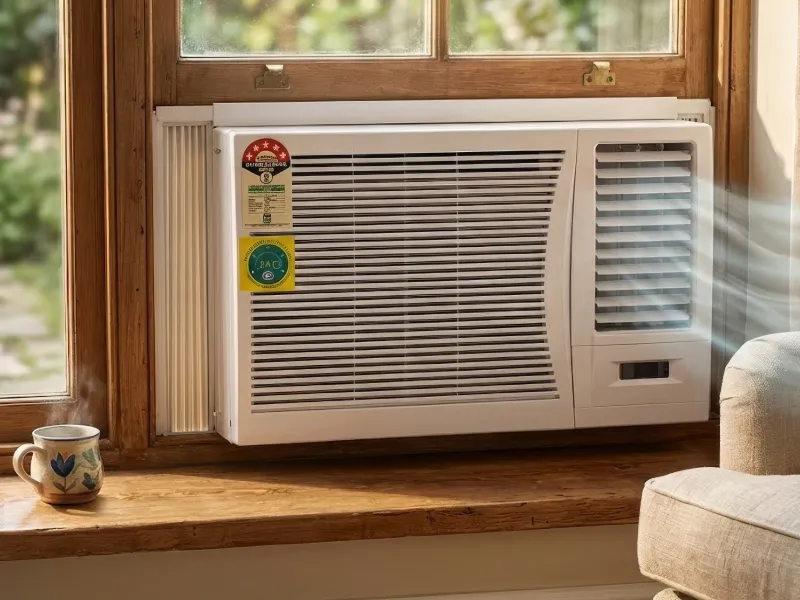
Last summer, I was sitting in my room at 11 PM, sweating through my shirt, staring at my window AC unit that had decided — out of nowhere — to just stop cooling properly. It was running, the fan was spinning, but the air coming out felt like someone had unplugged the cold part entirely.
I didn’t want to call a technician at that hour. And honestly, I didn’t want to pay for one either.
So I started troubleshooting. Some things I tried were dumb. Some actually worked within minutes. By midnight, my room was cool again — and I’d learned more about window ACs in two hours than I had in the past five years of owning one.
This article is everything that worked. No filler, no theory. Just real fixes that gave real results — fast.
1. Check the Air Filter First — It’s Almost Always Dirty
I know, I know. Everyone says “check the filter.” But I genuinely didn’t realize how much a clogged filter could destroy cooling performance until I pulled mine out and it looked like a small animal had moved in.
A dirty filter blocks airflow so badly that the unit works twice as hard to push half the air. Your room stays warm, the compressor gets stressed, and you assume something is broken when the fix costs you zero rupees.
How to do it:
- Turn the AC off and unplug it
- Pull out the front grille (usually clips off or has two screws)
- Slide out the foam/mesh filter
- If it’s grey and fuzzy, wash it with warm water and a little dish soap
- Let it dry completely before reinserting
- Turn the AC back on
The first time I did this properly, the airflow improvement was immediate. The unit sounded different — less strained. Cleaning took maybe 10 minutes.
How often should you clean it?
| Usage Level | Cleaning Frequency |
|---|---|
| Light (a few hours/day) | Every 3–4 weeks |
| Moderate (8+ hours/day) | Every 2 weeks |
| Heavy / Dusty environment | Every week |
2. Reset the Unit — Seriously, It Actually Works
Window ACs have internal sensors and safety cutoffs that can trip without any obvious reason — a voltage fluctuation, a brief overheating event, or just a glitch. When this happens, the compressor may stop working even though the fan keeps running.
Before you panic and call anyone, try a full reset.
Steps:
- Turn the AC off using the remote or control panel
- Unplug it from the wall — not just switch it off, physically unplug
- Wait a full 5 minutes (this lets the capacitors discharge and the sensors reset)
- Plug it back in
- Set it to Cool mode at the lowest temperature and run it for 10 minutes
I’ve had this fix work at least three times across two different units. It sounds too simple, but that’s exactly why people skip it and go straight to calling a technician.
3. The Coil Freeze Problem — And How to Fix It Fast
One night, I noticed water dripping aggressively from my unit and the cooling had basically stopped. I thought it was a refrigerant leak. It wasn’t.
The evaporator coil had frozen solid. This happens when:
- Airflow is restricted (dirty filter — see point 1)
- The room temperature drops too low and the AC keeps running
- There’s low refrigerant (this one does need a technician)
But in most cases, it’s an airflow issue you can fix yourself.
How to thaw it out:
- Switch the AC to Fan Only mode (no cooling)
- Let it run like this for 30–60 minutes
- The fan will blow warm air across the coil and melt the ice
- Once done, check and clean the filter before switching back to Cool mode
You’ll usually see water dripping into the drain pan as the ice melts — that’s normal. Place a towel below just in case.
4. Check Your Temperature Setting and Mode — This Sounds Obvious Until It Isn’t
I once spent 20 minutes convinced my AC was broken, only to realize it was set to “Fan” mode, not “Cool.” My brother had changed it and forgotten to mention it.
But beyond that, there’s a smarter way to use temperature settings that can dramatically improve how fast your room cools.
The mistake most people make: Setting the AC to 16°C or 18°C thinking it’ll cool faster.
It won’t. Your AC compresses refrigerant at the same rate regardless. What changes is when the compressor shuts off. Setting it extremely low means the compressor never rests, which stresses the unit and can actually trigger the coil freeze issue I mentioned above.
What actually works: Set it to 24°C initially. Once the room drops to a comfortable level, you can go to 22°C. This lets the unit cycle properly and cool more consistently.
Also double-check you’re in Cool mode and not Dry or Auto — both of those behave differently.
5. Inspect the Vents and Fins on the Back — The Forgotten Side
Most people clean the front filter and call it a day. The back of the unit — which faces outside — gets completely ignored. And that’s where the condenser coils and fins are, responsible for releasing heat from your room to the outside air.
When those fins get bent, clogged with dust, leaves, or debris, the unit can’t release heat efficiently. The result? Weak cooling and a unit that runs constantly without reaching the set temperature.
For a quick fix, you can use a fin comb (costs less than 300 rupees online) to straighten bent fins. For cleaning, a can of compressed air works well, or even a gentle rinse with water if you’re comfortable removing the unit.
Here’s a quick comparison of what blocked vs clean fins do:
| Condition | Cooling Efficiency | Energy Use |
|---|---|---|
| Clean fins, good airflow | 100% efficient | Normal |
| Partially blocked fins | ~75% efficient | 15–20% higher |
| Heavily clogged fins | ~50% efficient | 30–40% higher |
This one fix — straightening and cleaning the back fins — made a noticeable difference for me, especially in peak summer when outside temps are brutal.
6. The Drainage Problem Nobody Talks About
Window ACs produce condensation as they cool. This water is supposed to drain out through a small hole at the back-bottom of the unit. When that drain gets clogged, water backs up, the drain pan overflows, and sometimes the unit starts shutting off automatically as a safety measure.
If your AC is leaking water inside the room, or it keeps shutting off randomly, check the drain.
How to unclog the drain:
- Turn off and unplug the unit
- Find the drain hole at the rear bottom of the unit (usually a small slot or hole)
- Use a thin wire, pipe cleaner, or straw to poke through and clear any blockage
- If accessible, pour a small cup of water through to test the flow
- You can also use a wet/dry vacuum from outside to suck out any blockage
I had a unit that kept triggering its auto-shutoff for two days. The technician was going to charge me for a refrigerant check. Turned out the drain was completely blocked with algae buildup. Five minutes with a wire fixed it.
If you want to prevent this, add a few drops of white vinegar into the drain channel every month — it kills algae before it builds up.
For more detailed help on this specific issue, check out this guide on 10 Easy Window AC Cleaning Maintenance Guide Fixes for Water Leakage.
7. Power and Voltage Issues — The Fix You Don’t Expect
This one surprised me the most. My AC was running but the cooling was weak and inconsistent. The compressor would kick on, run for a bit, then shut off — repeatedly. I cleaned everything, reset it, checked the filter. Nothing helped.
A neighbor suggested I check the voltage at the outlet.
I borrowed a cheap multimeter (you can get one for under 500 rupees) and tested the wall socket. The voltage was dropping to around 185V during peak evening hours. My AC’s compressor needs a stable 220–240V to run properly. At low voltage, it can’t maintain the pressure needed for effective cooling — and the thermal protection trips to prevent motor damage.
What to do:
- Test your outlet voltage during evening hours when grid load is highest
- If voltage is consistently low, a voltage stabilizer (also called an AC stabilizer) is worth buying — they run between 1,500 to 4,000 rupees and protect both cooling and compressor life
- Make sure the AC has a dedicated outlet — sharing with other high-draw appliances (like a microwave or refrigerator) on the same circuit drops available voltage
This was the fix I least expected to need, but it made the most consistent difference long-term.
Common Mistakes I Made (So You Don’t Have To)
- Spraying the coils while the unit is plugged in. Always unplug first. Learned this after a small shock reminded me.
- Reassembling the filter before it was fully dry. A damp filter grows mold fast and starts pushing musty air into the room.
- Ignoring the error codes. Most modern window ACs flash an error code when something’s wrong. I used to ignore those lights. Now I look them up immediately — they save a lot of guessing.
- Running the AC with the window gaps unsealed. If warm air is leaking in around the sides of the unit, no amount of troubleshooting helps. Foam tape costs almost nothing and makes a big difference.
- Skipping the 3-minute wait before restarting. Restarting the compressor too quickly after shutting off can damage it. Most units have a built-in delay, but on older models, wait at least 3 minutes manually.
For a broader look at these kinds of preventable issues, this breakdown of 7 Secret Window AC Cleaning Maintenance Guide Mistakes to Avoid Today covers the topic really well.
Quick Reference: Symptom → Most Likely Fix
| Symptom | Most Likely Cause | Quick Fix |
|---|---|---|
| Running but not cooling | Dirty filter or frozen coil | Clean filter / thaw coil |
| Water dripping indoors | Clogged drain | Clear drain hole |
| Compressor keeps shutting off | Low voltage or coil freeze | Check voltage / thaw coil |
| Weak airflow | Dirty filter or bent fins | Clean filter and fins |
| Bad smell from vents | Mold on coil or filter | Deep clean + vinegar |
| Unit not turning on | Tripped breaker or faulty plug | Check breaker / try reset |
| Fan works, no cold air | Wrong mode or thermostat issue | Check mode settings |
When to Actually Call a Technician
There are a few things you genuinely cannot fix at home without equipment:
- Refrigerant leak — If your coil keeps freezing and the filter is clean, low refrigerant is likely. This needs a certified technician with a charging kit.
- Compressor failure — If the unit hums but the compressor never kicks on, the compressor or capacitor may be dead.
- Electrical faults inside the unit — Burning smells, sparks, or tripped breakers that keep returning.
Everything else? Honestly, a lot of it is stuff you can handle with basic tools and a bit of patience. The technician calls I’ve paid for in the past — most of them could have been avoided with the steps above.
For a complete look at how to identify when you should handle it yourself vs. call someone, this article on 5 Smart Window AC Cleaning Maintenance Guide Checks Before Calling a Technician walks through it clearly.
Final Thoughts
The night I fixed my AC at midnight, I felt genuinely proud — not because it was complicated, but because I’d been assuming these things required expertise I didn’t have. Most of the time, the issue is something basic: a filter, a blocked drain, a wrong setting, or inconsistent voltage.
Once you go through these fixes a couple of times, it becomes second nature. You’ll hear your AC differently, notice when something’s slightly off, and catch problems before they become repair bills.
Keep a small maintenance kit near your AC unit — a screwdriver, a soft brush, compressed air, and a multimeter. That’s genuinely all you need for 90% of the issues that come up.
Frequently Asked Questions
Q1. My window AC is running but blowing warm air — what’s the first thing I should check?
Start with the air filter. A heavily clogged filter restricts cold airflow so much that the air reaching you is barely cooled. Also verify the unit is actually set to “Cool” mode and not “Fan” or “Dry.”
Q2. How do I know if my AC coil is frozen?
The most obvious signs are: weak or no airflow from the front vents, water dripping excessively inside the room, and the unit feeling unusually cold on the outside casing. If you remove the front panel and see ice on the silver coil behind the filter — that confirms it.
Q3. Can low voltage really stop my AC from cooling?
Absolutely. Compressors require a specific voltage range to operate. Below that range, they either underperform or trip their thermal protection. A stabilizer is a worthwhile investment if your area has voltage fluctuations.
Q4. How often should I fully clean my window AC (not just the filter)?
A full cleaning — coils, drain, fins, and casing — should happen at least once before the summer season starts and once midway through if you’re using it heavily. Monthly filter cleaning should happen regardless.
Q5. My AC turns on, runs for a few minutes, then shuts off. What’s wrong?
This is usually one of three things: coil freeze (thaw it and check the filter), a clogged drain causing the safety float switch to trip, or a voltage issue causing the thermal protector to cut power. Start with the drain and filter — those are the easiest to check.
Also worth reading: If you want to go beyond basic fixes and build habits that keep your unit running well all year, check out 7 Smart Window AC Cleaning Maintenance Guide Habits That Prevent Breakdowns — it covers a lot of the preventive side that this article doesn’t get into.