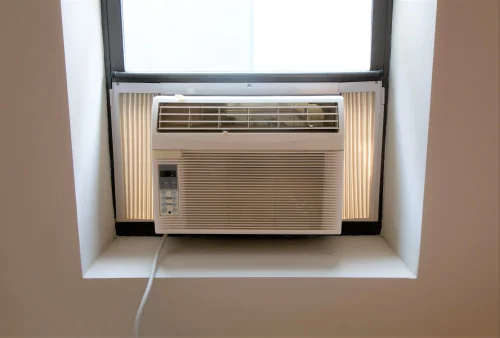
Last summer, my window AC started making this weird rattling noise around week two of a brutal heat wave. I ignored it. Big mistake. By week three, it had stopped cooling altogether, and I was sitting in a 38°C room waiting three days for a technician who charged me more than I’d like to admit for what turned out to be a completely preventable issue — a clogged drain pan and a filter so dirty it looked like a dust bunny graveyard.
That experience taught me something I now tell every neighbor and friend who asks: window ACs don’t just break down randomly. They break down because of neglect. And the good news? Most breakdowns are 100% avoidable with a few simple routines done consistently.
Here’s what I’ve been doing since that disaster — routines that have kept my unit running strong for two full seasons without a single service call.
1. Clean or Replace the Air Filter Every 2–4 Weeks
This is the single most impactful thing you can do, and it’s also the one most people skip.
The air filter is your AC’s first line of defense. It catches dust, pet hair, pollen, and all kinds of airborne particles. When it gets clogged, your unit works harder, airflow drops, cooling efficiency tanks, and internal components start overheating. That’s usually the beginning of the end.
What I do:
- Pull out the filter (usually behind the front panel — no tools needed)
- Hold it up to light. If you can’t see light through it, it needs cleaning
- Wash it under warm running water, let it dry completely, and put it back
- If it’s a disposable filter, just replace it
One thing I learned the hard way — never put a damp filter back in. I did that once and ended up with a mild mold smell that took weeks to fix.
Quick Reference: Filter Cleaning Schedule
| Usage Level | How Often to Clean |
|---|---|
| Light use (a few hours/day) | Every 4 weeks |
| Moderate use (6–8 hrs/day) | Every 2–3 weeks |
| Heavy use (all day/night) | Every 1–2 weeks |
| Dusty or pet-friendly home | Every 1 week |
Honestly, setting a phone reminder takes 10 seconds and saves you a lot of grief.
2. Inspect and Clean the Condenser and Evaporator Coils Every Season
Most people have never even looked at their AC coils. I hadn’t either until the technician showed me what dirty coils look like — they were practically wearing a fur coat of dust and grime.
The evaporator coils (inside, facing your room) absorb heat. The condenser coils (outside, facing the street) release it. When either set gets coated with dirt, heat transfer becomes inefficient. Your AC runs longer cycles, uses more electricity, and eventually the compressor strains under the load.
How I clean mine:
- Turn off and unplug the unit completely (non-negotiable)
- Use a soft brush or a vacuum with a brush attachment to gently remove loose debris
- Spray a no-rinse coil cleaner (available at any hardware store for under PKR 1,000)
- Let it foam up and drip away — it pulls the grime with it
- For the outside coils, a gentle rinse with a hose works fine
I do this at the start of summer and once mid-season. It takes maybe 30 minutes total and the difference in cooling performance is noticeable immediately.
For a deeper walkthrough on cleaning techniques, these 10 powerful window AC cleaning tips cover the process in solid detail.
3. Clear the Drain Pan and Drain Line Regularly
This one got me. Remember that breakdown I mentioned at the start? Yep — this was the culprit.
Your AC removes humidity from the air, and that moisture has to go somewhere. It drips into a drain pan and flows out through a drain line. When the pan fills up or the line gets blocked by algae or debris, water backs up inside the unit. That can cause water leaks into your wall, mold growth inside the unit, and even electrical damage if it reaches components.
Signs you have a drain problem:
- Water dripping inside your room from the unit
- Musty or mildewy smell from the vents
- Unit shutting off unexpectedly (some models have float switches that cut power when the pan overflows)
What to do:
- Once a month, locate the drain pan (usually at the bottom of the indoor section) and check for standing water
- Use a wet-dry vacuum or a turkey baster to clear any buildup
- Pour a small amount of diluted bleach (1 tablespoon in a cup of water) into the drain line monthly to prevent algae growth
- Check the drain outlet outside — sometimes insects nest there and block it
It sounds fussier than it is. Once you’ve done it twice, it takes under 10 minutes.
Drain Maintenance Frequency Guide:
| Season | Action Needed |
|---|---|
| Before summer starts | Full inspection and flush |
| Mid-summer (peak use) | Check pan, pour diluted bleach |
| After a long rain spell | Check outdoor drain outlet |
| End of season | Full clean before storage |
4. Check the Window Seal and Weatherstripping
Here’s something that doesn’t get talked about nearly enough: even a small gap around your AC unit can cost you significantly in wasted energy and poor cooling.
When there are gaps between the unit and the window frame, warm outside air leaks in. Your AC then has to work harder to compensate, running longer and wearing out faster. I noticed this when one side of my room was always warmer than the other — turned out the foam strip on the left side of the unit had crumbled away.
What to check:
- Run your hand around the edges of the unit on a hot day. Feel any warm air coming in? That’s a gap
- Look at the side accordion panels — they stretch out to fill the window but can develop holes or become loose
- Check the foam weatherstripping at the top and bottom of the unit
Fixes:
- Foam weatherstripping tape is inexpensive and widely available — just peel and stick
- For bigger gaps, AC foam insulation strips (sold specifically for this purpose) do a much better job
- If the side panels are cracked or warped, replacement kits are available online for most common brands
I make a habit of doing a quick seal check every spring before I fire up the unit for the season. Takes five minutes and the energy savings are real.
5. Listen to Your AC — and Act on Early Warning Sounds
Your AC will almost always warn you before it completely breaks down. The problem is most of us ignore the early signals because the unit is still “sort of working.”
I’ve learned to treat unusual sounds the way I’d treat a check engine light — something to investigate immediately, not months later.
Common sounds and what they usually mean:
| Sound | Likely Cause | Action |
|---|---|---|
| Rattling or vibrating | Loose panels, debris in fan | Tighten screws, check fan blades |
| Squealing or screeching | Fan motor bearing failing | Lubricate or replace motor |
| Banging or clanking | Bent or broken fan blade | Inspect immediately, stop use |
| Hissing | Refrigerant leak | Call a technician |
| Clicking repeatedly | Electrical relay issue | Call a technician |
| Gurgling | Water in drain pan | Check drain line |
The rattling sound I had last summer? It was a loose front panel and a leaf stuck in the fan. Five-minute fix. Instead I ignored it until the drain backed up and the whole unit stopped.
If you’re dealing with noise issues, these 7 powerful solutions for noisy window AC units break down the diagnosis process really well.
6. Do a Full Deep-Clean Before Storing for the Off-Season
If you live somewhere with distinct seasons and pack your window AC away for winter, what you do before storage matters more than most people realize.
Storing a unit that’s damp, dirty, or has leftover moisture inside is basically inviting mold, rust, and pest infestations. I stored mine without cleaning it once and pulled it out the following spring to find a musty smell, visible rust on the drain pan, and a family of cockroaches that had decided it was excellent real estate.
My end-of-season routine:
- Run the unit on “fan only” mode for 2–3 hours to dry out internal moisture
- Clean the filter one final time
- Wipe down all exterior surfaces with a slightly damp cloth
- Clean the coils as described in Routine #2
- Check and clear the drain pan completely
- Cover the outdoor section with a breathable cover (not plastic — it traps moisture)
- Store in a dry, upright position if removing from the window
What NOT to do:
- Don’t store it on its side — it can damage the compressor
- Don’t use an airtight plastic cover indoors — moisture gets trapped
- Don’t skip the fan-dry step — mold loves residual moisture
For anyone serious about keeping their unit in top shape long-term, these 12 essential window AC maintenance tips for longer life are worth bookmarking.
Common Mistakes People Make (That I’ve Made Too)
Cleaning the filter but nothing else. The filter is a start, but if the coils, drain, and seals are neglected, you’ll still have problems.
Using too much water when cleaning. Electrical components don’t appreciate being soaked. Always unplug first, and be careful around the control board area.
Ignoring performance dips. “It’s still cooling, just not as well” is not a reason to wait. Reduced performance is always a symptom of something, and catching it early is always cheaper.
Running the AC right after installation without checking the tilt. Window ACs need a very slight backward tilt (about 1/2 inch) so condensate drains outward. If it’s perfectly level or tilts forward, water drains into your room.
Using harsh chemicals on coils. I once tried a general-purpose cleaner and it corroded part of the coil fins. Use cleaners specifically made for AC coils.
Maintenance Effort vs. Impact Overview
Here’s a rough idea of how each routine stacks up in terms of effort and benefit:
| Routine | Time Required | Frequency | Impact on Lifespan |
|---|---|---|---|
| Filter cleaning | 10–15 mins | Every 2–4 weeks | Very High |
| Coil cleaning | 25–35 mins | Twice per season | High |
| Drain maintenance | 10 mins | Monthly | High |
| Seal check & repair | 5–10 mins | Annually | Medium-High |
| Sound monitoring | Ongoing | Continuous | Medium |
| Off-season deep clean | 45–60 mins | Once per year | High |
The total time investment across a full season? Maybe 3–4 hours. The cost of a single repair call? Easily 5–10x that in money alone, not counting the heat and frustration.
Frequently Asked Questions
Q: How do I know if my window AC needs professional servicing vs. DIY maintenance?
If the unit isn’t cooling despite a clean filter and clear coils, or if you hear a hissing sound (possible refrigerant leak), or if it’s tripping your circuit breaker — those are technician territory. Everything else in this article is genuinely DIY-friendly.
Q: Can I use a pressure washer to clean the outside coils?
I wouldn’t. The fin coils are delicate and high pressure bends them easily, which actually reduces airflow. A regular garden hose on a gentle setting is more than enough.
Q: My AC smells musty even after cleaning. What’s going on?
Mold is likely growing somewhere inside — often in the drain pan or on the evaporator coil. A coil disinfectant spray (the no-rinse type with antimicrobial properties) usually solves it. If the smell persists, the drain pan itself may need a thorough scrub with diluted bleach.
Q: How long should a window AC last with proper maintenance?
Most window ACs are rated for 8–10 years. With consistent maintenance like the routines above, running them past 12–15 years is genuinely achievable. Neglected units often fail within 4–5 years.
Q: Is it okay to run the AC while cleaning the outside coils?
Absolutely not. Always power off and unplug completely before any cleaning. Even with the unit off, unplugging is important — some components can still carry charge briefly after shutoff.
If you’re also trying to figure out whether your unit has underlying performance issues before they become real problems, this guide on 5 smart window AC checks before calling a technician walks through a solid self-diagnostic process that’s saved me more than one unnecessary service call.