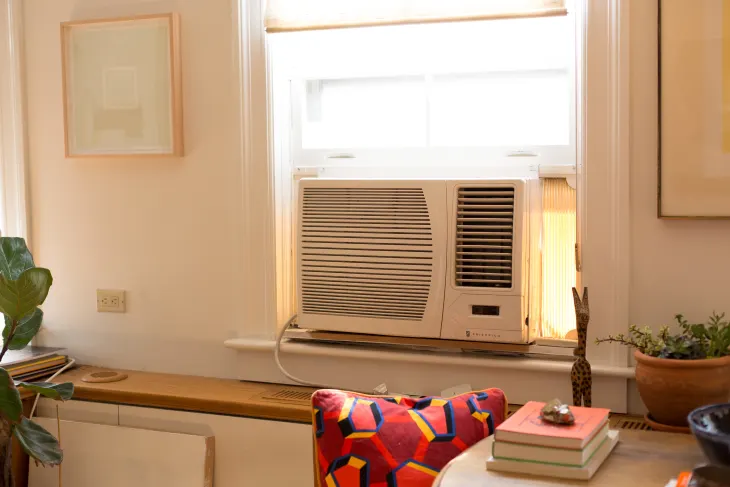
Okay, let me be honest with you. Last summer, my window AC unit started blowing this weird musty smell — like someone left a wet towel inside it for a week. I ignored it for about two weeks thinking it would go away on its own. It didn’t. In fact, the cooling got weaker, my electricity bill shot up noticeably, and eventually the unit started making a grinding noise that had me genuinely worried.
I called a technician. He came in, opened the unit, and spent about 45 minutes cleaning stuff I had never even thought about. When I saw what came out of that machine — the thick grey dust, the greenish mold patches, the blocked drain — I was genuinely embarrassed. He looked at me and said, “Bhai, this needed cleaning months ago.”
That moment changed how I think about AC maintenance. So here are the five cleaning tips I genuinely wish someone had told me before I wasted money on a service call that I could’ve mostly handled myself.
1. Clean the Air Filter Every 2–3 Weeks (Not Once a Season) — The Biggest Mistake Most People Make
For the longest time, I thought cleaning the filter once at the start of summer was enough. Turns out, that’s one of the most common mistakes people make — and it quietly kills your AC’s efficiency.
The air filter is literally the first line of defense. Every particle of dust, pet hair, cooking smoke, and airborne gunk that enters your room gets caught by that filter. When it gets clogged, your AC has to work harder to pull air through, which means more electricity and less cooling. It’s like trying to breathe through a cloth over your face.
How to do it properly:
- Turn off the unit and unplug it before touching anything.
- Slide out the filter (most window ACs have a front panel that clicks open — check your manual if you’re unsure).
- Take it outside or to the bathroom. Tap it gently to loosen the dry dust first.
- Rinse it under lukewarm running water — not hot, not pressurized.
- Let it dry completely in shade before putting it back. Never put a wet filter back in.
A dry, clogged filter vs a clean one makes a shocking difference in airflow. I started doing this every 2–3 weeks during peak summer and the difference in cooling was immediate.
Filter Cleaning Frequency Guide:
| Usage Level | Recommended Cleaning Interval |
|---|---|
| Light use (4–5 hrs/day) | Every 3–4 weeks |
| Moderate use (6–8 hrs/day) | Every 2–3 weeks |
| Heavy use (8+ hrs/day) | Every 1–2 weeks |
| Homes with pets/dust | Every week |
2. Don’t Ignore the Evaporator Coils — They’re Where the Real Magic (and Mold) Happens
This one genuinely surprised me. I had no idea the evaporator coils inside the unit were getting dirty and affecting performance. These are the metal fins you can see when you remove the front panel — they look like a tiny radiator. They absorb heat from the room air, and over time, dust and moisture cling to them and form a layer that acts like insulation — the exact opposite of what you want.
When coils are coated in grime, the heat transfer process slows down. Your AC runs longer cycles, uses more power, and still doesn’t cool as well. In humid climates like Karachi, mold on the coils is also a real issue — and that’s where the musty smell usually comes from.
Cleaning the coils step by step:
- Unplug the unit completely.
- Remove the front panel and filter to expose the coils.
- Use a soft brush or an old toothbrush to gently brush off loose dust — always brush in the direction of the fins, never across them (they bend very easily).
- Spray a no-rinse coil cleaner (available at any hardware store for about Rs. 300–500) directly on the coils. It foams up, loosens dirt, and drips down into the drain pan.
- Let it sit for 5–10 minutes. The foam will carry the gunk away on its own — no rinsing needed.
If you don’t have coil cleaner, a very mild dish soap diluted heavily in water works in a pinch, but you’ll need to rinse it off with a low-pressure spray, which can be tricky.
Do this at the start and middle of every summer and you’ll notice a clear improvement in cooling. For more detailed guidance on this, check out 9 Powerful Window AC Cleaning Maintenance Guide Steps I Wish I Knew Earlier — it goes really deep on coil care.
3. Clean the Drain Pan and Unclog the Drain Line — The Step That Prevents Water Leakage
If you’ve ever seen water dripping from the front of your window AC (inside your room), this is almost always the culprit. The drain pan sits below the evaporator coils and collects condensed water. That water is supposed to flow out through a drain hole at the back of the unit. But when dust, mold, and algae build up in the pan, the drain hole gets clogged and water overflows forward — right into your room.
I learned this the expensive way when water dripped onto my wooden study table and warped it. Total unnecessary damage.
How to clean the drain pan:
- After accessing the interior of the unit, locate the flat tray at the bottom — that’s the drain pan.
- Use a wet cloth or sponge to wipe out all the standing water and sludge.
- Mix one tablespoon of bleach in one cup of water and wipe the pan down with it — this kills mold and algae and prevents them from coming back quickly.
- Find the drain hole (usually at the back or bottom) and use a thin wire, pipe cleaner, or a straightened paperclip to gently poke through and clear any blockage.
- Pour a small amount of water into the pan and watch to confirm it drains out the back.
Drain Pan Maintenance Schedule:
| Season | Action |
|---|---|
| Start of summer | Deep clean + bleach treatment |
| Mid-summer | Quick wipe + drain check |
| End of season | Full dry out before storage |
| After heavy rain/humidity spike | Check for overflow |
This ten-minute job can save you from water damage, mold growth inside the unit, and that horrible musty smell. Honestly, cleaning the drain pan is one of those things that feels boring until you skip it once and regret it.
4. Clean the Condenser Coils and Fins on the Outside — Most People Completely Forget This Side
Here’s the thing — your window AC is essentially two machines in one. The front half faces your room (evaporator side), and the back half sticks outside (condenser side). Most people only ever clean the inside. The outside is just as important.
The condenser coils on the outdoor side release the heat extracted from your room into the outside air. When they’re coated in dust, leaves, dried insects, and general outdoor grime, they can’t release heat efficiently. The result is that your compressor has to work harder, temperatures cycle poorly, and the unit runs hot — which shortens its lifespan.
In dusty environments, this side gets filthy fast.
How to clean the outdoor side safely:
- Unplug the unit — absolutely non-negotiable before working on any part of it.
- If possible, carefully slide the unit out of the window (have someone help you — these are heavy).
- Use a garden hose on a gentle setting to spray the fins from the inside outward — this pushes dirt out the way it came in, rather than deeper in.
- If you can’t remove the unit, use a coil fin comb (very cheap, available online) to straighten any bent fins, then spray with a fin-safe cleaner and wipe with a soft cloth.
- Let it dry completely before reinstalling.
Efficiency Impact of Dirty vs Clean Condenser Coils:
| Coil Condition | Estimated Efficiency Drop | Electricity Cost Impact |
|---|---|---|
| Clean | Baseline | Normal |
| Light dust layer | 5–10% drop | Slight increase |
| Moderate buildup | 15–20% drop | Noticeable increase |
| Heavily clogged | 30–40% drop | Significant increase |
You can find more helpful tips on this exact issue in 8 Proven Window AC Cleaning Secrets for Better Performance — it covers the condenser side in a lot of practical detail.
5. Deep Clean the Entire Unit at Least Once a Year — Pull It All Apart
Everything I’ve described so far is routine maintenance — stuff you should be doing regularly through the season. But once a year, ideally before summer begins, the unit deserves a proper deep clean. This means going beyond the filter and doing a full teardown clean.
I know it sounds intimidating. The first time I did it, I watched three YouTube videos, set aside a Saturday morning, and laid out all the parts on a plastic sheet in my bathroom. Took about two hours. But when I plugged it back in, it literally blew colder air than it had in years.
What a full deep clean includes:
- Remove the unit from the window and take it to an open area or bathroom.
- Remove the outer casing (usually 4–6 screws on the sides and back).
- Clean the blower fan wheel (the barrel-shaped fan inside) — this collects thick layers of dust that restrict airflow badly. A brush and slightly damp cloth work well.
- Clean and disinfect the entire interior casing with a diluted antibacterial solution.
- Clean both coil sets as described above.
- Clear the drain pan and drain line.
- Let everything dry for at least 2–3 hours before reassembly.
- Check the insulation foam around the unit’s frame — replace if it’s deteriorated (it prevents cooled air from leaking back outside).
Things you’ll need for a deep clean:
- Soft bristle brush or old toothbrush
- No-rinse coil cleaner spray
- Bleach + water solution (for drain pan)
- Screwdrivers (flathead + Phillips)
- Fin comb (optional but helpful)
- Compressed air can (great for blowing out dust from tight corners)
- Bucket and old towels
If your unit is more than 5 years old and has never had a full deep clean, expect to find some seriously unpleasant stuff inside. Mold, dead insects, compacted dust — the works. Don’t be grossed out. Just clean it, and you’ll be amazed at the performance improvement.
For a complete checklist that you can follow step by step, 12 Window AC Cleaning Tips That Save You Money is genuinely one of the best resources I’ve come across.
Common Mistakes to Avoid
Since I’ve made most of these myself, let me save you the trouble:
- Putting a wet filter back in. Mold grows fast in a damp, dark space. Always let it dry completely.
- Using a pressure washer on the fins. The aluminum fins bend instantly. Use only gentle water pressure.
- Cleaning while plugged in. Sounds obvious, but in a hurry, people forget. Always unplug first.
- Using harsh chemical sprays not meant for AC units. Stick to products labeled for coil cleaning.
- Skipping the drain pan because it looks “mostly clean.” Algae grows even in thin layers of moisture. Clean it anyway.
- Waiting until the AC breaks down to clean it. Reactive maintenance always costs more than preventive.
Quick Maintenance Snapshot
| Task | Frequency | Difficulty | Time Required |
|---|---|---|---|
| Filter cleaning | Every 2–3 weeks | Very easy | 10–15 minutes |
| Evaporator coil cleaning | Every 1–2 months | Moderate | 20–30 minutes |
| Drain pan cleaning | Monthly | Easy | 10 minutes |
| Condenser coil cleaning | Every 2–3 months | Moderate | 30–45 minutes |
| Full deep clean | Once a year | Takes effort | 2–3 hours |
Final Thoughts
Honestly, maintaining a window AC isn’t complicated — it’s just something most of us were never taught. We assume it runs itself. We assume someone else will fix it. And then one sweaty afternoon the cooling dies and we’re stuck waiting for a technician and a big bill.
The five things I’ve shared here are genuinely all you need to keep your unit running efficiently, smelling clean, and lasting years longer than it otherwise would. None of them require special skills. Just a bit of time, the right supplies, and the willingness to actually look inside the machine.
Start with the filter this weekend. It takes 15 minutes. I promise you’ll feel the difference within a day.
Frequently Asked Questions
Q1. How often should I clean my window AC if I live in a dusty area like Karachi or a similar city?
In high-dust environments, you should clean the filter every 7–10 days instead of the usual 2–3 weeks. The evaporator coils should also be inspected monthly. Dust accumulates much faster in urban and dry climates, and the impact on performance is quicker too.
Q2. Can I use a vacuum cleaner to clean the AC filter instead of washing it?
Yes, a vacuum with a brush attachment works well for light dust. It’s actually a good quick option between full washes. But every 4–6 weeks, you should still do a proper water rinse to remove the finer particles that the vacuum can’t pick up.
Q3. My AC smells musty even after I cleaned the filter. What’s causing it?
That smell almost always comes from mold growing on the evaporator coils or inside the drain pan. Cleaning just the filter won’t fix it. You need to clean the coils with a no-rinse coil cleaner and disinfect the drain pan with a diluted bleach solution. Give it a full interior cleaning and the smell should disappear within a day or two of operation.
Q4. Is it safe to clean the AC myself or should I always call a technician?
Routine cleaning — filter, coils, drain pan — is completely safe to do yourself as long as you unplug the unit before you start. A professional service is worth it for things like refrigerant issues, electrical problems, or if the unit hasn’t been cleaned in several years and needs a serious overhaul. But regular maintenance? Absolutely do it yourself.
Q5. Will cleaning my window AC actually reduce my electricity bill?
Yes, genuinely. A dirty AC works harder and longer to achieve the same cooling, which directly increases power consumption. Studies and technician feedback consistently show that a well-maintained AC can use 15–25% less electricity compared to a neglected one. Over a full summer, that adds up to real money saved.
If you want to go even deeper into keeping your unit in top shape, check out 7 Essential Window AC Maintenance Tips for Long Life — it’s a great next read that covers seasonal prep and long-term care in detail.