
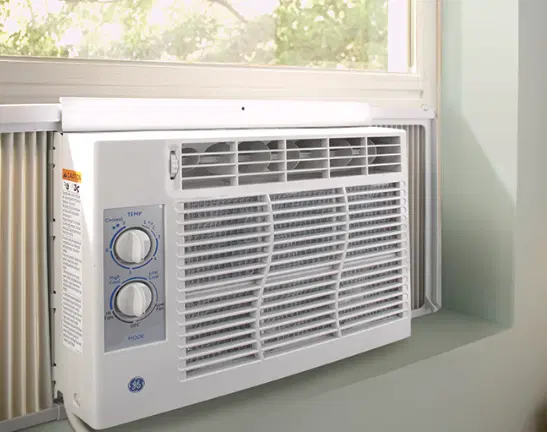
Last summer, I made a rookie mistake that cost me weeks of sweaty, uncomfortable nights. I bought a brand-new window AC unit, slapped it in the window, plugged it in, and wondered why my room felt only slightly less miserable than before. The unit was running fine — the problem was everything around it. The installation, the positioning, the settings — all wrong.
After some trial, error, and a lot of frustrated Googling at 2 AM, I figured out what actually makes a window AC unit perform at its best. And honestly? The difference was night and day. The same unit that barely chilled my room was suddenly making it feel like a walk-in freezer.
So if you’re setting up a window AC — whether it’s brand new or you’re reinstalling an old one — here are 7 tricks that genuinely work.
1. Pick the Right Window (Not Just Any Window) —
The biggest mistake most people make is installing the AC in whatever window is closest to the outlet. I get it — convenience feels logical. But window placement can make or break your cooling efficiency.
Here’s what you actually want:
- A window that’s centrally located in the room, so cool air distributes evenly
- Away from direct sunlight for most of the day (east-facing is usually better than west-facing)
- A window that faces away from major heat sources outside (like a paved driveway or a west wall that bakes all afternoon)
I moved my unit from a west-facing window to a north-facing one and the unit ran noticeably less while keeping the room cooler. It was the same AC, same room — just a better window.
Window Direction vs. Cooling Performance
| Window Direction | Sun Exposure | Recommended? |
|---|---|---|
| North-facing | Low | ✅ Best choice |
| East-facing | Morning only | ✅ Good |
| South-facing | Moderate | ⚠️ Okay |
| West-facing | Afternoon peak | ❌ Avoid if possible |
2. Level It Correctly — But Tilt It Just a Little —
Every window AC installation guide tells you to level the unit. What they don’t always mention is that you actually want a very slight backward tilt — like 1/4 to 1/2 inch lower on the outside than the inside.
Why? Because window ACs generate condensation, and that water needs somewhere to go. If your unit is perfectly level or tilted inward, that water drains into your room. Not ideal.
The slight outward tilt lets the condensate drip outside, which also prevents mold and musty smells from building up inside the unit.
I learned this after noticing a small puddle forming near my baseboard. Thought the unit was broken. Nope — just tilted wrong. A couple of adjustments with a level and the problem vanished.
Use a basic bubble level or even a free phone app like Bubble Level. Takes two minutes and prevents a lot of headaches.
3. Seal Every Gap Like Your Comfort Depends on It (Because It Does) —
This one sounds obvious, but I genuinely underestimated it. After installation, I had small gaps on both sides of the accordion-style side panels. They looked minor. Tiny, even.
Turns out, those “tiny” gaps were letting in warm humid air that completely undermined what the AC was doing. It’s like trying to cool a room with the door cracked open.
Here’s how to seal properly:
- Use foam weatherstripping tape along the window sill and frame contact points
- For the accordion panels, if they feel flimsy or thin, add an extra layer of insulating foam tape on the inner side
- Check for gaps between the unit and the window sash — use window insulation kits (they’re cheap and available at any hardware store)
- If there’s a gap above the unit where the window doesn’t close flush, seal it with a strip of rigid foam board cut to size
A sealed installation can improve efficiency by 20–30%. That’s not a small number.
4. Don’t Ignore the BTU-to-Room-Size Match —
This is where a lot of people go wrong before they even buy the unit — but if you already have one, it’s still worth knowing whether it’s properly matched to your space.
An AC that’s too small will run constantly and never fully cool the room. One that’s too large will cool the air quickly but not reduce humidity, leaving the room feeling cold and clammy.
General BTU Guide:
| Room Size (sq ft) | Recommended BTU |
|---|---|
| Up to 150 | 5,000 BTU |
| 150–250 | 6,000 BTU |
| 250–350 | 7,000–8,000 BTU |
| 350–550 | 10,000–12,000 BTU |
| 550–700 | 14,000 BTU |
| 700–1,000 | 18,000 BTU |
Also factor in: if the room gets heavy direct sunlight, add about 10% to your BTU requirement. If multiple people occupy the room regularly, add another 600 BTU per person beyond the first.
I had a 5,000 BTU unit trying to cool a 300 sq ft room — it just couldn’t keep up. Once I swapped it for a proper 8,000 BTU unit, same room, same setup — completely different experience.
For more guidance on finding that sweet spot of efficiency, check out these 10 Smart Window AC Setup Tips for Faster Cooling.
5. Use the Fan-Only Mode Strategically Before Cooling —
Here’s something I picked up after a lot of experimenting: on a brutally hot day, don’t just crank the AC to its coldest setting immediately. Start with fan-only mode for 10–15 minutes first.
The logic is simple. When your room has been baking all day, the air near the ceiling is significantly hotter than near the floor. Running the fan first circulates that hot air out and creates a more even temperature baseline. Then when you switch to cooling mode, the AC doesn’t have to fight against a pocket of superheated air near the top.
I started doing this every evening and noticed the room reached my target temperature noticeably faster than when I just blasted it cold from the start.
Bonus tip: Set a ceiling fan (if you have one) to run counterclockwise in summer. It pushes cool air down toward you instead of recirculating warm air near the ceiling.
6. Clean the Filter Before First Use — Even If It’s New —
I know — it’s brand new, straight out of the box. Why would it need cleaning?
Because filters can accumulate dust and fine debris during manufacturing, packaging, and shipping. It’s not a lot, but even a light layer of particulate can reduce airflow right out of the gate.
For a new unit:
- Remove the filter and tap it gently against a surface to shake loose any loose debris
- Rinse it under warm water if it’s a washable mesh filter
- Let it dry completely before reinstalling
For reinstalled or used units, this step is even more critical. A dirty filter is one of the top reasons window ACs underperform. Studies consistently show that a clogged filter can reduce cooling efficiency by 15–20%.
Filter Cleaning Frequency Guide:
| Usage & Environment | Cleaning Frequency |
|---|---|
| Light use, clean indoor air | Every 4–6 weeks |
| Daily use, average environment | Every 2–3 weeks |
| High dust / pet hair / heavy use | Every 1–2 weeks |
| Coastal or high humidity areas | Every 1–2 weeks |
Make it a habit to check the filter every two weeks during peak summer. It takes five minutes and it’s one of the highest-impact maintenance tasks you can do.
You can get a deeper look at this with 8 Easy Window AC Cleaning Tricks for Ice-Cold Air.
7. Set the Temperature Smart — Not Just Low —
Most people set their AC to the coldest possible setting thinking that’ll cool the room faster. It doesn’t. The unit cools at the same rate regardless of the temperature setting — a lower number just means it runs longer, not harder.
What actually matters is where you set the target temperature and how you use the timer.
Smart temperature habits:
- Set the thermostat to 24–26°C (75–78°F) for a balance of comfort and efficiency — going below 20°C wastes significant energy with minimal extra comfort
- Use the timer or sleep mode — most modern window ACs have programmable timers; set it to raise the temperature by 2–3 degrees after you’ve fallen asleep
- Don’t turn it off and on repeatedly — it’s more efficient to let it run on a moderate setting than to cycle it constantly
Efficiency vs. Temperature Setting (approximate energy use increase per degree cooler):
| Target Temp | Relative Energy Use |
|---|---|
| 28°C (82°F) | Baseline |
| 26°C (79°F) | ~6% more |
| 24°C (75°F) | ~12% more |
| 22°C (72°F) | ~20% more |
| 18°C (65°F) | ~40%+ more |
There’s a sweet spot for most people around 24–25°C that keeps the room genuinely comfortable without running your electricity bill into the ground.
For more on dialing in your energy settings, 9 Easy Window AC Energy Saving Secrets for Summer breaks it down really well.
Common Mistakes That Cancel Out Everything Above
Even if you do all seven things right, these habits will quietly undo your efforts:
Keeping doors and windows open — Seems obvious, but even a cracked door to a hallway dramatically increases the load on your unit.
Blocking the vents — Furniture, curtains, or objects placed directly in front of the unit restrict airflow. Keep at least 18–24 inches of clearance in front of the AC.
Running heat-generating appliances nearby — Ovens, dryers, even a lamp near the unit’s thermostat sensor can trick it into running harder than needed.
Skipping the pre-season check — Before the hot season kicks in, give the unit a once-over: check the filter, inspect the coils, make sure the drainage isn’t blocked. Five minutes of prep prevents weeks of poor performance.
Ignoring unusual sounds or smells — A rattling sound often means something is loose inside the unit. A musty smell almost always means mold on the evaporator coil. Neither gets better on its own.
Real Talk: What Surprised Me Most
When I finally got everything right — proper window, correct seal, right BTU, clean filter, smart settings — my electricity bill actually dropped even though the room was more comfortable. That was the unexpected win.
A properly set up window AC doesn’t just cool better. It cools more efficiently. It runs fewer cycles to maintain temperature, puts less stress on the compressor, and lasts longer before needing repairs.
The setup phase feels like extra work upfront, but it pays off every single day of the summer.
If you want to go deeper on keeping your unit running at its best long-term, 9 Proven Window AC Maintenance Secrets for Better Cooling is worth a read.
FAQs
Q1: Does it matter which side of the room the window AC is installed on?
Yes, it actually does. Ideally, you want the unit positioned so the cool air flows toward the center of the room. If it’s installed in a corner window and blows directly at a wall, you’re getting poor air distribution. Central placement, or at least placement where airflow can reach most of the room, works best.
Q2: My AC cools the room but it still feels humid. What’s wrong?
This usually means the unit is oversized for the space. A too-large AC cools the air temperature quickly but shuts off before it has time to dehumidify properly. You end up with cold, clammy air. Check if your unit’s BTU rating is significantly higher than what’s recommended for your room size.
Q3: How long should a window AC run before the room feels cool?
A properly sized and installed unit should cool a typical bedroom to a comfortable temperature within 20–30 minutes on a hot day. If it’s taking much longer, check the filter, the seal around the unit, and whether the room size matches the BTU rating.
Q4: Is it okay to run the window AC all night?
Yes, absolutely — as long as the unit is properly installed and maintained. Modern window ACs are designed for continuous use. Using sleep mode or setting a timer to raise the temperature slightly after a few hours is a good way to balance comfort and energy savings overnight.
Q5: Why does my window AC smell musty when I first turn it on?
That musty smell is almost always mold or mildew on the evaporator coil or in the drain pan — common after the unit has been sitting unused. Before the season starts, clean the filter, spray the coil with a coil cleaner (available at hardware stores), and let the unit run on fan-only mode for a while to dry everything out. If the smell persists after cleaning, the drain pan may need a more thorough cleaning.