Last summer, my electricity bill hit a number that genuinely made me sit down. I’m talking about a bill that was almost double what I expected — and the only thing that had changed was I’d started running my window AC more often because of the brutal heat. That moment pushed me to actually figure out what I was doing wrong instead of just complaining about it.
Turns out, I was making a bunch of small mistakes that were silently draining power every single day. Once I fixed them one by one, my next bill dropped noticeably. Not a little — noticeably. So I’m sharing everything I learned, because I genuinely wish someone had told me this stuff earlier.
1. Set Your Thermostat to 24–26°C (75–78°F), Not Lower
This was my biggest mistake. I used to crank it down to 18°C thinking it would cool the room faster. It doesn’t. Your AC doesn’t cool faster at a lower temperature — it just runs longer and harder.
Every degree below 24°C can increase your energy consumption by around 6–8%. That adds up fast over a full summer.
Sweet spot: 24°C when you’re active, 26°C when you’re sleeping or leaving for a few hours.
2. Clean Your Air Filter Every 2–3 Weeks
A clogged filter is basically like trying to breathe through a pillow. Your unit has to work much harder to push air through, which means more electricity for less cooling.
I started cleaning my filter every two weeks during peak summer, and I noticed the room cooled faster and the unit didn’t run as continuously as before.
How to do it:
- Turn off and unplug the unit
- Pull out the filter (it’s usually right behind the front panel)
- Rinse it under lukewarm water
- Let it dry completely before putting it back
- Never run the AC without the filter — that pulls dust directly into the coils
Here’s a quick look at how filter condition affects efficiency:
| Filter Condition | Airflow Efficiency | Estimated Energy Impact |
|---|---|---|
| Clean | 100% | Baseline |
| Slightly dusty | ~85% | +8–10% energy use |
| Heavily clogged | ~60% | +25–30% energy use |
| Damaged/missing | Poor + coil damage | Long-term cost increase |
3. Use “Fan Only” Mode When It’s Not Blazing Hot
This one took me an embarrassingly long time to figure out. On mildly warm evenings, switching to fan-only mode circulates air without engaging the compressor — which is the part that actually eats electricity.
Compressor running = high energy use. Fan only = a fraction of that.
If the outside temperature drops in the evening (say, below 30°C), try fan mode for an hour before deciding if you actually need cooling. Often, you don’t.
4. Don’t Ignore the “Sleep Mode” or Timer Function
Most window ACs have a sleep mode or a built-in timer, and most people never use it. I was one of them for years.
Sleep mode gradually raises the temperature by 1°C every hour after you fall asleep, since your body generates less heat and needs less cooling as the night goes on. This can save a surprising amount of energy overnight.
Setting a timer to turn off the unit after 4–5 hours also means you’re not cooling an already-cold room at 3am while you’re fast asleep.
5. Seal the Gaps Around Your Window Unit
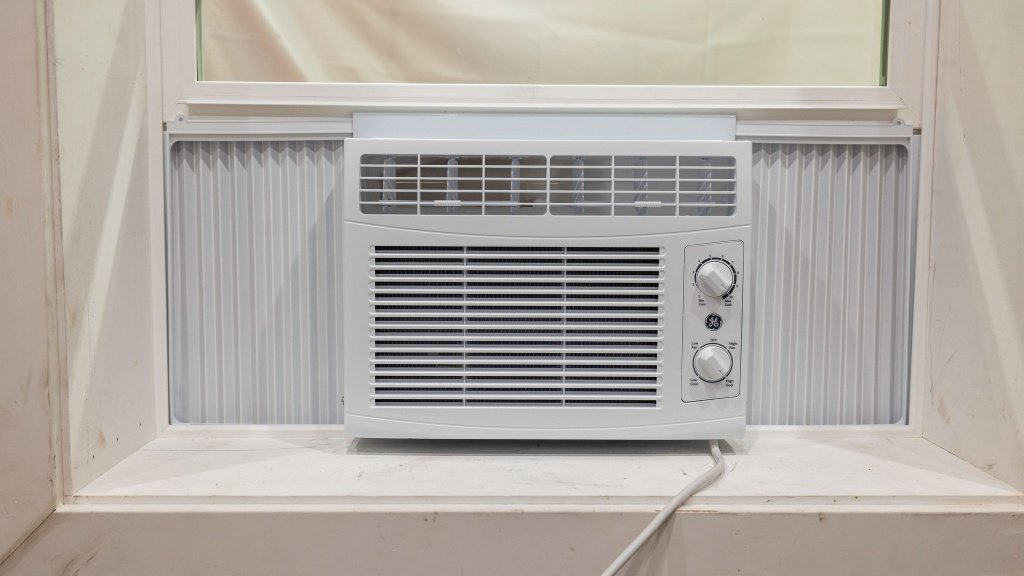
This one is huge and almost nobody talks about it. Hot air seeping in around the sides of your window AC unit completely undermines everything you’re trying to do. Your AC is working to cool the room while warm outdoor air sneaks right back in.
Use foam weatherstripping tape or the accordion panels that come with most units properly. I also used a small strip of foam insulation on the top gap — made a noticeable difference.
Check out these 5 smart window AC installation tips for perfect cooling — proper installation alone can affect efficiency more than any setting change.
6. Keep Heat Sources Away from the Thermostat Area
Most window AC units sense room temperature near the intake grille. If you have a lamp, TV, or even a laptop running right next to the unit, it reads a higher temperature than the actual room and keeps running longer than needed.
I moved my desk lamp across the room and the difference was immediate. The unit cycled off earlier because it was reading the actual room temperature, not the heat from my electronics.
7. Use Ceiling Fans or Table Fans Together With Your AC
Running a ceiling fan alongside your AC allows you to raise the thermostat by 2–3°C without feeling any warmer. The wind-chill effect makes the air feel cooler on your skin even if the actual temperature is higher.
The fan uses maybe 30–75 watts. Your AC compressor uses 700–1500 watts. The math is pretty obvious.
Just remember: fans cool people, not rooms. Turn the fan off when you leave.
Here’s a rough comparison of energy use:
| Device | Typical Wattage | Cost Per Hour (Approx.) |
|---|---|---|
| Window AC (1 ton) | 900–1100W | Higher |
| Ceiling Fan | 50–75W | Very low |
| Table Fan | 30–55W | Minimal |
| AC + Fan Together | ~950–1150W total | Less than AC alone at lower temp |
(Running AC at 26°C + fan is cheaper than AC alone at 23°C)
8. Keep Curtains and Blinds Closed During Peak Sun Hours
Your AC is fighting heat that enters through your windows constantly. Thick curtains or blackout blinds can reduce solar heat gain by 25–45%, which directly means your AC runs less.
This especially matters for west-facing and south-facing rooms between 12pm and 5pm. I switched to light-blocking curtains in my bedroom and the AC ran noticeably shorter cycles throughout the afternoon.
Thermal curtains aren’t expensive — and they pay for themselves within one summer in electricity savings.
9. Get Your Coils Cleaned Once a Year
Even if you clean the filter religiously, dust and grime still build up on the evaporator and condenser coils inside the unit over time. Dirty coils reduce the heat exchange efficiency — meaning the unit works harder to produce the same cooling effect.
A once-a-year deep clean (either DIY with a coil cleaner spray or by a technician) keeps your unit running at full efficiency. I noticed my unit running quieter and cooling faster after the first proper coil cleaning I ever did.
Here’s a detailed guide on window AC cleaning steps for smooth performance that walks through the whole process simply.
10. Right-Size Your AC for the Room
This is a mistake people make before they even buy the unit. An AC that’s too small for a room runs continuously trying to keep up. An AC that’s too large for a room short-cycles (turns on and off too frequently), which is also inefficient and doesn’t dehumidify properly.
Rough guide:
| Room Size | Recommended Capacity |
|---|---|
| Up to 150 sq ft | 0.75 ton / 9,000 BTU |
| 150–250 sq ft | 1 ton / 12,000 BTU |
| 250–350 sq ft | 1.5 ton / 18,000 BTU |
| 350–500 sq ft | 2 ton / 24,000 BTU |
Also factor in: ceiling height, direct sun exposure, number of people in the room, and heat-generating appliances.
11. Don’t Keep Turning It On and Off Frequently
Every time your AC starts up, the compressor draws a large surge of current to get going. If you’re switching it off for 10 minutes and back on again, you’re paying that startup cost repeatedly without giving the room a real break.
If you’re leaving for under 30 minutes, it’s often more efficient to leave it running at a higher temperature than to switch it off and restart it.
For longer absences, switch it off entirely — but for short breaks, raise the temperature by 2–3 degrees using the remote instead.
12. Check and Improve Your Room Insulation
This is the tip most people skip because it feels like effort. But if your room has poor insulation — gaps under the door, thin walls with no insulation, large single-pane windows — your AC is basically fighting the entire outdoors.
Simple fixes that don’t require renovation:
- Door draft stoppers at the base of the door
- Bubble wrap or window insulation film on single-pane windows (it sounds weird but it works)
- Keeping room doors closed while the AC is on
These proven window AC maintenance tips also cover a lot of the surrounding habits that make a real difference in how efficiently your unit performs.
Common Mistakes That Quietly Kill Your Efficiency
Most people make at least two or three of these without realizing:
- Setting the temperature too low thinking it cools faster
- Leaving doors and windows open “just a crack”
- Skipping filter cleaning because the room still feels cool
- Running the AC in a room nobody is using
- Placing the unit where it gets direct afternoon sunlight
- Never checking if the drainage hole is clogged (causes ice buildup and reduced efficiency)
A Quick Look at Monthly Savings Potential
Here’s a rough estimate of what consistent energy-saving habits can do over a summer month (based on average usage of 8 hours/day, 30 days):
| Habit | Estimated Monthly Savings |
|---|---|
| Raising thermostat by 2°C | 12–15% on AC bill |
| Cleaning filter regularly | 5–10% |
| Using fan + AC combo | 8–12% |
| Sealing gaps | 5–8% |
| Using sleep mode/timer | 10–15% |
| Keeping curtains closed | 5–10% |
| Combined effect | Up to 40–50% reduction |
These aren’t exact figures — they vary by unit, room, and climate — but the direction is consistent. Every one of these habits compounds with the others.
Wrapping Up
Honestly, when I look back at that electric bill that shocked me into action, I’m kind of grateful for it. It forced me to actually pay attention to how I was using my AC instead of just running it mindlessly.
None of these tips require fancy gadgets or expensive upgrades. Most of them are free. A few cost a small amount (weatherstripping, curtains) but pay back quickly.
Start with the filter, set your temperature to 24–26°C, seal the gaps around your unit, and use a fan alongside. Just those four changes alone will probably show up in your next bill.
And if you want to go deeper on the maintenance side of things, these 8 essential window AC maintenance tasks most people ignore is a solid next read — some of those are things I only discovered after already dealing with a repair bill.
Frequently Asked Questions
Q1. What temperature should I set my window AC to for maximum savings?
The sweet spot is between 24–26°C (75–78°F). Every degree lower increases energy consumption by roughly 6–8%. Setting it to 18°C doesn’t cool your room faster — it just runs longer.
Q2. How often should I clean my window AC filter?
During active summer use, every 2–3 weeks is ideal. If you’re in a dusty environment (like near a main road), once every 10–14 days is better. A clogged filter can increase energy use by 25–30%.
Q3. Is it better to leave the AC running all day or turn it off when I leave?
For absences over 30–45 minutes, turn it off. For shorter periods, raise the temperature by a few degrees rather than switching off and restarting (which causes a compressor surge). Smart plugs with timers or your unit’s built-in timer can help automate this.
Q4. Does using a fan with my AC actually save money?
Yes — significantly. A fan lets you raise your thermostat by 2–3°C without feeling warmer, thanks to the wind-chill effect. Since the compressor is the biggest power draw, running it less while using a low-wattage fan is a clear win.
Q5. Why does my window AC run constantly without properly cooling the room?
Most likely causes: dirty filter, dirty coils, gaps letting hot air in, undersized unit for the room, or the unit sensing heat from nearby electronics. Start with a filter clean and gap check — those fix the problem in most cases without calling a technician.