Meta Description: Window AC cleaning & maintenance guide: Easy to follow process to keep your home cool. Here are 11 smart tips to revive your old air conditioner, and save some money on energy bills.
11 Window AC Repair Tips: Smart Cleaning & Maintenance Guide to Revive Old AC
Is your window AC not cooling up your room? Making strange noises? Blowing warm or musty-smelling air?
You’re not alone. Until something goes wrong, most people ignore their window AC unit. But here’s the reality — some regular attention can have an old AC run like new.
These 11 practical, simple-to-follow window AC cleaning and maintenance tips are covered in this guide. No matter if your unit is 3 or 10 years old, these steps restore its performance, lower your electricity bill and help it last much longer.
Let’s get into it.
The Importance of Window AC Maintenance
Now before we get into the tips, here’s something you want to know.
When an AC is dirty or not working properly, it works harder than usual to cool your room. That means it consumes more electricity, fails more quickly and costs you more in repairs. According to the U.S. Department of Energy, a clogged air filter alone can decrease an AC’s efficiency by 5–15%.
That’s a big deal — particularly in summer when you’re running it for hours every day.
Regular upkeep solves that problem. This encourages airflow and reduces energy usage while purifying the air in your room.
What You’ll Need — Before Getting Started
Make sure you have the following handy before you start. Most of them are already at home.
| Tool / Supply | Purpose |
|---|---|
| Screwdriver | Remove front panel and grille |
| Soft brush or old toothbrush | Clean fins and coils |
| Vacuum with brush attachment | Remove dust and debris |
| Fin comb | Straighten bent fins |
| Coil cleaner spray | Deep clean the evaporator coils |
| Mild dish soap + warm water | Wash the filter and drain pan |
| Spray bottle | Rinse surfaces |
| Microfiber cloth | Wipe down exterior |
| Gloves and safety goggles | Protect yourself |
Before cleaning, always ensure that the AC is unplugged. Safety first — always.
Tip 1: Always Do a Full Power Shutdown First
This may sound obvious, but many people don’t do it.
Before touching any portion of your window AC — ensure you unplug the entire unit from the wall outlet. Don’t simply shut it off with the remote or at the power button. Pull the plug.
Water and electricity are a dangerous combination. If you start to clean a live unit, you run the real risk of electric shock.
Once disconnected, let the unit sit for 10–15 minutes before you begin working. This dissipates any stored electrical charge and permits the coils to reach room temperature.

Tip 2: Clean or Replace the Air Filter — This Is a Biggie
The air filter serves as the first line of defense for your AC. It also traps dust, pet hair, pollen and other debris before they can get to the coils.
If the filter becomes blocked, airflow decreases dramatically. Your AC must operate longer to achieve the same temperature. This consumes electricity and can strain the motor.
How to clean the filter:
- Remove the front grille (normally just clips off or has 2 screws)
- Pull out the filter — it should probably be gray or brown
- Give it a few gentle taps outside to dislodge loose dust
- Wash it off with warm running water
- Rub on a little dish soap and scrub gently with a soft brush
- Repeatedly rinse until the water runs clear
- Let it dry completely before putting it back in — never put a wet filter back in
How often should you do this?
| Usage Level | Cleaning Frequency |
|---|---|
| Light use (a few hours/day) | Every 4–6 weeks |
| Moderate use (8+ hours/day) | Every 2–3 weeks |
| Heavy use (24/7 or pets at home) | Every 1–2 weeks |
If your filter seems torn, bent or comes out unsalvageably dirty after a wash — replace it. A new filter is cheap and worth every cent.
Tip 3: Deep-Clean the Evaporator Coils
The evaporator coils hide behind the filter. They’re thin metal tubes that absorb heat from your room’s air. They’re the ones actually cooling the air.
Dust and grime accumulate on the coils as time passes. This creates a barrier layer that prevents heat transfer. Result? Your air conditioning system runs longer but cools less.
How to clean evaporator coils:
- Lightly brush debris off the coil surface with a soft brush
- Spray a no-rinse coil cleaner (you can find these at hardware stores) directly on the coils
- Let it foam up and drip down — it takes dirt into the drain pan
- Remove any remaining residue with a damp cloth
Be gentle. The coil fins are quite thin and easy to bend.
Tip 4: Use a Fin Comb to Straighten the Fins
Look closely at the coils. A lot of thin aluminum strips you see are fins. They assist in transferring heat more efficiently.
Bent fins block airflow and reduce cooling performance. They get bent by impacts, harsh cleaning or simply age.
A fin comb (about $5–$10) allows you to quickly straighten these fins. Simply run it through the fin rows gently to realign them. Follow the direction of the fins, rather than working against them.
An obvious improvement in your AC’s airflow and energy efficiency can be achieved through this one small step.
Tip 5: Clean the Outside Condenser Coils
Your window air-conditioning system has two sets of coils. The evaporator coils are located inside (the cool side). The condenser coils are on the outside (hot side).
The condenser coils expel the heat that was extracted from your room to the outside air. If these components are coated with dust, dirt or debris, they cannot dissipate heat properly. This overworks the compressor — and that is how compressors burn out.
How to clean condenser coils:
- Carefully remove the outer casing (consult your unit’s manual)
- Vacuum up loose debris
- Use spray coil cleaner and let it do its job
- Gently rinse with a low-pressure water wash or damp cloth
- Dry before reassembling
If you can’t safely reach the outside of your window unit, this is a good job to leave to a professional technician.
Tip 6: Empty the Drain Pan and Drain Line
As your AC cools the air, it also removes humidity. That moisture drips into a drain pan and is drained out through a drain line.
Over time, algae, mold and sludge build up in the drain pan. An obstruction in the drain line leads to a backup of water — and eventually spills into your room or walls.
Signs of a clogged drain:
- Water dripping inside the room
- Musty or sour smell
- AC shutting off prematurely (some units have a float switch to turn the AC off if water backs up)
How to fix it:
- Pull out and dump the drain pan
- Wash it with warm, soapy water or a solution of water and white vinegar
- Clear the drain hole with a thin brush or pipe cleaner
- To kill mold and prevent future growth, pour a small cup of diluted bleach (1 part bleach, 10 parts water) down the drain
Perform this each season, or every 1–2 months when used heavily.
Tip 7: Examine and Clean the Fan Blades
Your AC unit has a fan (or two) that circulates air past the coils. Over time, dust and grime accumulate on the fan blades and throw the fan off balance.
An unbalanced fan vibrates. It makes more noise. It strains the motor. And it moves less air.
To clean the fan:
- Find the fan blade assembly (this should be accessible after you take off the grille and filter)
- Wipe each blade down with a damp cloth
- Clear heavy residue with a soft brush and light soap
- Check that the fan spins freely with no wobble
A cracked or chipped blade may require replacing the whole fan assembly.
Tip 8: Check the Weatherstripping and Window Seal
This one is missed almost every time.
Your window AC resides in the window frame and seals with foam or rubber weatherstripping. This seal stops outside warm air from slipping into your room around the sides of the unit.
When the weatherstripping begins to go bad, you get gaps. Hot humid air continually seeps in, and your AC is forced to work against it 24/7. Your room never fully cools down — and your energy bill rises.
What to do:
- Check the foam strips located at the sides and top of your AC unit
- Press them lightly — if they crumble, compress flat or feel hard, they’re done
- Peel off the old strips and replace with new foam weatherstripping tape (you can pick it up at any hardware store)
- Ensure the accordion panels on both sides of the unit are fully extended and seated snugly
This five-minute fix can make a noticeable difference in how cold your room gets.
💡 Want more detailed guides on keeping your AC running efficiently all year long? Visit Window AC Maintenance for expert tips, seasonal checklists, and step-by-step maintenance advice.
Tip 9: Check for Ice Buildup and Treat It Properly
Ice on your window AC unit is a red flag. It typically signifies one of three possibilities:
- The air filter is too dirty (restricting airflow)
- Low on refrigerant (requires a technician)
- The evaporator coils are severely fouled
Never chip or scrape ice from your coils. You’ll bend the fins and may even poke a hole in a refrigerant line.
The right way to defrost:
- Disable the cool setting and switch it to “fan only” mode
- Allow the fan to run for 30–60 minutes to melt the ice naturally
- Lay towels around the unit to catch dripping water
- After thawing, determine and correct the underlying cause prior to restoring cooling
If ice comes back just as fast after defrosting and your filter is clean, you need to contact a technician to check if refrigerant levels are correct.
Tip 10: Tighten Everything Up and Inspect the Electrical Connections
Vibration over the years can loosen screws, panels and even some electrical connections.
Go through this checklist:
- Tighten all loose screws on the unit casing
- Ensure the front grille snaps or screws back into place securely
- Inspect the power cord for fraying, cracks or discoloration
- Examine the plug — if it’s loose in the outlet or warm to the touch, replace the outlet or call in an electrician
- Check to see whether the brackets that hold the AC in the window are still secure and level
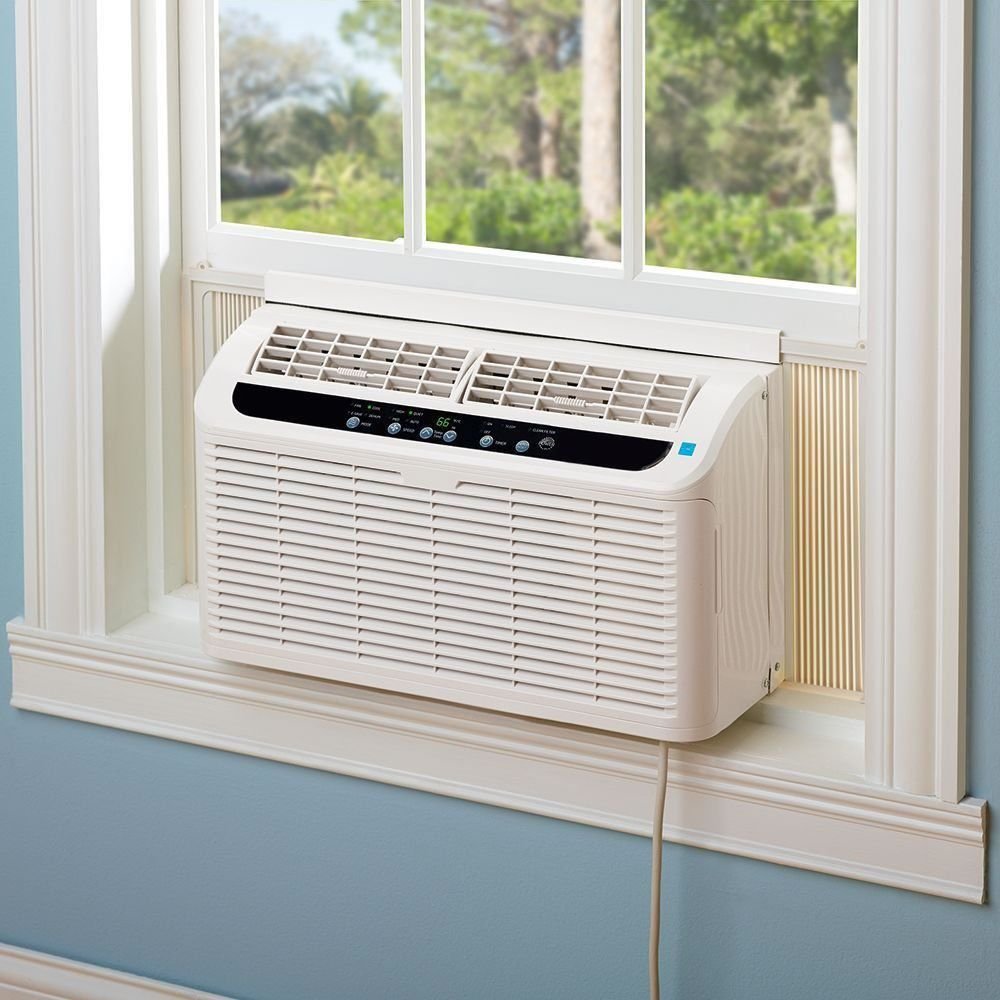
On a slightly forward-tilted unit (toward the room), drain water can be pushed backward. It should slope very slightly outward — a quarter inch or so — so water runs off outside.
Tip 11: Run a Performance Test Before Trusting It All Season
Once everything is clean and back together, go ahead and do a test run before the heat kicks in for real.
Here’s your post-maintenance performance checklist:
| What to Check | What to Look For |
|---|---|
| Startup | Smooth power-on with no sparks or burning smell |
| Airflow | Strong, steady airflow from vents |
| Cooling | Room temperature drops within 10–15 minutes |
| Sound | No grinding, rattling, or squealing |
| Drainage | Water drips outside (not inside) |
| Thermostat | Unit cycles on and off properly at set temp |
If something seems amiss during this test — weird noises, weak airflow or the unit running but not cooling — don’t ignore it. Fix the problem now before high summer temperatures hit.
How Often Should You Do Full Maintenance?
Here’s a maintenance schedule that’s easy to stick to:
| Task | Frequency |
|---|---|
| Clean or check air filter | Every 2–4 weeks during use |
| Wipe down exterior | Monthly |
| Clean evaporator coils | Every season (before summer) |
| Clear drain pan and line | Every 1–2 months |
| Check weatherstripping | Once per year |
| Straighten fins | Once per year |
| Full deep clean | Once per year (before cooling season) |
| Professional inspection | Every 2–3 years |
Set a reminder on your phone. Five minutes of routine care saves hours of repair work later.
Why Your Window AC Sometimes Needs a Professional — Not Just Cleaning
A lot can be solved with maintenance. But certain things require a trained technician.
Call a pro if you notice:
- Refrigerant leak — presence of oily residue near the coils, hissing noises or warm air being emitted even after cleaning the coils
- Compressor failure — it hums but does no cooling at all
- Electrical problems — burning smell, tripped breakers or sparking
- Ongoing ice accumulation — even after the filter and coils have been cleaned
- Loud mechanical grinding — bearings or fan motor may be failing
Trying to fix refrigerant or electrical problems yourself is dangerous and in many places illegal without a license. According to Energy Star’s guidelines on HVAC maintenance, refrigerant handling must always be performed by a certified professional.
FAQs — Window AC Cleaning & Maintenance
Q1: How do I check if my window AC needs cleaning? Spot these signs: weak airflow, warm or musty-smelling air, higher electricity bills, ice on the coils or water dripping inside. All of these suggest a unit in need of attention.
Q2: Is it a good idea to clean my window AC with a pressure washer? Nope. High-pressure water can bend the fins, damage electrical components and force water into areas where it doesn’t belong. Instead, use a gentle spray or damp cloth.
Q3: Is vinegar safe to use on AC coils? Yes, cleaning the drain pan and mild coil deposits with diluted white vinegar works great. However, for heavier coil buildup, a no-rinse coil cleaner works better and is less harmful to the metal.
Q4: What is the lifespan of a window AC? A well-maintained window AC can last 10–15 years. If little maintenance is done, most units begin a declining process after year 5–7.
Q5: Do I need to remove the AC from the window to clean it? For a basic cleaning (filter, front coils, drain pan) — no. If you want a thorough deep clean of the condenser coils and fan, you’ll need to remove it or at least have easy access to the back of the unit.
Q6: My AC smells like mold. What should I do? Replace the filter, clean out the drain pan and evaporator coils. Mold grows wherever there is moisture and dust. A UV light kit for the AC unit can also be installed to eliminate mold at the source in the future.
Q7: Will a dirty AC make you sick? Yes. Airborne mold spores, bacteria and dust that have accumulated inside an AC unit are blown directly into the air you breathe. Those with allergies or asthma are particularly at risk. Regular cleaning keeps the air clean.
Final Thoughts
Just because your window AC is getting old, it does not mean a replacement is necessary.
Most struggling units just need a good cleaning and some TLC. Clogged filters, dirty coils, blocked drains and worn weatherstripping are all solvable issues. And they are all avoidable with regular upkeep.
Go through these 11 tips once before summer starts. Then stay on top of the easy monthly chores — particularly the filter. You’ll feel a difference right away: cooler air, quieter operation and lower electricity bills.
A little effort now saves a lot of money in the future. Your old AC has more life left in it than you think.