Meta Description: Window AC cleaning & maintenance tips can help you quickly reduce your electricity bills. Find 10 maneuvers you can follow to keep your unit circulating cool and efficient.
10 Tips for Cleaning and Maintaining Window ACs to Save on Electricity Bills
Summer heat is no joke. And that electricity bill at the end of the month isn’t either.
If your window air conditioner has been working overtime, you’ve probably been shelling out big bucks as well. What most people don’t know is that a dirty or poorly maintained window AC unit can consume as much as 25 percent more electricity than a clean, well-tuned one.
The good news? You don’t have to be a technician to fix this.
By developing the right window AC cleaning & maintenance habits, you can reduce your energy costs, increase your unit’s life, and cool down a room — all without breaking the bank.
This guide provides 10 safe, sensible tips that are accessible for anyone. These tips will make a tangible difference whether you’ve owned your unit for one year or ten.
Let’s get into it.
Why a Grimy Window AC Will Cost You More Money
Before we get to the tips, let’s discuss why maintenance is so important for your electricity bill.
Your AC works by sucking in warm air, cooling it off, and blowing it out again. When dust, dirt, and grime accumulate inside the unit, the machine has to output more energy to do its previous job. That additional effort = more electricity.
Think of it like trying to breathe through a clogged nose. You expend a lot more energy to get the same air in. Your air conditioning system is under a similar strain.
Here’s a quick guide to how neglect affects energy use:
| Maintenance Issue | Estimated Increase in Energy Use |
|---|---|
| Clogged air filter | 5–15% more |
| Dirty evaporator coils | 10–20% more |
| Blocked condenser fins | 8–15% more |
| Low refrigerant (leak) | 20–30% more |
| Dirty fan blades | 5–10% more |
Small problems add up fast. Now let’s fix them.
Tip #1 — Clean or Change the Air Filter Every 2–4 Weeks
Your air filter is the first line of AC defense. It traps dust, pet hair, pollen, and other particles before they enter the machine.
But here’s the thing: most people forget it exists.
A clogged filter blocks airflow. Less airflow means your AC is running longer to cool the same space. That’s wasted electricity.
How to Clean the Filter
- Shut off and unplug your air conditioner.
- Remove the front panel (most units either clip on or are screwed in).
- Slide out the filter.
- Rinse it under warm water. Use a soft brush if needed.
- Allow it to dry fully before replacing it.
- Replace filters that are damaged, warped, or so dirty they can’t be cleaned.
Pro tip: Hold the filter up to light. If you can’t see light through it, it’s time for a new one.
It takes under 10 minutes to clean the filter. Do it every 2–4 weeks during months when you’re running the AC daily, and you’ll find a meaningful difference in performance and energy use.
Tip #2 — Keep the Evaporator Coils Clean
The evaporator coils sit directly behind the air filter. These are the cold coils that perform the cooling of air in your room.
If these coils get covered in dust and dirt, they may struggle to absorb heat effectively. The AC must run longer cycles in order to reach the set temperature — and that uses more electricity.
Cleaning the Evaporator Coils
- Use a no-rinse coil cleaner spray (found at hardware stores).
- Spray it on the coils, where it will drip down into the drain pan.
- A soft brush or compressed air works best for light dust.
- Do this at least once per season, or every 2–3 months if using heavily.
When cleaning, do not bend the fins. Bent fins reduce airflow.
Tip #3 — Use a Fin Comb to Straighten Bent AC Fins
Speaking of fins — both the evaporator (inside) and condenser (outside) coils have thin metal fins that aid heat transfer.
These fins bend from normal usage, cleaning, or accidental contact over time. That blocks airflow and makes your unit work harder.
A fin comb costs only a few dollars and can help restore proper airflow in minutes.
How to Use a Fin Comb
- Choose comb size according to fin spacing (found on the AC manual or comb package).
- Draw the comb gently down the fin columns to align them.
- Be slow and deliberate — don’t force bent fins.
This is among the most neglected maintenance procedures. It’s fast, inexpensive, and can yield significant performance gains once done.
Tip #4 — Clean the Condenser Coils on the Outside Section
The condenser coils are located in the portion of your window air conditioner that faces outdoors. They expel the heat extracted from your room to the outside air.
If the outdoor section is blocked with leaves, dirt, or debris, heat cannot escape properly. This causes the compressor to work overtime — driving up your electricity consumption.
Cleaning the Condenser Side
- First, turn the unit off and unplug it.
- Gently spray the outside fins down using a garden hose or spray bottle.
- Spray from the inside outward to blow debris away.
- Keep away from high-pressure water — it can bend fins or damage parts.
Perform this at the beginning of the cooling season and again in mid-summer.
Tip #5 — Regularly Drain and Clean the Drain Pan
Your AC cools the air by removing humidity. That moisture collects in a drain pan at the bottom of the unit and drains to the outside.
If algae, mold, or dirt plugs the drain pan, water backs up inside the unit. This can:
- Make water drip inside your room
- Lead to mold growth
- Make the unit shut off automatically (some units have safety shutoffs)
- Reduce cooling efficiency
How to Clean the Drain Pan
- If possible, remove the AC from the window (or work carefully with it in place).
- Find the drain pan (typically at the bottom of the unit).
- Use a sponge or wet/dry vacuum to remove standing water.
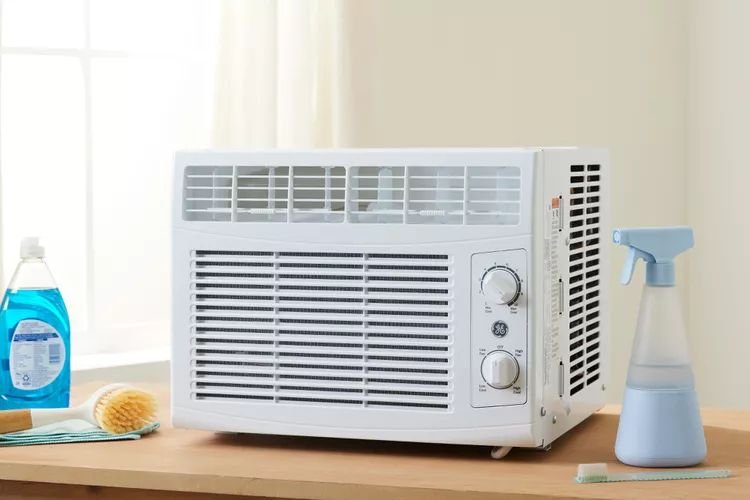
- Scrub the pan with warm water and a few drops of dish soap or white vinegar.
- Rinse and allow to dry before reassembling.
Bonus: Add a little white vinegar into the drain hole once a month during the cooling season — this helps prevent algae and mold buildup.
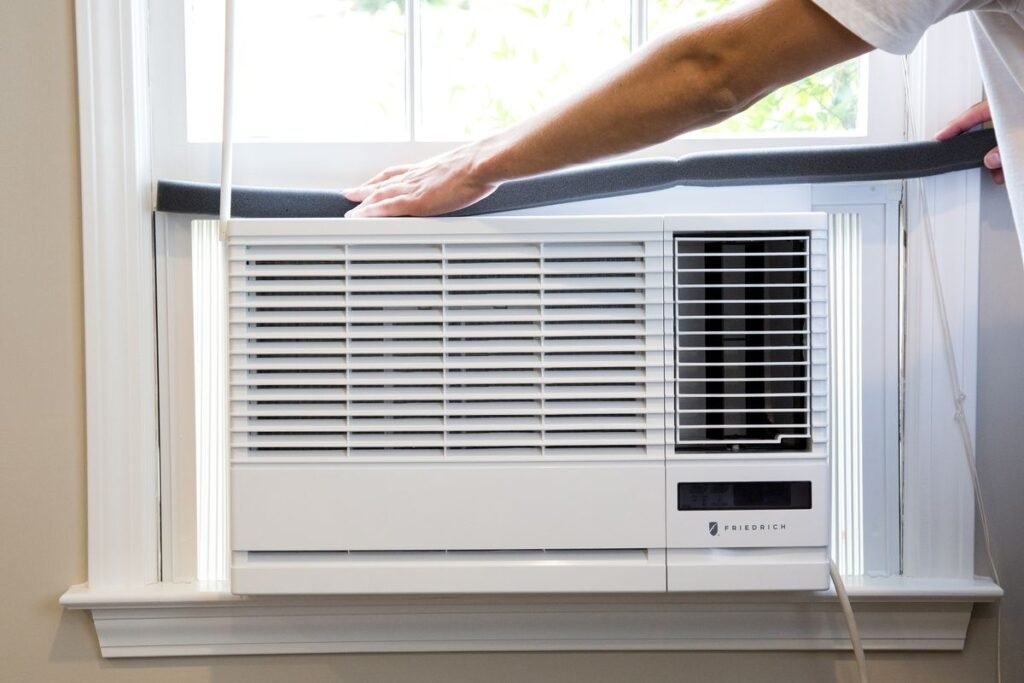
Tip #6 — Inspect and Seal Air Leaks Around the Unit
This tip has nothing to do with the inside of your AC — but it could make a big difference on your electricity bill.
If warm outside air is seeping in around the sides of your window AC, your unit has to run constantly to combat that extra heat load.
Where Leaks Happen
- Side accordion panels that don’t seal tightly against the window frame
- Gaps between the unit and the window sill
- Old foam insulation that’s flattened or worn out
How to Fix It
- Seal the gaps on the sides and top with foam weather stripping.
- Replace the foam padding that came with your unit if it’s flattened or torn.
- Use AC unit insulating tape around the frame for a tighter seal.
For more detailed guidance on sealing and other upkeep routines, Window AC Maintenance is a great resource dedicated entirely to keeping your unit in top shape.
A properly sealed window AC can reduce cooling costs by 10–15% on its own. It’s among the easiest wins on this list.
Tip #7 — Clean the Fan Blades for Better Airflow
Your window AC has a fan (sometimes two — one on the evaporator side, one on the condenser). The fans circulate air through the unit.
Fan blades caked with grime are heavier and slightly out of balance. They spin less efficiently, move less air, and make the motor work harder.
Cleaning the Fan Blades
- Open the casing with the unit unplugged.
- Wipe each blade with a damp cloth or soft brush.
- Scrape off any accumulated grease or grime.
- Make sure the fan turns freely and isn’t wobbling.
If the fan motor is making a grinding or squealing sound, it may require lubrication or professional service.
Tip #8 — Set the Right Temperature (Stop Overcooling)
This is not a cleaning tip — but it’s a maintenance habit for your wallet.
For each degree cooler than its ideal setpoint, energy consumption increases by around 3–5%.
The Sweet Spot
| Setting | Energy Impact |
|---|---|
| 78°F (25°C) | Most efficient for cooling |
| 72°F (22°C) | Moderate energy use |
| 68°F (20°C) | High energy use |
| 65°F (18°C) | Very high energy use |
While you’re home and active, set your AC to 78°F (25°C). Use a programmable timer or smart plug to turn it off when you’re not home.
Pair your AC with a ceiling fan. A fan makes you feel 4°F cooler without dropping the thermostat. That’s a free efficiency boost.
According to the U.S. Department of Energy, using ceiling fans allows you to raise the thermostat setting about 4°F with no reduction in comfort — a simple and proven way to cut cooling costs.
Tip #9 — Schedule a Deep Clean Once a Year
Aside from routine filter and fin cleaning, your AC requires a complete deep clean at least once a year — preferably before the cooling season begins.
A deep clean covers everything:
- Full disassembly of the front panel and housing
- Cleaning all internal components with coil cleaner and compressed air
- Inspecting electrical connectors for corrosion or loose wires
- Looking for signs of a leak, such as frost or oil residue on the refrigerant lines
- Lubricating moving parts as directed by the manufacturer
- Checking the thermostat calibration
If you’re not comfortable doing this yourself, hire an HVAC technician. Professional deep cleans run about $75–$150 and could save you far more than that in electricity over an entire summer.
Quick Annual Maintenance Checklist
| Task | DIY or Pro? | Frequency |
|---|---|---|
| Filter cleaning | DIY | Every 2–4 weeks |
| Coil cleaning | DIY | Every 2–3 months |
| Fin straightening | DIY | Once a season |
| Drain pan cleaning | DIY | Monthly |
| Air leak sealing | DIY | Once a season |
| Fan blade cleaning | DIY | Once a season |
| Full deep clean | DIY or Pro | Annually |
| Refrigerant check | Pro Only | Annually or as needed |
Tip #10 — Know When It’s Time to Replace the Unit
Sometimes the best maintenance decision is knowing when to stop maintaining.
Older window AC units get less efficient with age — even when perfectly maintained. A unit that’s 10–15 years old could be consuming 30–50% more electricity than a newer Energy Star-certified model.
Signs It May Be Time for a New Unit
- No matter how much you service it, the electricity bill keeps going up
- The room takes a long time to cool down
- It never turns off because it can’t reach the set temperature
- You hear strange noises (grinding, banging, or hissing)
- Refrigerant leaks are recurring
- Repair costs are more than 50% of the price of a new unit
Modern Energy Star window ACs use as much as 10% less energy than standard models. Over 10 years, the savings can add up to hundreds of dollars.
The Real-World Impact: Before vs. After Maintenance
Here’s a real-world glimpse of how regular window AC cleaning & maintenance can impact your electricity consumption:
| Scenario | Monthly kWh Used | Estimated Monthly Cost* |
|---|---|---|
| Neglected unit (no maintenance) | 220 kWh | $33.00 |
| Partially maintained unit | 190 kWh | $28.50 |
| Well-maintained unit (all tips applied) | 160 kWh | $24.00 |
*Approximate based on national average US electricity rate of $0.15/kWh. Outcomes may differ based on region, unit size, and hours used.
That’s a potential savings of $9/month or $108/year — just from basic maintenance. For homes running multiple units, the savings stack up quickly.
Top Mistakes to Avoid While Servicing Your Window AC
Even well-intentioned homeowners commit these mistakes:
- Cleaning the filter and neglecting the coils — The filter is not a standalone solution. Dirty coils negate all of your filter-cleaning efforts.
- Using high-pressure water on fins — This bends the soft metal fins and restricts airflow.
- Reinstalling the AC before all components are completely dry — Moisture in electrical components leads to short circuits.
- Disregarding strange sounds — Grinding, hissing, or rattling noises are warning signs, not just irritants.
- Running the AC in fan-only mode throughout the day — This isn’t as effective for energy savings as shutting the unit off or using a timer.
- Skipping annual inspections — Small problems caught early are cheap to fix. Ignored problems become expensive breakdowns.
Frequently Asked Questions (FAQs)
Q1: How often should I clean a window AC filter? If you use the AC daily during summer months, clean your filter every 2 to 4 weeks. If you have pets or live in a dusty area, clean it every 2 weeks. A clean filter is the biggest contributing factor to energy efficiency.
Q2: Is it possible to clean my window AC without taking it out of the window? For most routine maintenance, including cleaning the filter, spraying the coils, and cleaning the drain pan, you don’t need to remove the unit. Removing it makes full deep cleans easier, but it isn’t always required.
Q3: What will happen if I don’t clean my window air conditioner? Dust will accumulate on the filter and coils, causing restricted airflow, harder working of the unit, increased electricity use, decreased cooling performance, and reduced longevity. You also run the risk of mold developing inside the unit.
Q4: How can I tell if my window AC needs more refrigerant? Signs of trouble include ice building up on the evaporator coils, the unit blowing air that isn’t very cold, hissing or bubbling sounds, and electricity bills that are higher than usual. Refrigerant problems need to be addressed by a licensed HVAC technician — this is not a DIY fix.
Q5: Should I clean an old window AC or just replace it? Cleaning and maintenance is worthwhile if the unit is under 8–10 years old and working reasonably well. If it’s more than 10–12 years old, runs most of the time, or needs frequent repairs, a new Energy Star model will pay for itself over time.
Q6: Does sealing gaps around the window AC actually save electricity? Absolutely. Air leaks constantly bring warm outside air in, forcing your AC to fight an endless battle against heat. Foam weather stripping to fill those gaps is among the cheapest and most effective measures you can take.
Q7: Can I use a vacuum to clean AC coils? Yes — a vacuum with a soft brush attachment works well for dislodging loose dust from coils. For a deeper clean, follow up with a no-rinse coil cleaner spray. Never use a stiff brush directly on coil fins — it can bend them.
Wrapping It All Up
Your window AC doesn’t need to be an energy drain.
With the 10 window AC cleaning & maintenance tips provided in this guide, you have all the information you need to keep your unit running efficiently — and your electricity bill low.
Start with the filter. Move to the coils. Seal those air leaks. Set a smart temperature. And put it on your calendar for a yearly deep clean.
These steps don’t involve specialized skills or expensive tools. They just need a touch of consistency.
A well-maintained window AC doesn’t just cut costs. It cools more effectively, lasts longer, and helps keep the air in your home cleaner. That’s a win on every level.
Stay cool — without the shock of a sky-high electricity bill.